A Blank Confidentiality Waiver Template for Research Studies serves as a standardized document allowing participants to waive certain privacy rights, ensuring transparent communication about data use. This template helps researchers maintain ethical standards while protecting sensitive information during the study. Clear terms in the waiver facilitate participant trust and legal compliance.
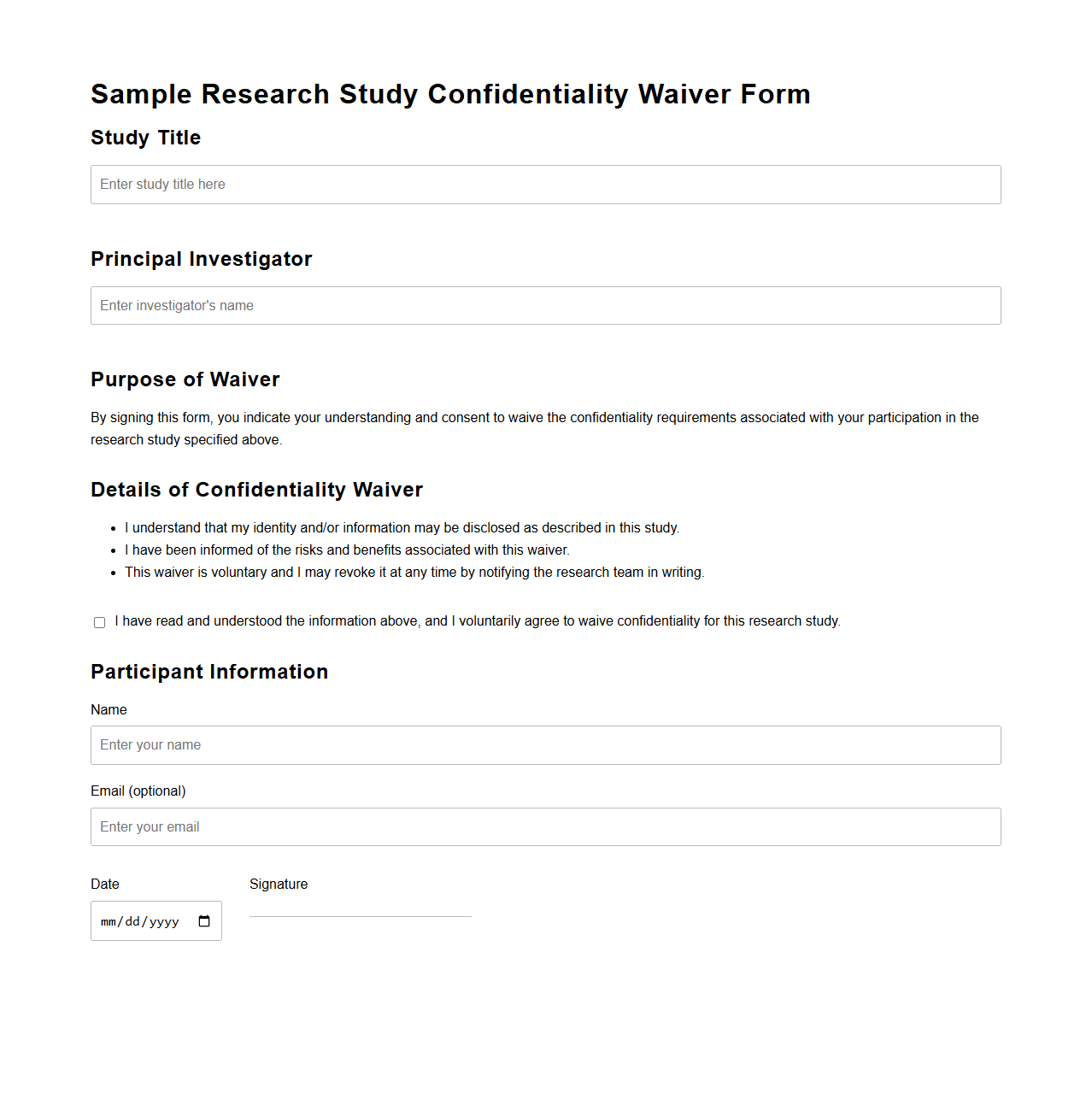
Sample Research Study Confidentiality Waiver Form
A
Sample Research Study Confidentiality Waiver Form is a legal document used to authorize the disclosure of confidential information related to a research study. It ensures that participants or involved parties willingly waive their right to privacy over specific data, allowing researchers to share or publish sensitive information without legal repercussions. This form is essential for maintaining ethical standards while facilitating transparency and collaboration in research projects.
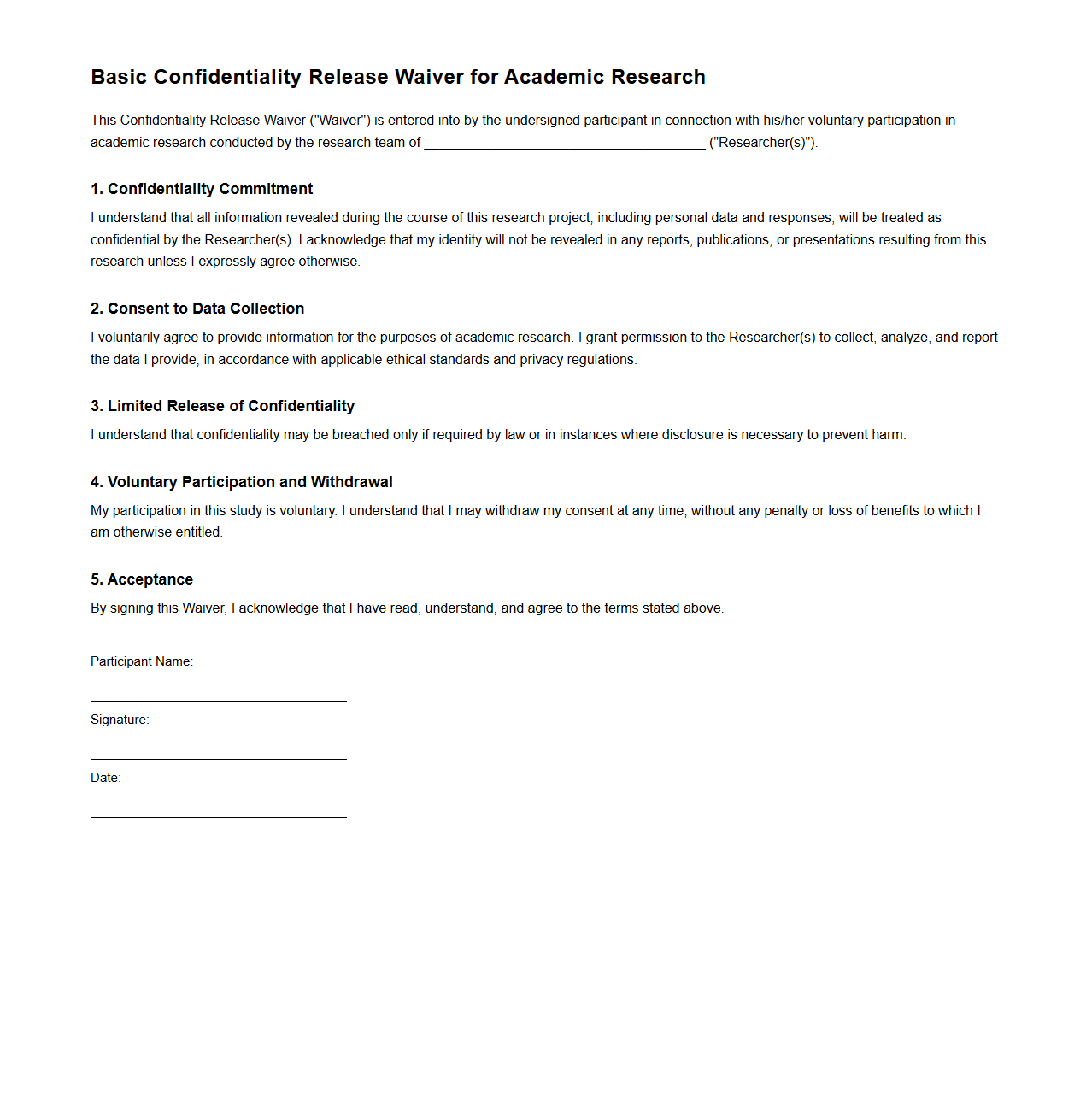
Basic Confidentiality Release Waiver for Academic Research
A
Basic Confidentiality Release Waiver for Academic Research is a legal document that allows researchers to access and use confidential information while ensuring the privacy rights of participants are protected. It outlines the terms under which sensitive data can be shared and restricts disclosure to unauthorized parties. This waiver is essential in maintaining ethical standards and compliance with institutional review board (IRB) requirements during academic studies.
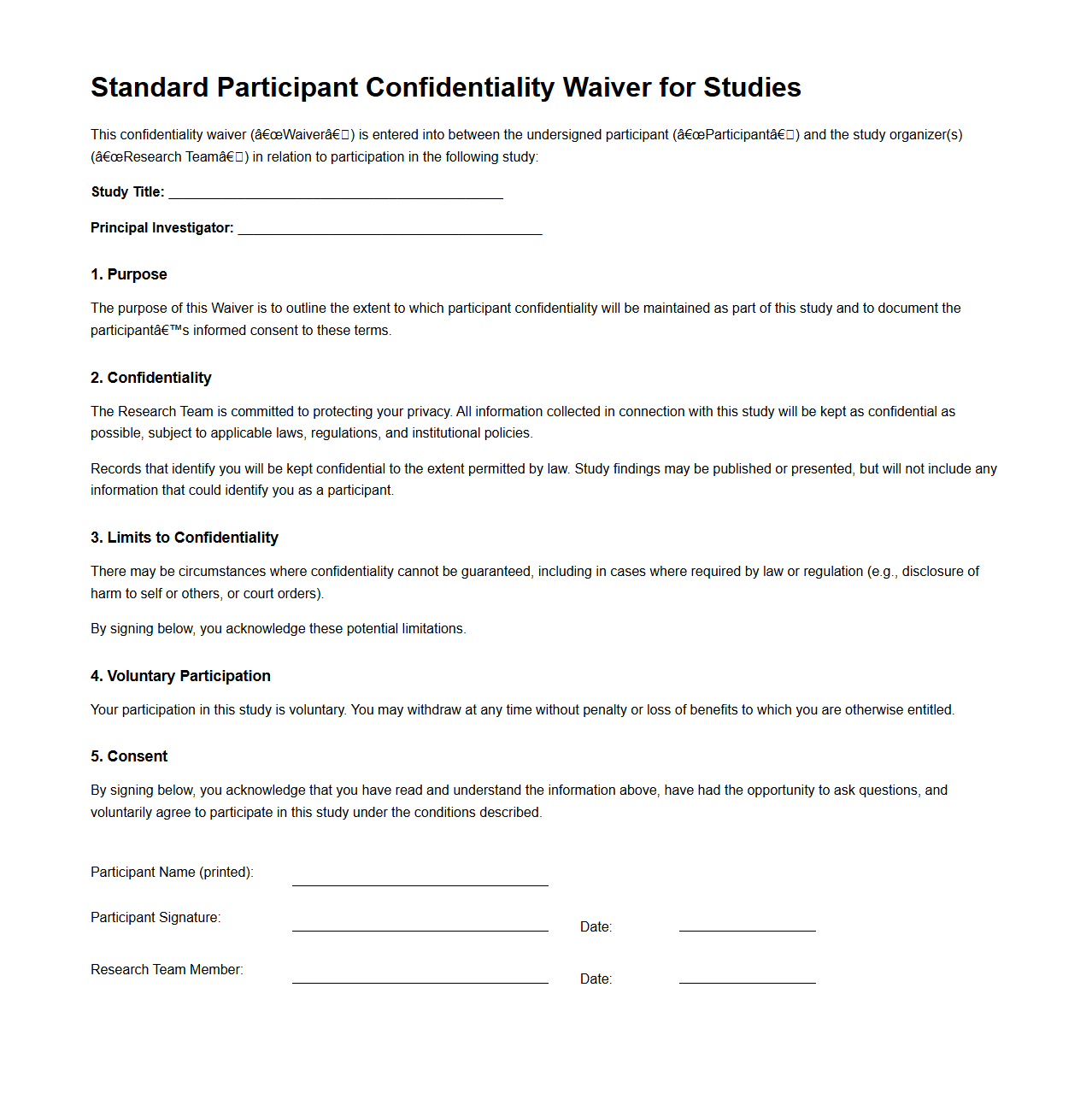
Standard Participant Confidentiality Waiver for Studies
The
Standard Participant Confidentiality Waiver for Studies document is a legal agreement that allows researchers to access sensitive personal information of study participants while ensuring compliance with privacy regulations. It explicitly outlines the conditions under which participant data can be used, shared, or disclosed, protecting participants' identities and personal information. This waiver is essential in maintaining trust and ethical standards in research involving human subjects.
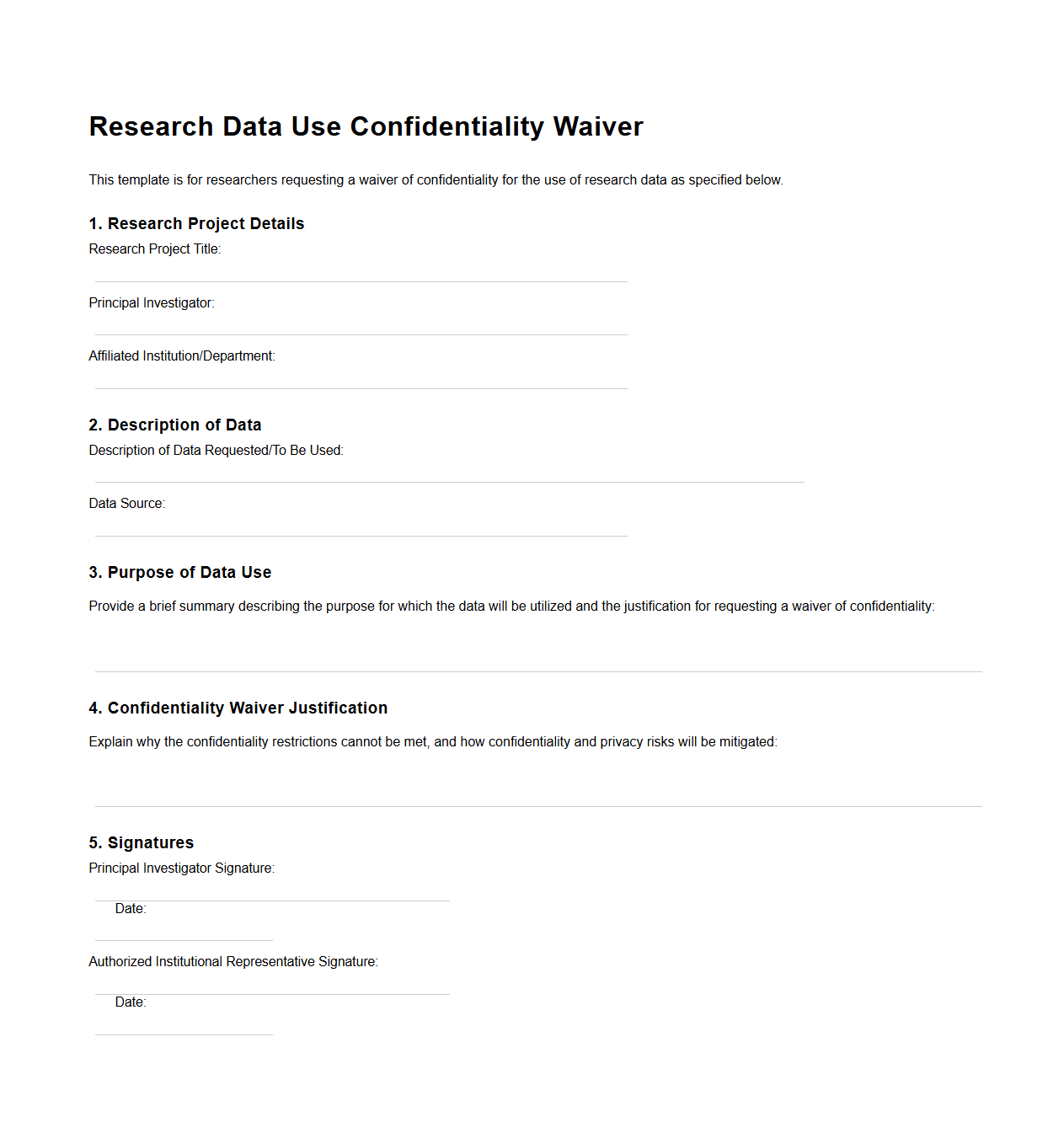
Research Data Use Confidentiality Waiver Template
A
Research Data Use Confidentiality Waiver Template document outlines the terms under which confidential data can be accessed and shared for research purposes while protecting participant privacy. It specifies researchers' responsibilities to maintain data confidentiality, restrict unauthorized use, and comply with applicable regulations such as GDPR or HIPAA. This template ensures ethical standards are met and facilitates secure data sharing in academic, clinical, or institutional research projects.
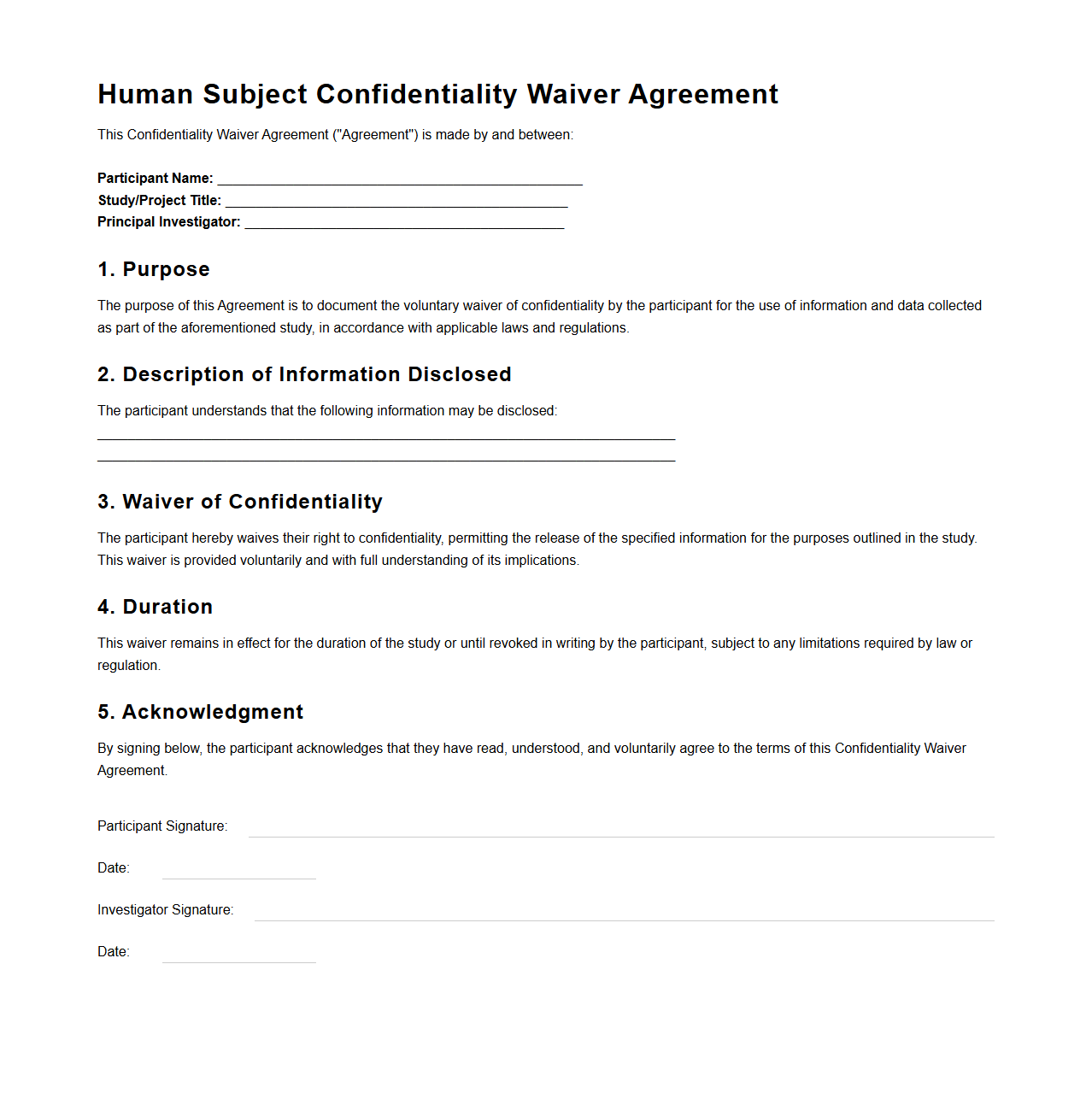
Human Subject Confidentiality Waiver Agreement Format
The
Human Subject Confidentiality Waiver Agreement Format document outlines the terms under which research participants agree to waive certain confidentiality rights, allowing researchers controlled access to sensitive information for study purposes. This agreement ensures ethical standards are maintained while facilitating the responsible use of personal data in compliance with institutional review boards (IRBs) and regulatory frameworks. It is essential for protecting participant privacy and enabling transparent communication between all parties involved in human subject research.
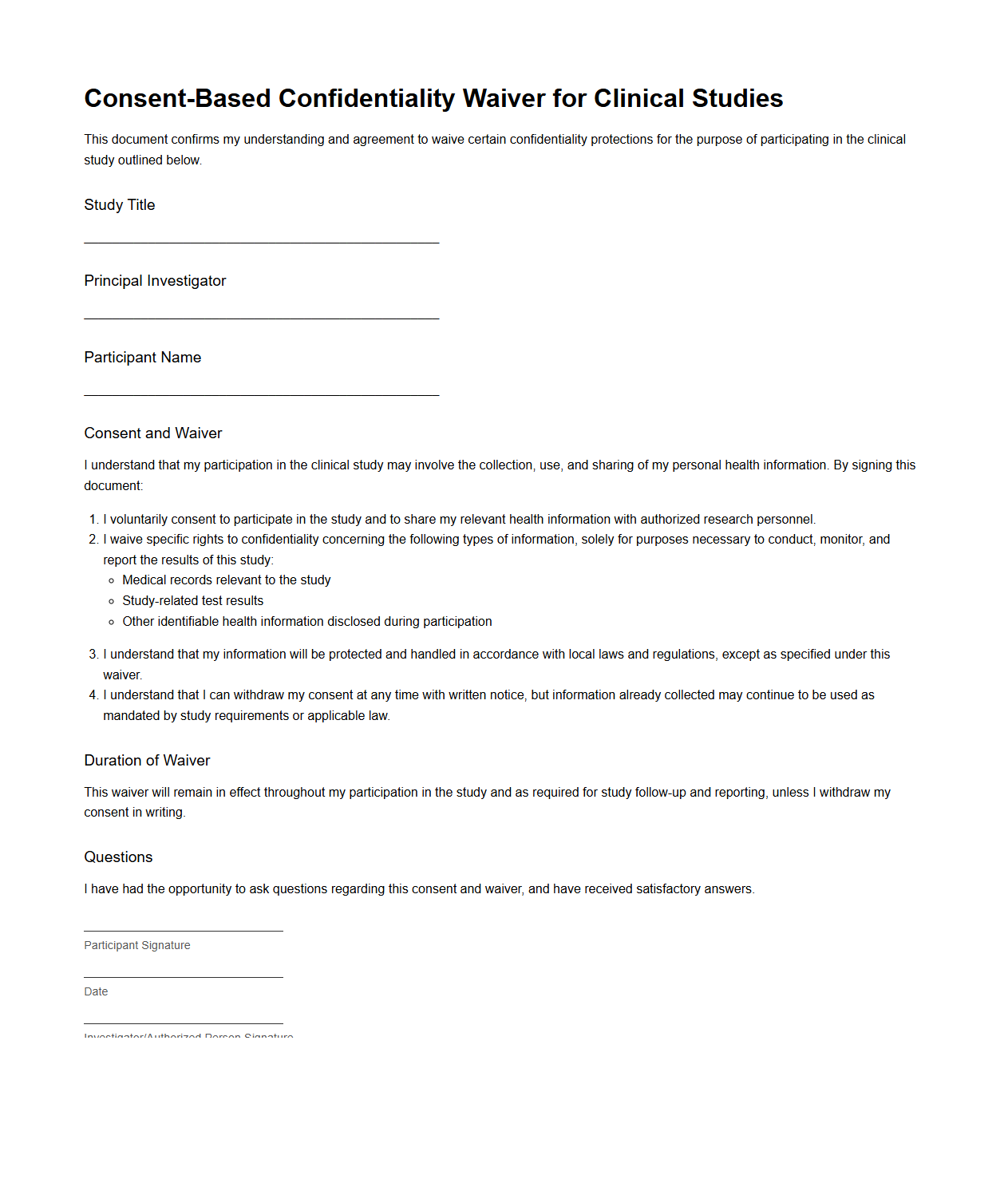
Consent-Based Confidentiality Waiver for Clinical Studies
A
Consent-Based Confidentiality Waiver for clinical studies is a legal document that allows researchers to access and use a participant's private health information without violating privacy laws. This waiver facilitates compliance with regulations such as HIPAA by ensuring that participants have explicitly agreed to the disclosure of their protected health data for research purposes. It is essential for maintaining ethical standards while enabling the collection of critical data needed for scientific progress.
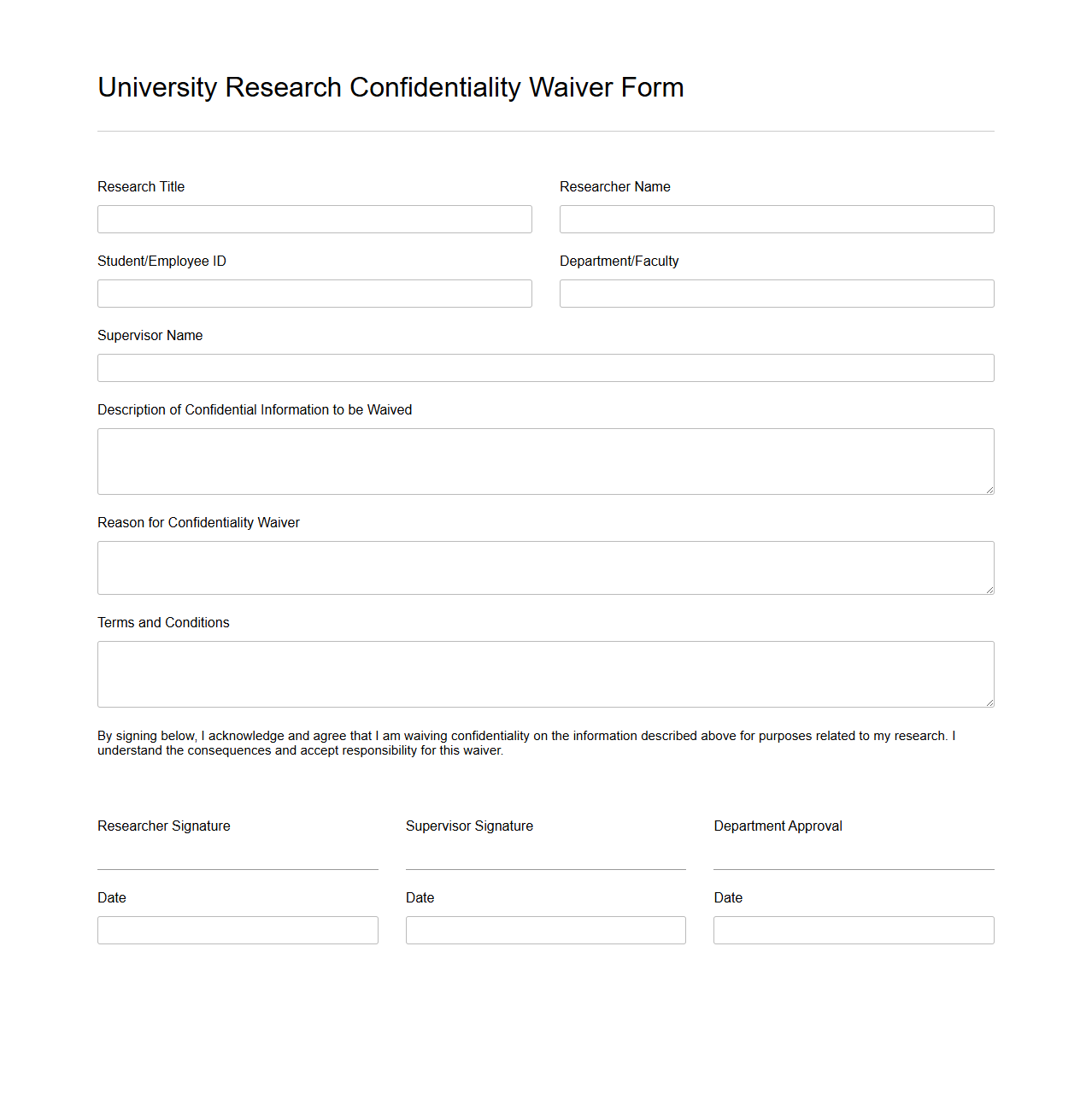
University Research Confidentiality Waiver Form
The
University Research Confidentiality Waiver Form is a legal document that grants permission to share or disclose specific confidential information related to research projects within a university setting. This form ensures that sensitive data, proprietary methods, or personal information are handled according to agreed privacy standards while allowing necessary communication with authorized parties. Researchers and participants sign this waiver to acknowledge and accept the terms governing data confidentiality and its potential use or sharing.
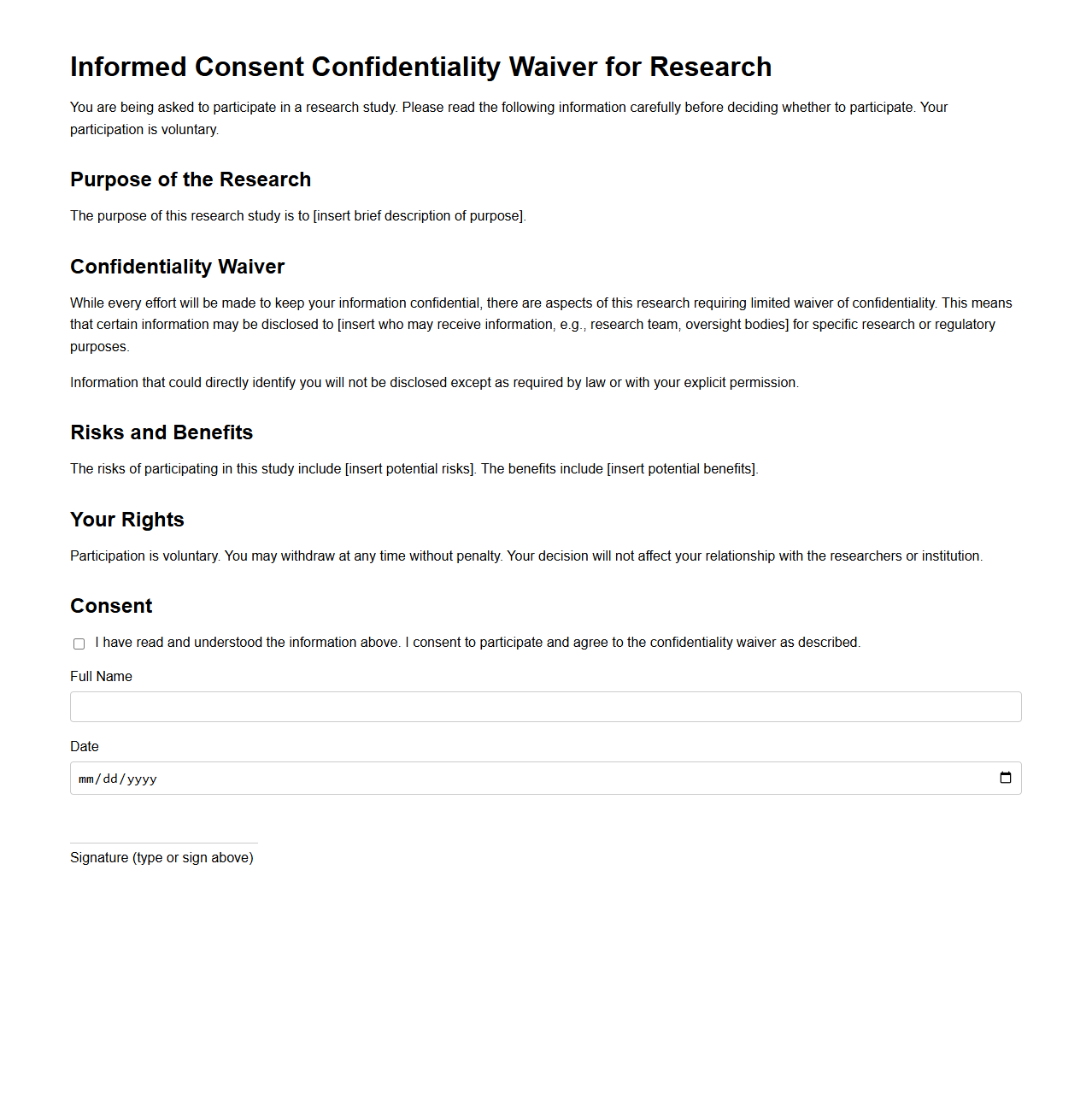
Informed Consent Confidentiality Waiver for Research
The
Informed Consent Confidentiality Waiver for Research document permits researchers to access identifiable participant information without obtaining standard confidentiality protections, often required when full anonymity cannot be assured. This waiver is granted by Institutional Review Boards (IRBs) under specific regulatory criteria, ensuring that potential risks to participants' privacy are minimized and justified by the research benefits. Researchers must clearly explain the scope and limitations of confidentiality to participants, maintaining ethical standards while enabling critical data collection for scientific studies.
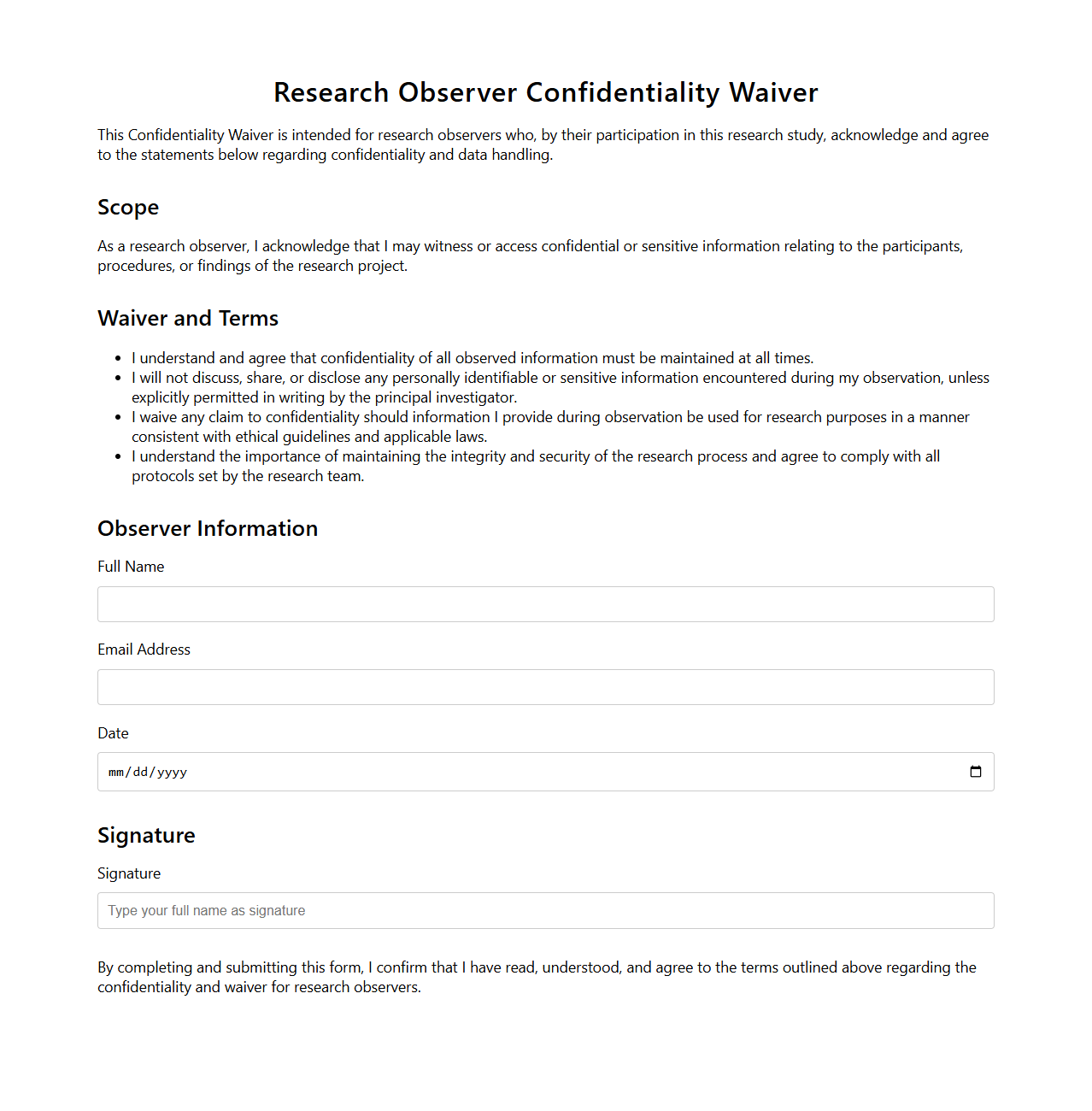
Research Observer Confidentiality Waiver Document
The
Research Observer Confidentiality Waiver Document is a formal agreement that allows researchers to access sensitive information or data during an observation study while ensuring confidentiality protections are understood and waived as necessary. This document typically outlines the scope of confidentiality, the type of information being observed, and the responsibilities of the observer regarding privacy and nondisclosure. It is essential in studies where observers need permission to review confidential materials without breaching privacy laws or ethical guidelines.
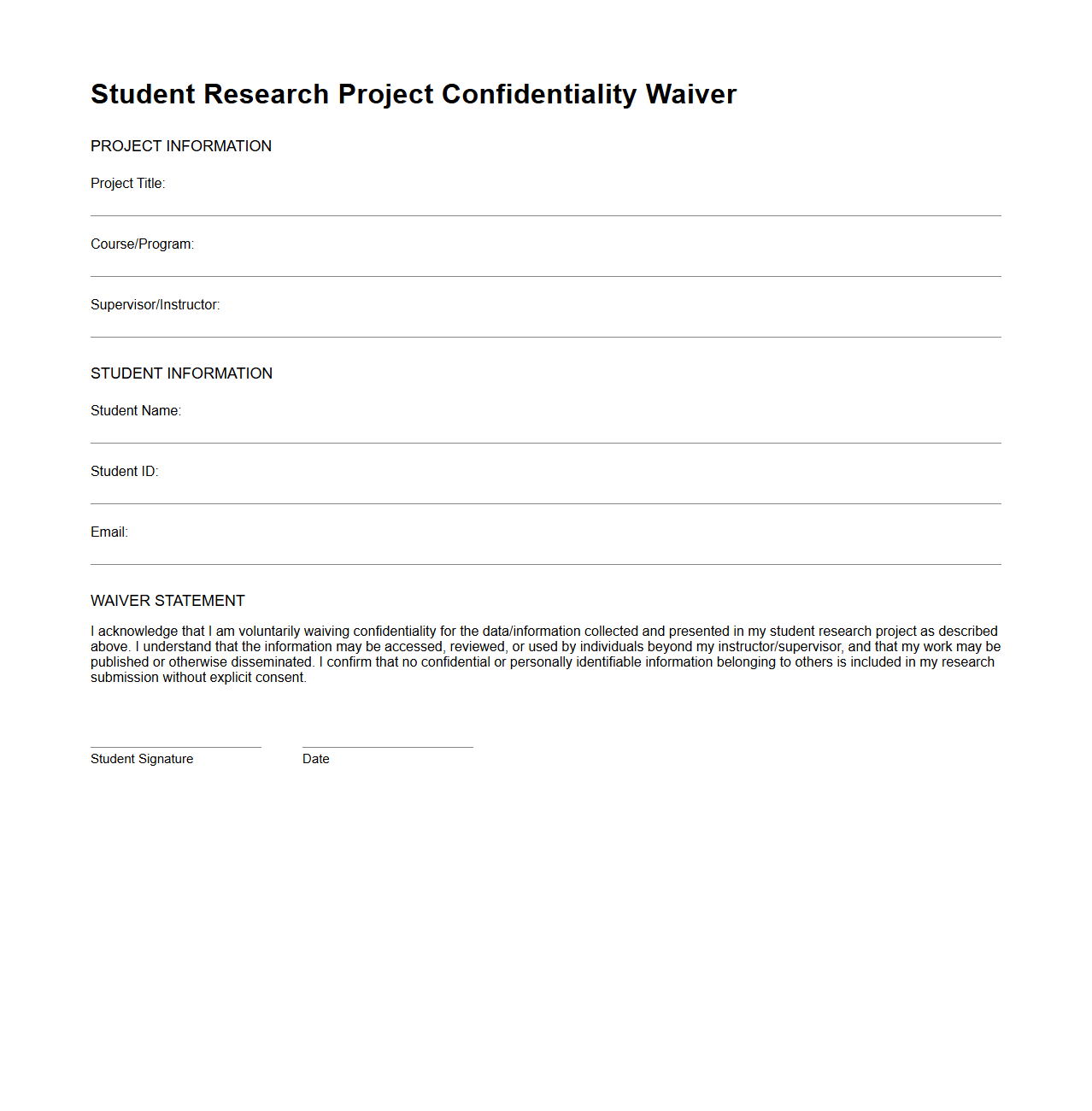
Student Research Project Confidentiality Waiver Template
A
Student Research Project Confidentiality Waiver Template is a legal document that allows students to waive confidentiality rights related to their research projects. This template ensures that sensitive information or proprietary data shared during the research can be disclosed to authorized parties without legal repercussions. It is essential for protecting both the student's intellectual property and the interests of collaborating institutions.
What key elements must a Blank Confidentiality Waiver include for research participants' informed consent?
A Blank Confidentiality Waiver must clearly define the scope of data collection, usage, and protection measures to obtain valid informed consent. It should explicitly state participants' rights, including confidentiality guarantees and the limits of data sharing. Additionally, the waiver must outline the duration of data retention and the procedures for withdrawal of consent.
How does IRB approval impact the wording of a Blank Confidentiality Waiver for studies?
IRB approval ensures that the waiver language adheres to ethical standards and regulatory requirements, promoting participant safety and data protection. The IRB may require specific phrases to clarify risks, benefits, and confidentiality safeguards in the waiver. Consequently, the waiver wording becomes aligned with institutional and federal guidelines for human subjects research.
Which data-sharing scenarios require explicit mention in the waiver's terms?
Any sharing of data with third parties, including collaborators, sponsors, or public databases, must be detailed explicitly in the waiver. Data sharing for future research purposes or de-identified data dissemination also requires clear participant notification. Transparency in these scenarios helps uphold participant trust and legal compliance.
How should blank fields be structured to ensure participant-specific customization?
Blank fields should be clearly labeled with prompts that guide accurate and complete participant information entry. Fields must accommodate various data types, such as names, dates, and study-specific details, ensuring flexibility. Properly structured blanks facilitate personalized consent documentation and reduce errors during participant enrollment.
What clauses address third-party data access in a research confidentiality waiver?
Clauses regarding third-party data access must specify who may access the data, the purpose of access, and conditions for maintaining confidentiality. They should include limitations on data use, data security measures, and any obligations third parties have toward protecting participant information. Such clauses reinforce accountability and protect participant privacy throughout the research process.