Blank Non-Discrimination Policy Framework Template
The
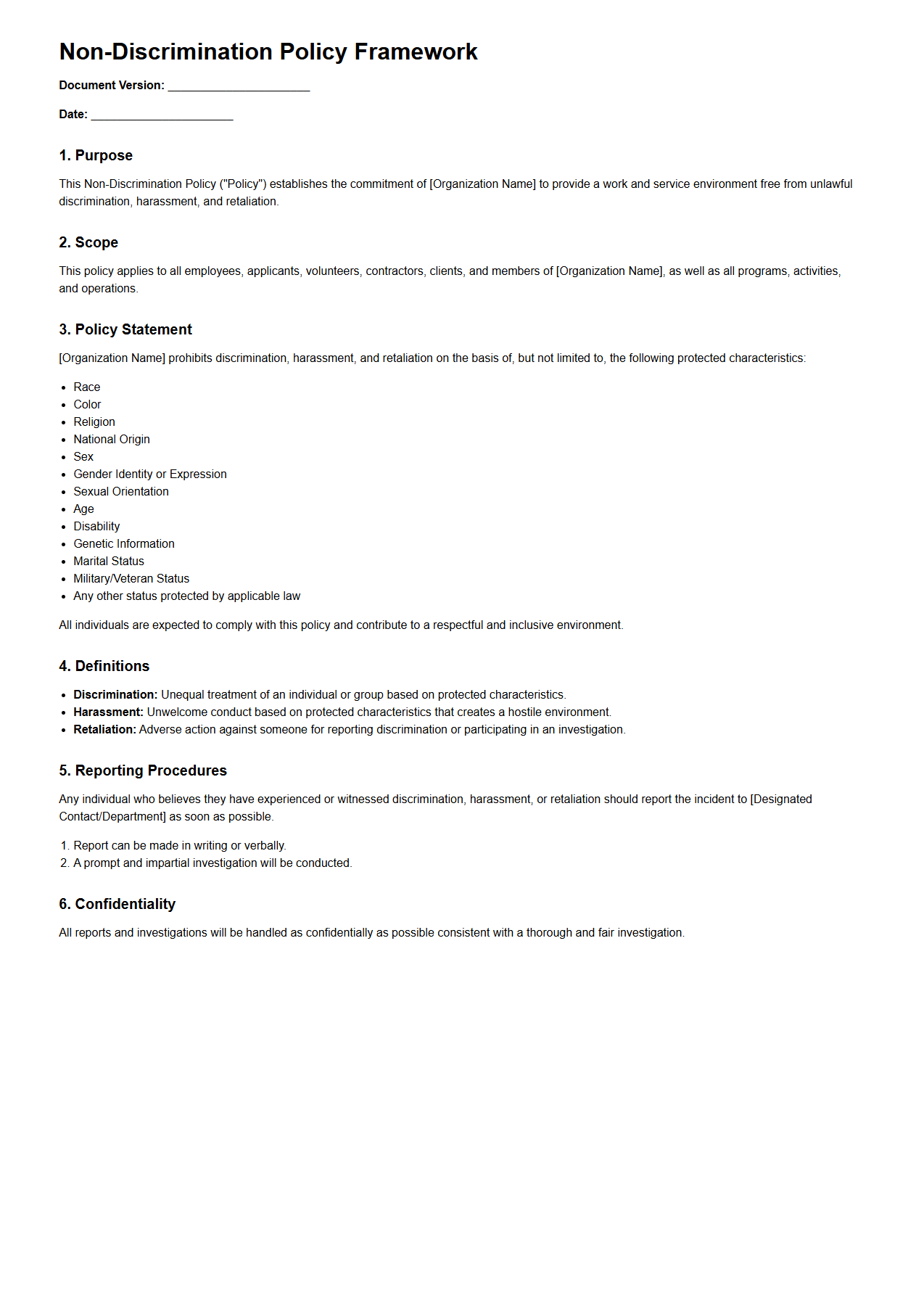
Blank Non-Discrimination Policy Framework Template document serves as a foundational guide for organizations to establish clear and comprehensive policies that prohibit discrimination based on race, gender, age, religion, disability, or other protected characteristics. This template provides structured sections for outlining the scope, definitions, reporting mechanisms, and enforcement procedures to ensure equitable treatment in workplaces or institutions. It helps organizations comply with legal standards while promoting an inclusive and respectful environment for all stakeholders.
Basic Non-Discrimination Policy Statement Outline
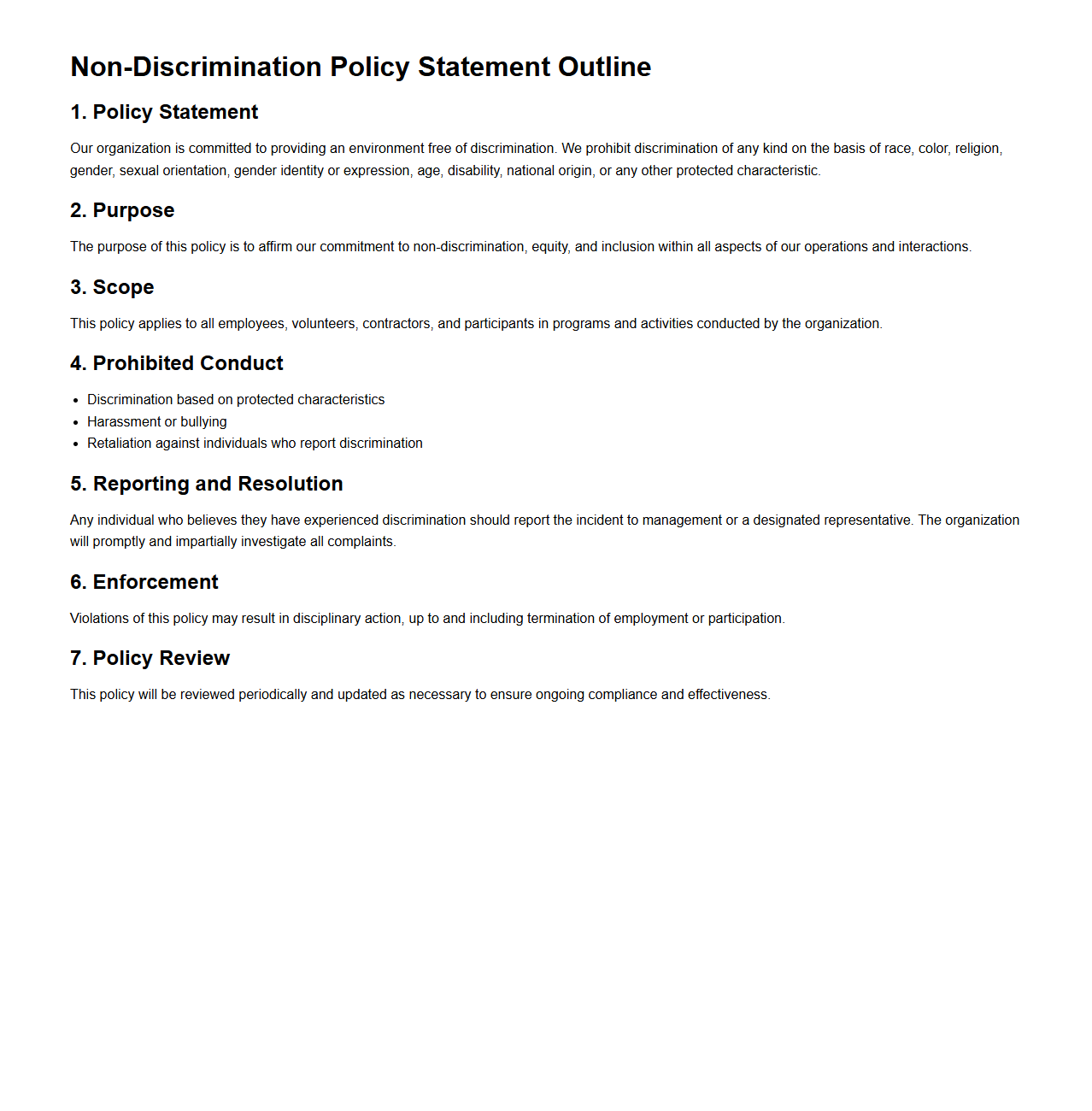
The Basic Non-Discrimination Policy Statement Outline document serves as a clear framework to communicate an organization's commitment to ensuring equal treatment and preventing discrimination in the workplace or other environments. It typically includes key principles, prohibited behaviors, protected classes, and compliance guidelines designed to promote fairness and legal adherence. This outline is essential for fostering an inclusive culture and minimizing the risk of discrimination claims.
Non-Discrimination PolicyNon-Discrimination Code of Conduct Draft Template
The
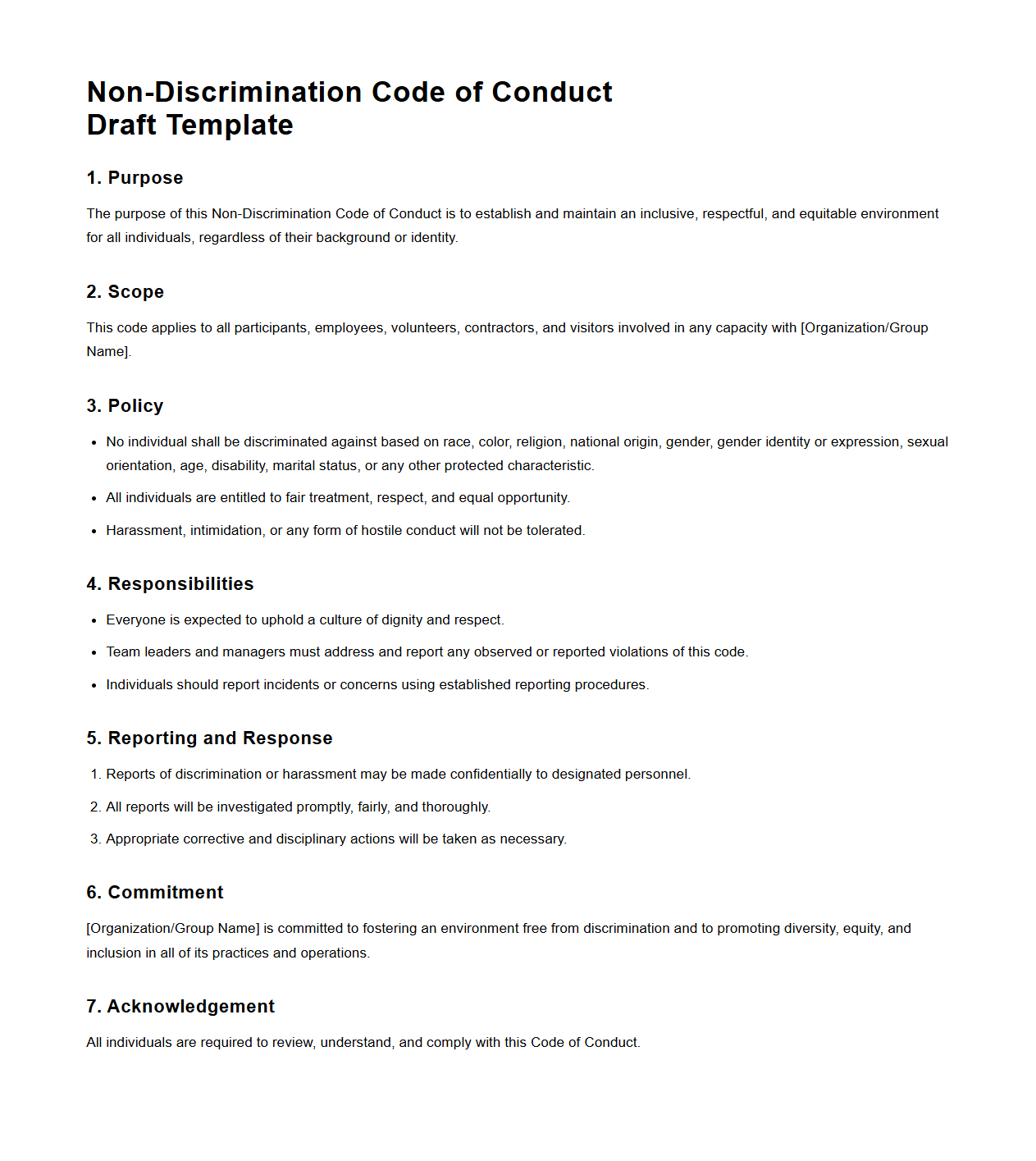
Non-Discrimination Code of Conduct Draft Template document outlines a comprehensive set of guidelines aimed at preventing discrimination in the workplace or organizational environment. It establishes clear standards for behavior, ensuring equal treatment regardless of race, gender, age, religion, disability, or other protected characteristics. This template serves as a foundational tool for organizations to promote inclusivity, protect employee rights, and maintain a respectful and equitable culture.
General Equal Opportunity Policy Format
The
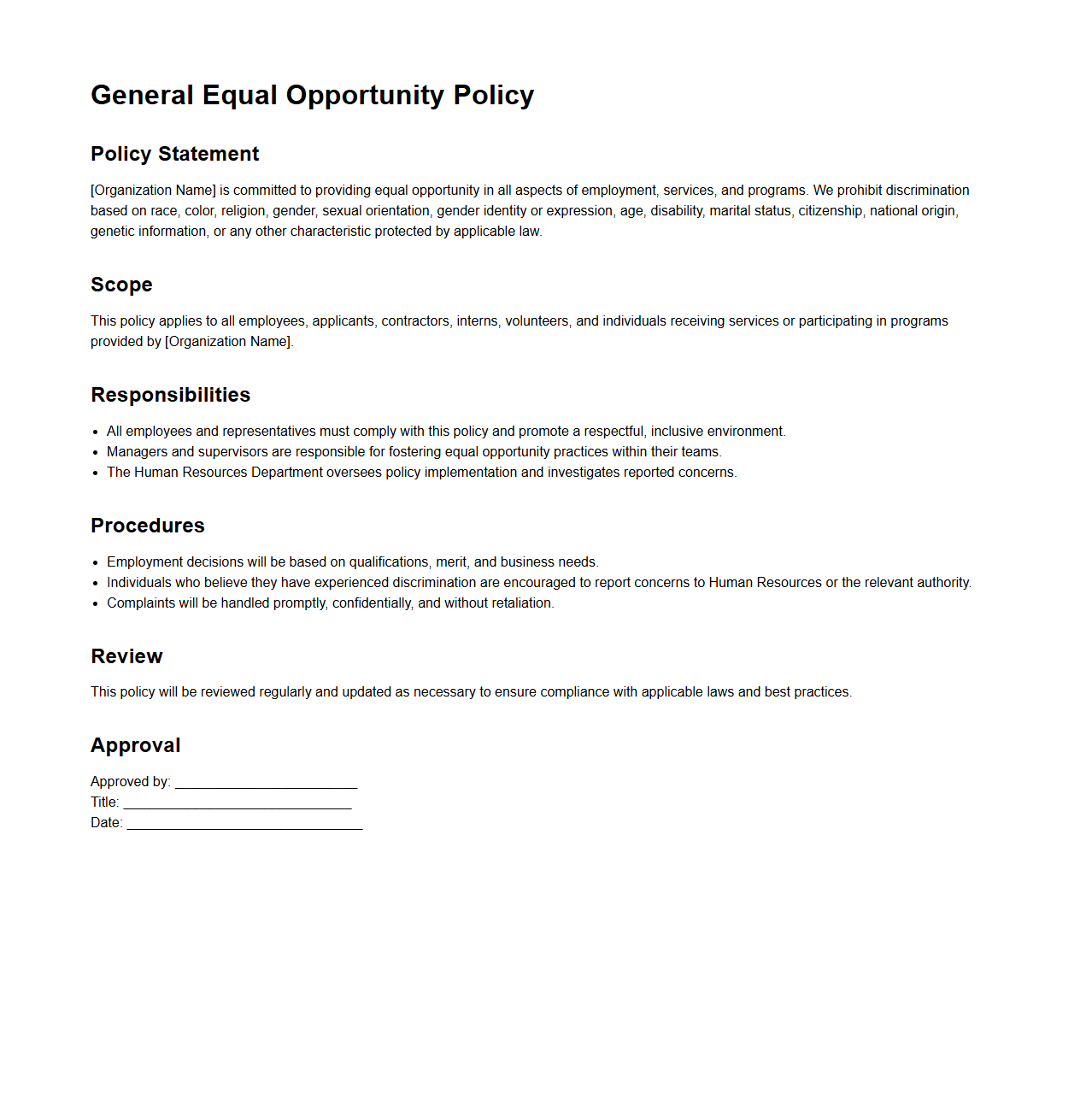
General Equal Opportunity Policy Format document outlines the structured framework organizations use to ensure fair treatment and non-discrimination across all employment practices. It defines the commitments and procedures to prevent bias based on race, gender, age, disability, or other protected characteristics in hiring, promotions, and workplace conduct. This format serves as a critical tool for promoting diversity, compliance with legal standards, and fostering an inclusive work environment.
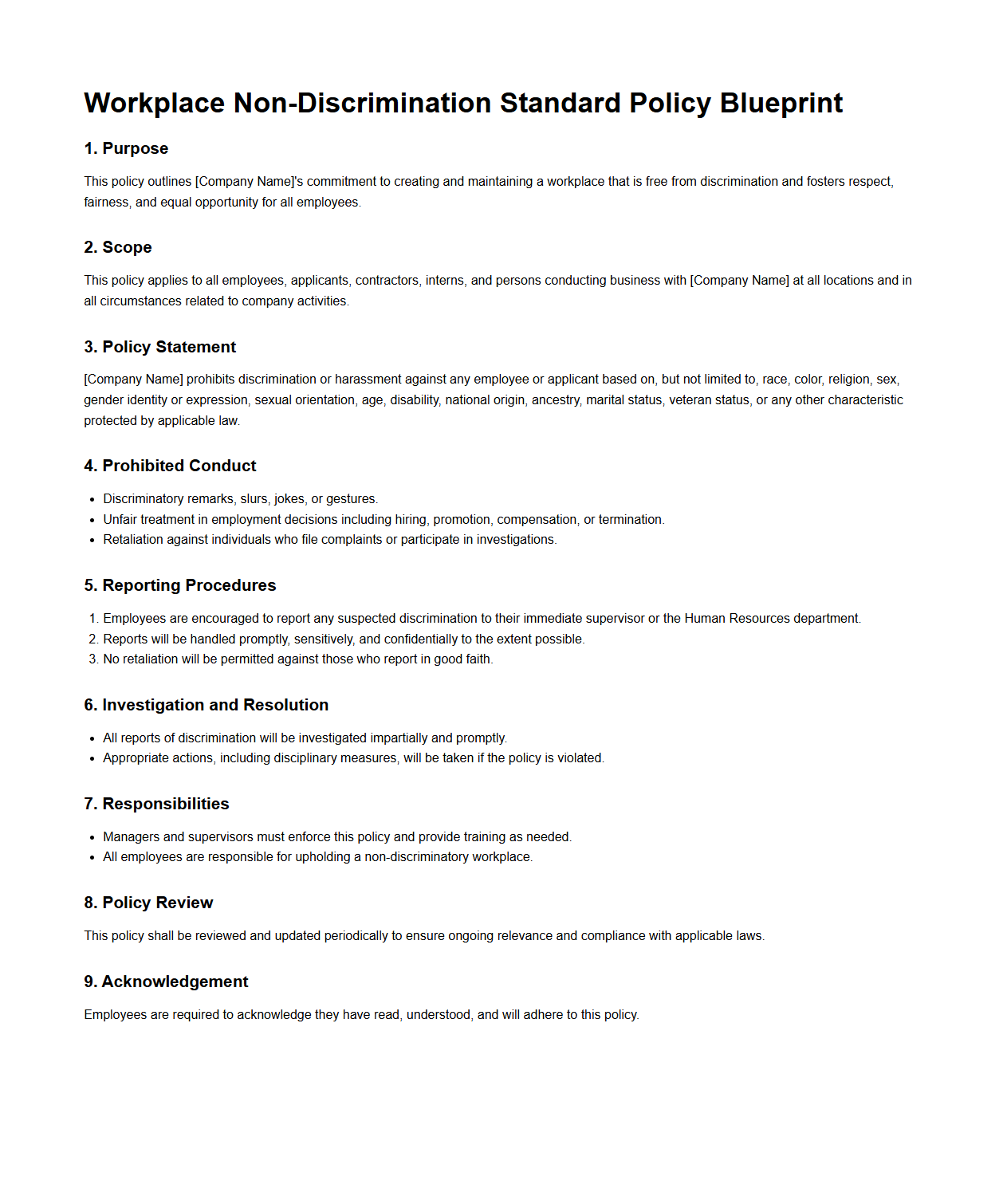
Workplace Non-Discrimination Standard Policy Blueprint
The
Workplace Non-Discrimination Standard Policy Blueprint document provides a comprehensive framework for organizations to establish clear guidelines that prohibit discrimination based on race, gender, age, disability, religion, or sexual orientation. It outlines best practices for creating an inclusive work environment, ensuring compliance with legal requirements, and promoting equal opportunities for all employees. This blueprint serves as a critical tool for HR professionals and management to foster diversity, equity, and fairness in the workplace.
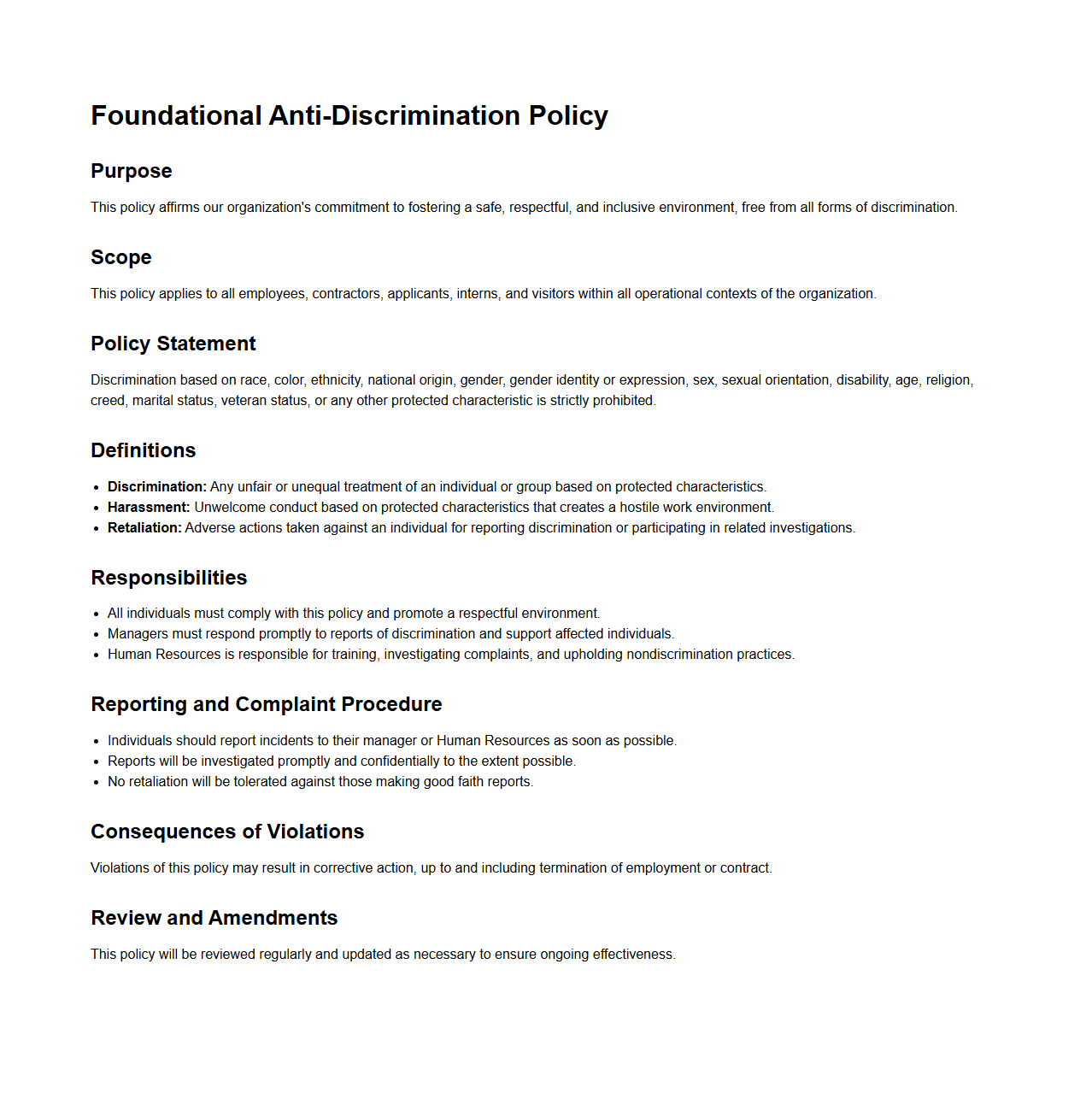
Foundational Anti-Discrimination Policy Structure Sample
The
Foundational Anti-Discrimination Policy Structure Sample document provides a comprehensive framework for organizations to establish clear and effective anti-discrimination guidelines. It outlines essential principles, legal obligations, and actionable measures to prevent discrimination and promote diversity and inclusion in the workplace. This standardized template serves as a practical tool for ensuring compliance with human rights laws and fostering a respectful, equitable environment for all employees.
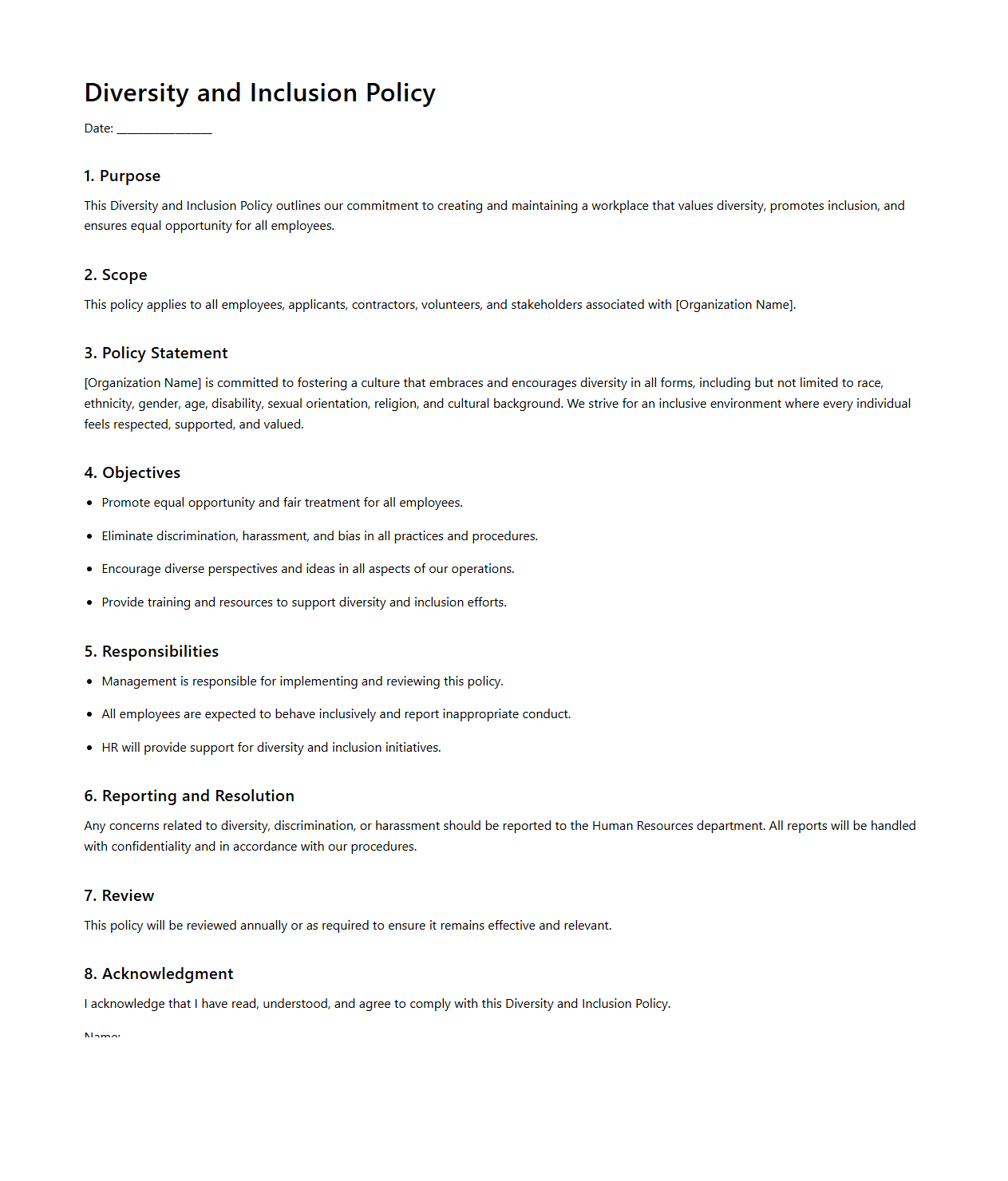
Diversity and Inclusion Policy Draft Template
A
Diversity and Inclusion Policy Draft Template document serves as a foundational guide for organizations to establish clear principles and strategies promoting workplace diversity and equal opportunities. It outlines the commitment to creating an inclusive environment that respects differences in race, gender, age, ethnicity, disability, and other protected characteristics. This template aids in ensuring compliance with legal standards while fostering a culture of respect and belonging for all employees.
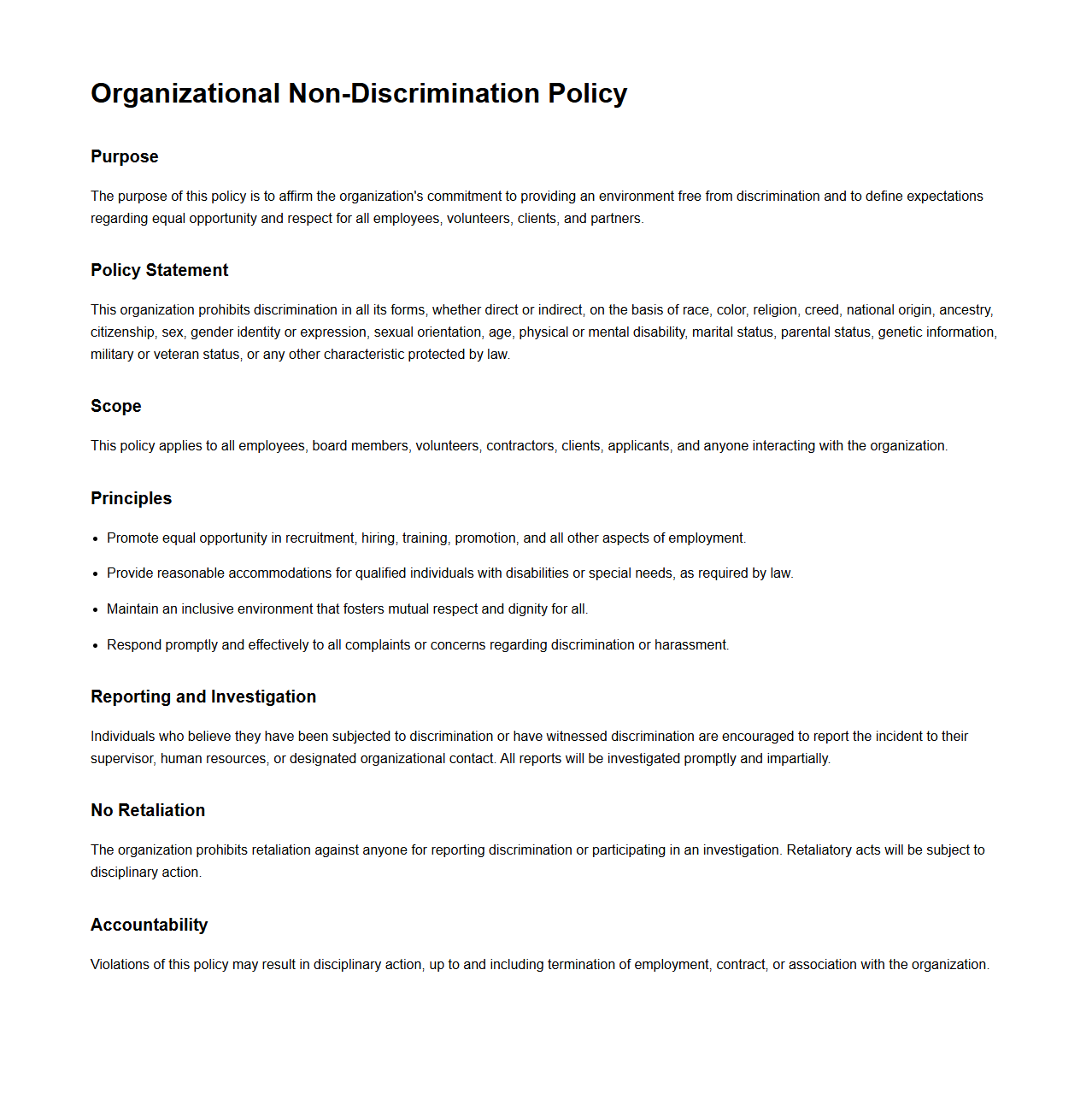
Organizational Non-Discrimination Policy Model
The
Organizational Non-Discrimination Policy Model document outlines a comprehensive framework to prevent discrimination within a company or institution, ensuring equal treatment regardless of race, gender, age, religion, or disability. It serves as a guideline for establishing clear standards, procedures, and responsibilities to promote a respectful and inclusive workplace environment. This model helps organizations comply with legal requirements while fostering diversity and equality.
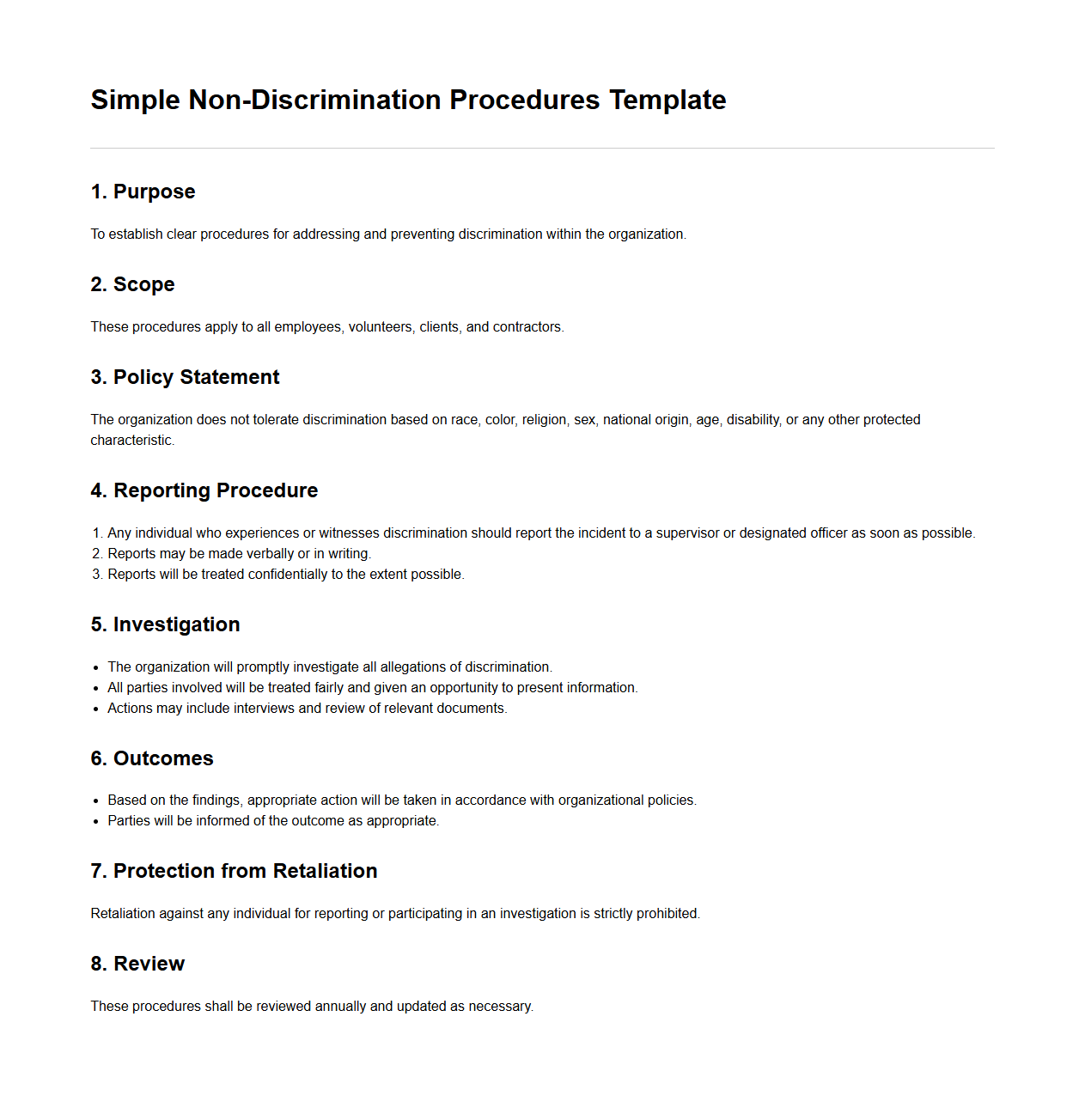
Simple Non-Discrimination Procedures Template
A
Simple Non-Discrimination Procedures Template document is a structured guide used by organizations to establish and enforce policies that prevent discrimination in the workplace or services. It outlines clear steps and protocols for handling complaints, ensuring compliance with legal standards such as the Civil Rights Act or the Equal Employment Opportunity Commission (EEOC) guidelines. This template helps promote a fair and inclusive environment by providing transparent procedures for addressing discrimination issues effectively.
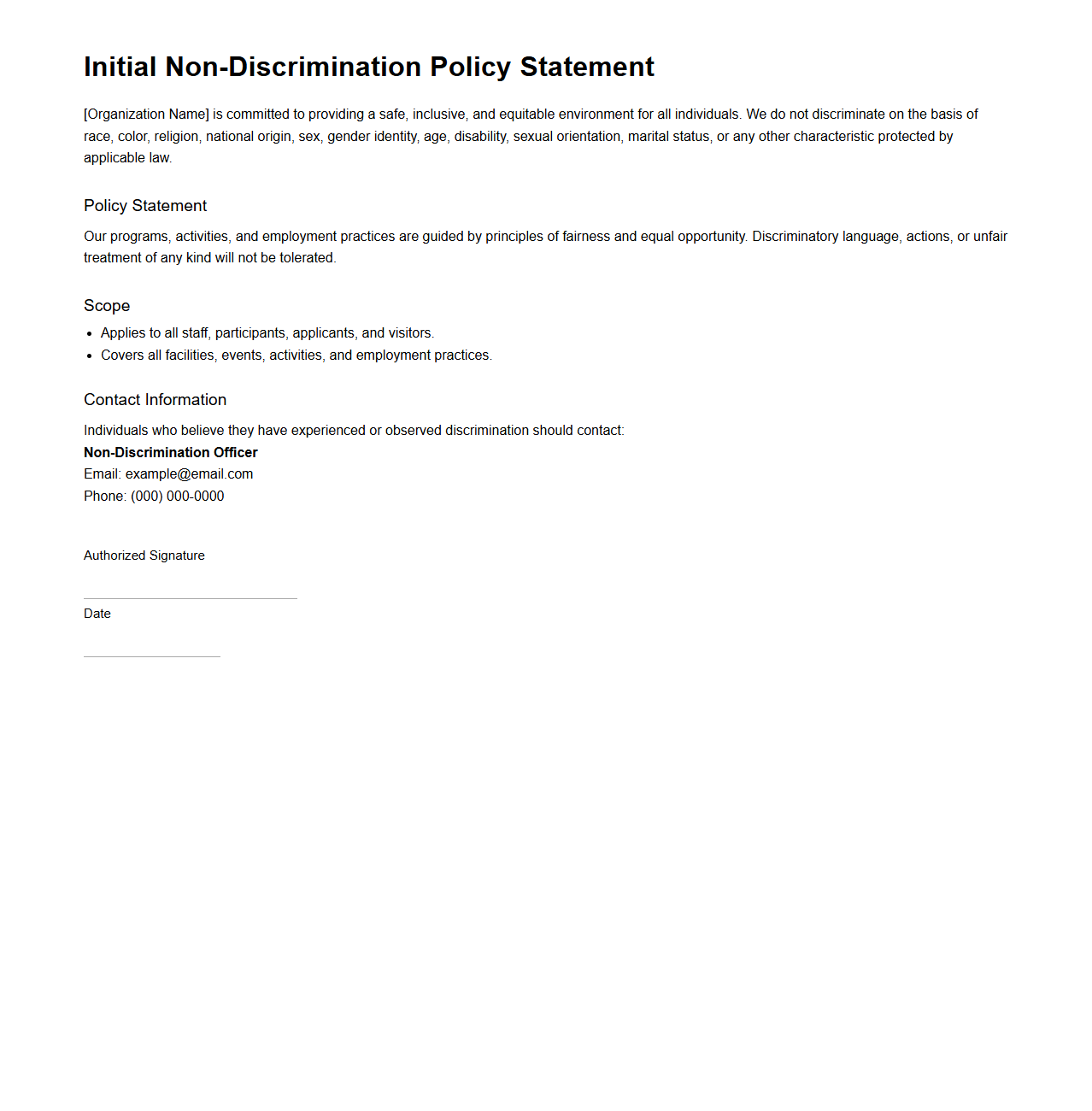
Initial Non-Discrimination Policy Statement Layout
The Initial Non-Discrimination Policy Statement Layout document outlines a company's commitment to providing equal employment opportunities without bias based on race, gender, age, disability, or other protected characteristics. This
policy statement serves as a foundational framework for promoting a diverse and inclusive workplace, ensuring compliance with federal regulations such as the EEOC guidelines. It establishes clear standards and expectations for nondiscriminatory practices in hiring, promotion, and workplace conduct.
What specific language should a Blank Policy Guideline include to address indirect forms of discrimination?
A Blank Policy Guideline must explicitly define indirect discrimination as practices or policies that appear neutral but disproportionately impact certain groups. It should include language that prohibits actions or criteria that create unintended barriers against protected classes. Clear examples help clarify what constitutes indirect discrimination to ensure comprehensive understanding and compliance.
How can organizations document exceptions within a Non-Discrimination policy without undermining its intent?
Organizations should explicitly state any exceptions in the policy, detailing the legal or operational justifications behind them. Documentation must include criteria, scope, and authority approving these exceptions to maintain transparency. This approach safeguards the policy's integrity by ensuring exceptions do not dilute the commitment to equal opportunity.
What are best practices for referencing legal frameworks in a Blank Non-Discrimination Policy template?
Best practices involve citing current and relevant local, national, and international laws that govern non-discrimination protections. The template should include a disclaimer regarding periodic legal updates to ensure ongoing compliance. Clearly linking policy principles to established statutes reinforces legal legitimacy and organizational accountability.
How should a Blank Policy Guideline outline reporting mechanisms for suspected policy breaches?
The guideline must detail accessible and confidential reporting channels for employees to raise concerns without fear of retaliation. It should specify the roles responsible for handling complaints and the expected timeline for responses. Including protection measures for whistleblowers emphasizes a safe and transparent reporting environment.
What documentation methods ensure consistent application of a Non-Discrimination Policy across departments?
Consistent application relies on standardized training materials, regular audits, and centralized record-keeping systems to track compliance. Departments should document incidents, resolutions, and policy revisions in a uniform format. This method promotes accountability and supports continuous improvement in organizational equity.