A Blank Confidentiality Agreement Template for Sensitive Information is a customizable legal document designed to protect confidential data shared between parties. It outlines obligations to prevent unauthorized disclosure and ensures sensitive information remains secure. This template is essential for businesses or individuals seeking to safeguard proprietary or private details during collaborations.
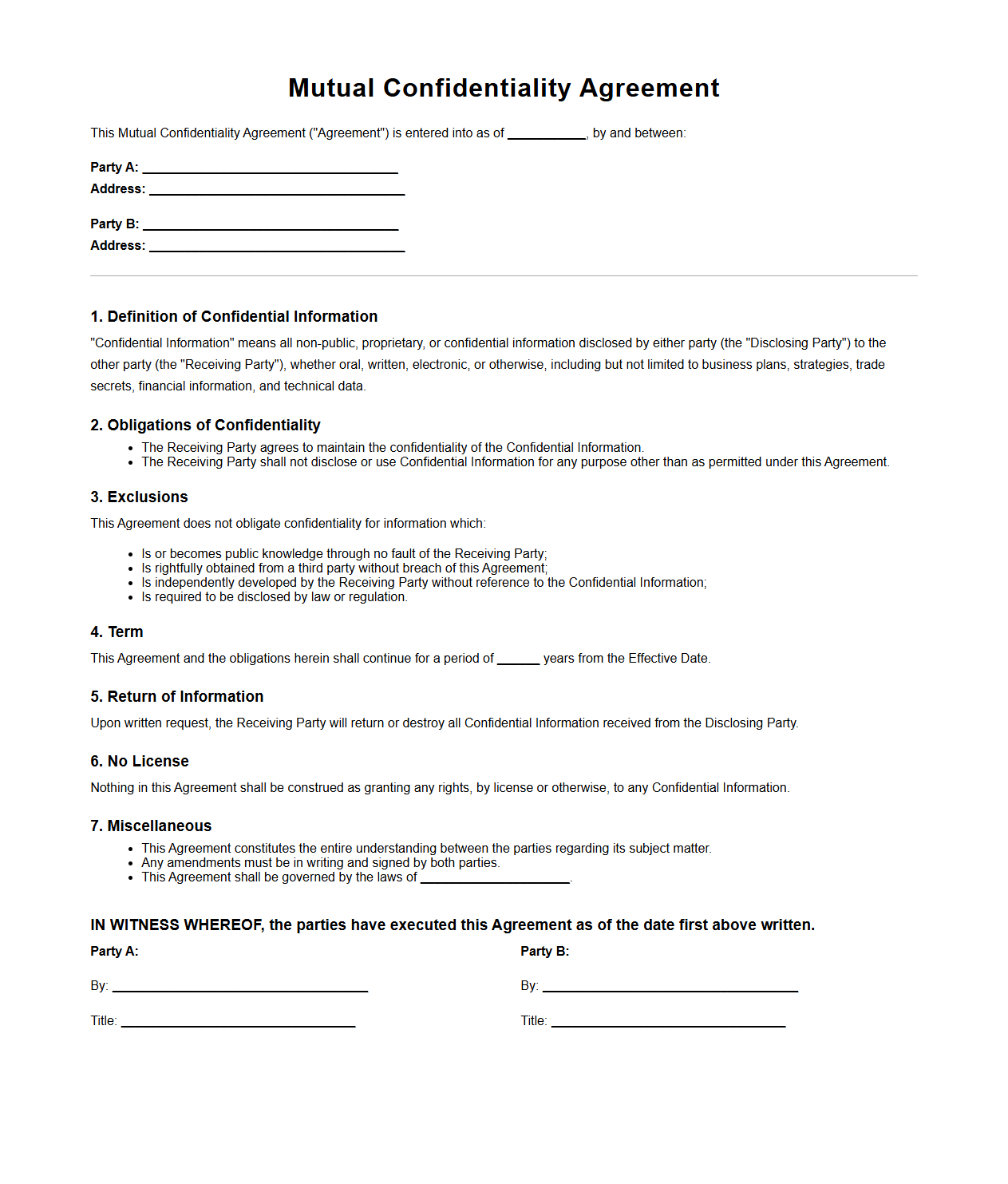
Blank Mutual Confidentiality Agreement Sample for Business Secrets
A
Blank Mutual Confidentiality Agreement Sample for Business Secrets is a template designed to protect sensitive information exchanged between two parties during business negotiations or collaborations. It ensures that proprietary information, trade secrets, and confidential data remain secure and are not disclosed to unauthorized third parties. This agreement typically outlines the obligations, duration, and scope of confidentiality to safeguard intellectual property and maintain trust between businesses.
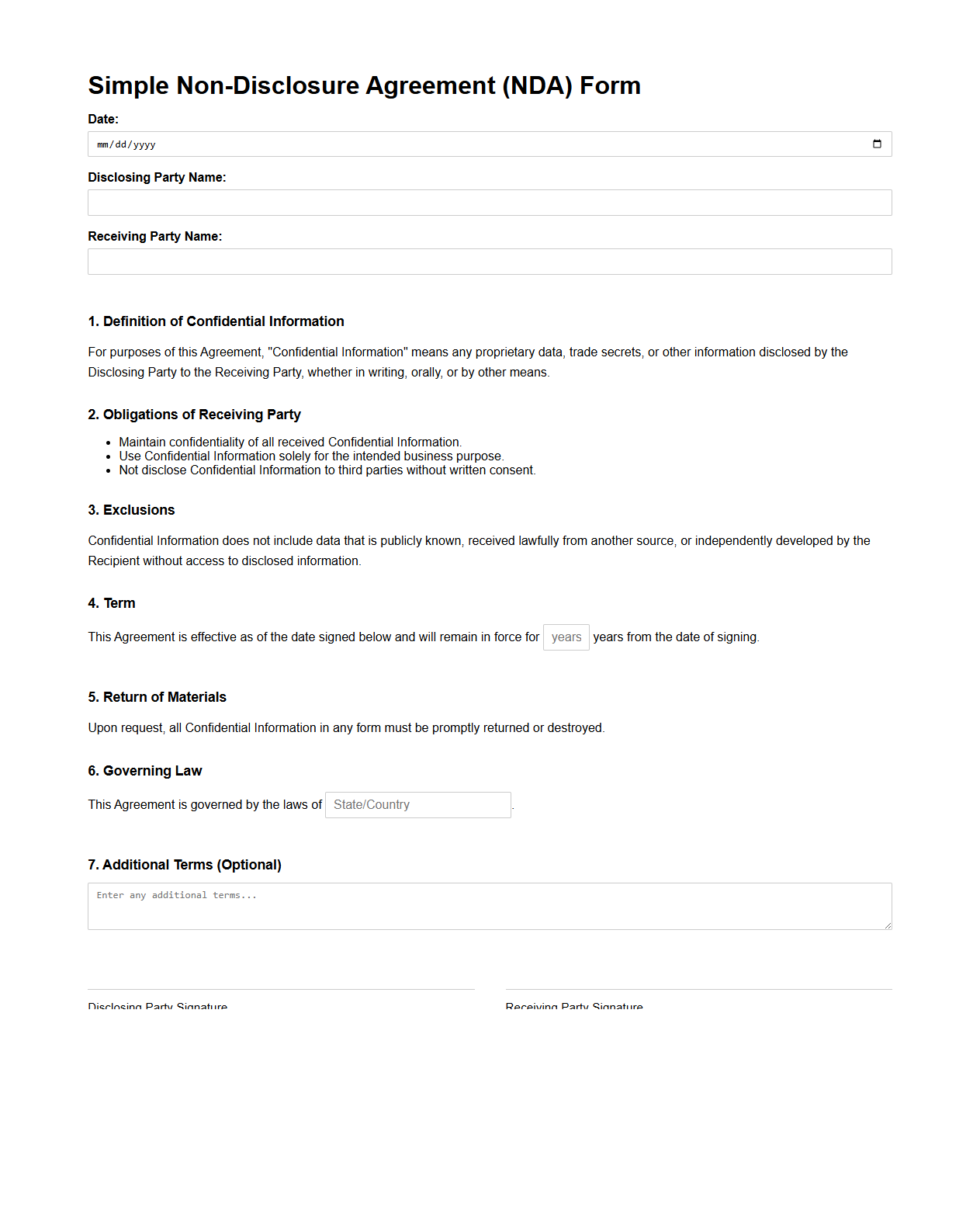
Simple Non-Disclosure Agreement Form for Proprietary Data
A
Simple Non-Disclosure Agreement (NDA) Form for Proprietary Data is a legal document designed to protect sensitive information shared between parties by ensuring confidentiality. It outlines the types of proprietary data covered, obligations of the receiving party to prevent unauthorized disclosure, and the duration of the confidentiality period. This form is crucial for businesses seeking to safeguard trade secrets, intellectual property, or other confidential information during negotiations or collaborations.
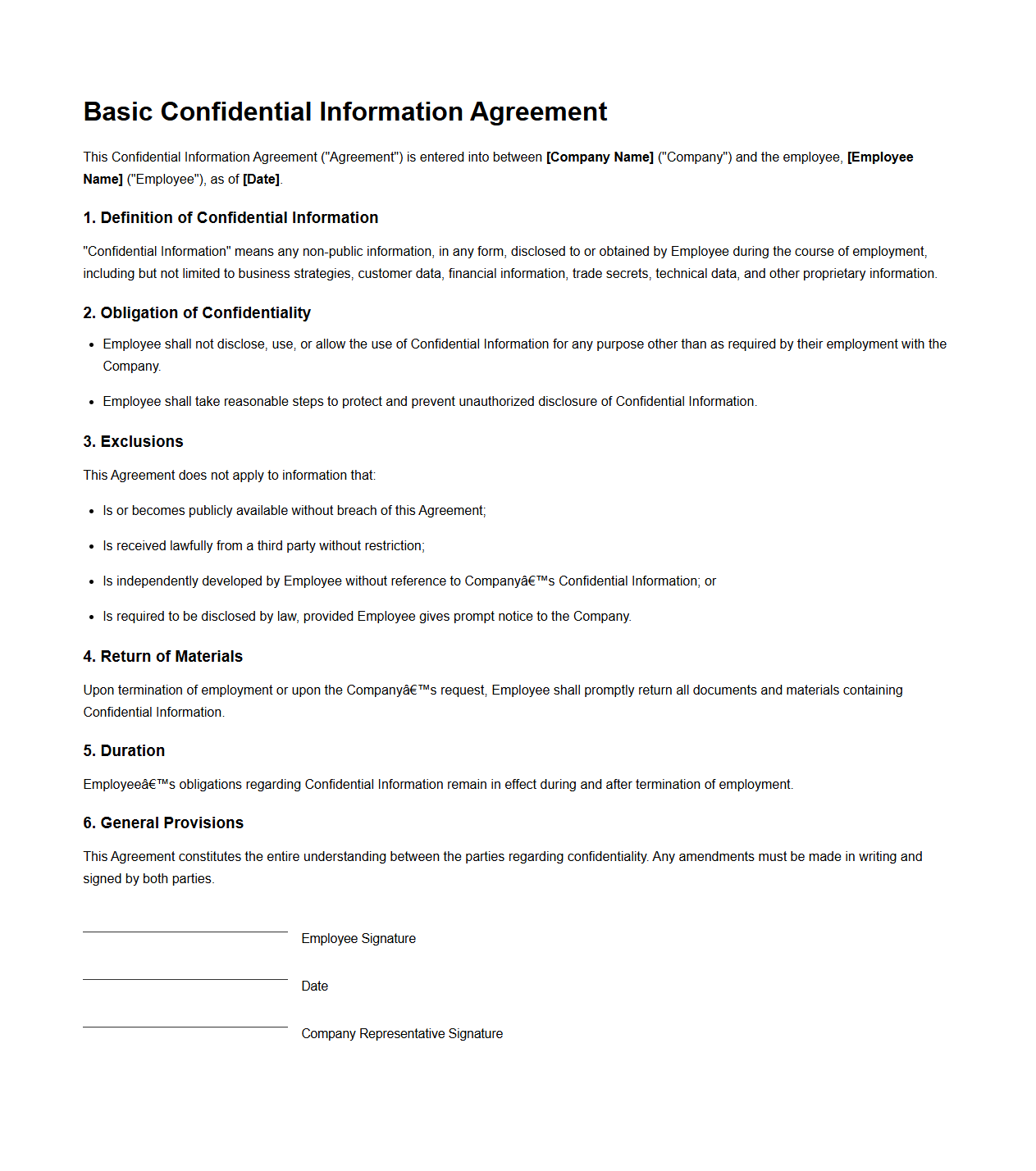
Basic Confidential Information Agreement for Employees
A
Basic Confidential Information Agreement for Employees is a legal document designed to protect sensitive company information by requiring employees to maintain confidentiality during and after their employment. It clearly defines what constitutes confidential information, including trade secrets, business strategies, and proprietary data, ensuring employees understand their obligations. This agreement helps prevent unauthorized disclosure, safeguarding the company's competitive advantage and intellectual property.
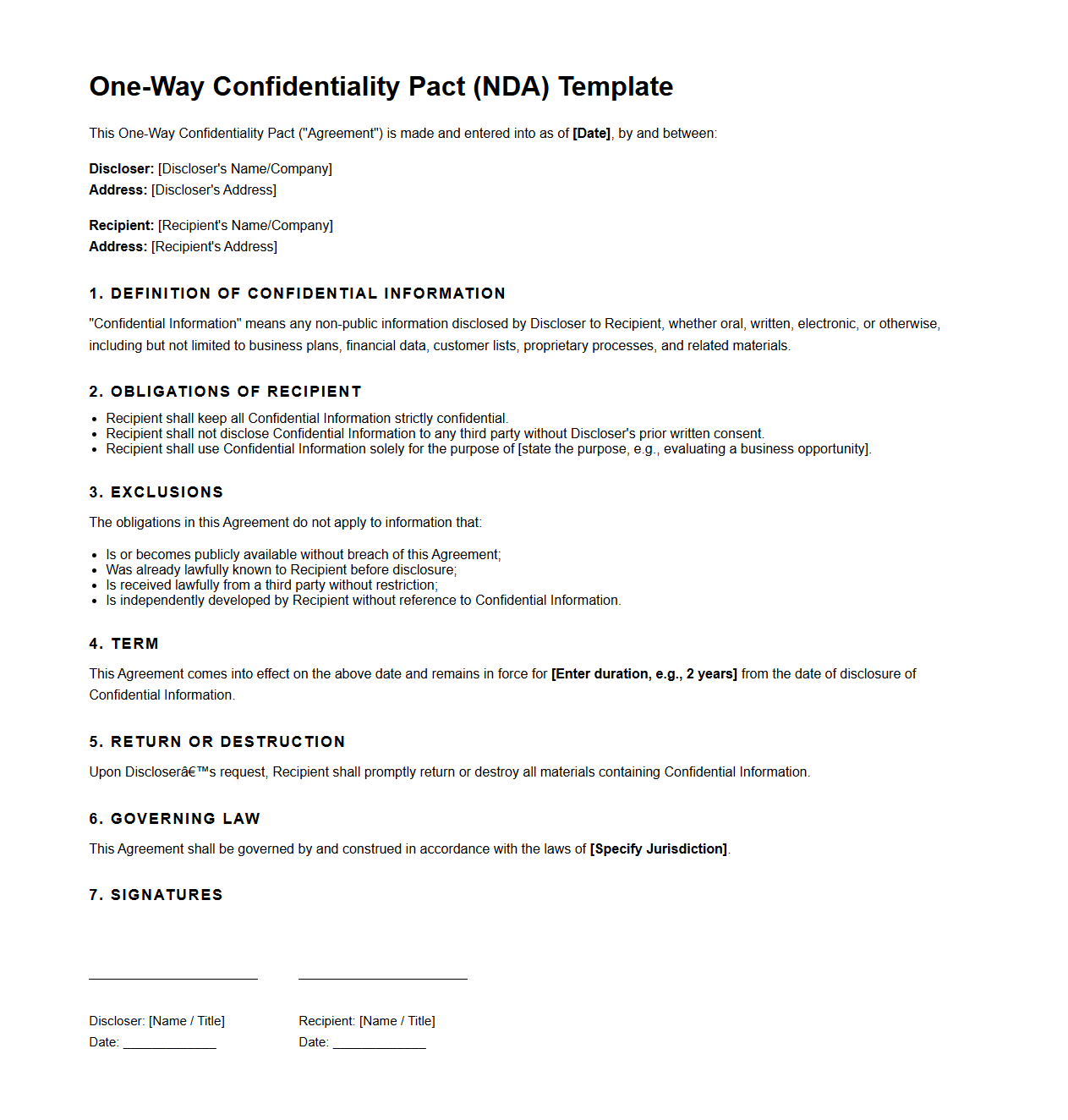
Template for One-Way Confidentiality Pact for Sensitive Content
A
Template for One-Way Confidentiality Pact for Sensitive Content is a pre-formatted legal document designed to protect proprietary or confidential information shared from one party to another. It clearly defines the obligations of the recipient to maintain secrecy and restricts the use or disclosure of sensitive data. This template ensures both parties understand the scope of confidentiality, safeguarding intellectual property, trade secrets, or delicate business information during discussions or collaborations.
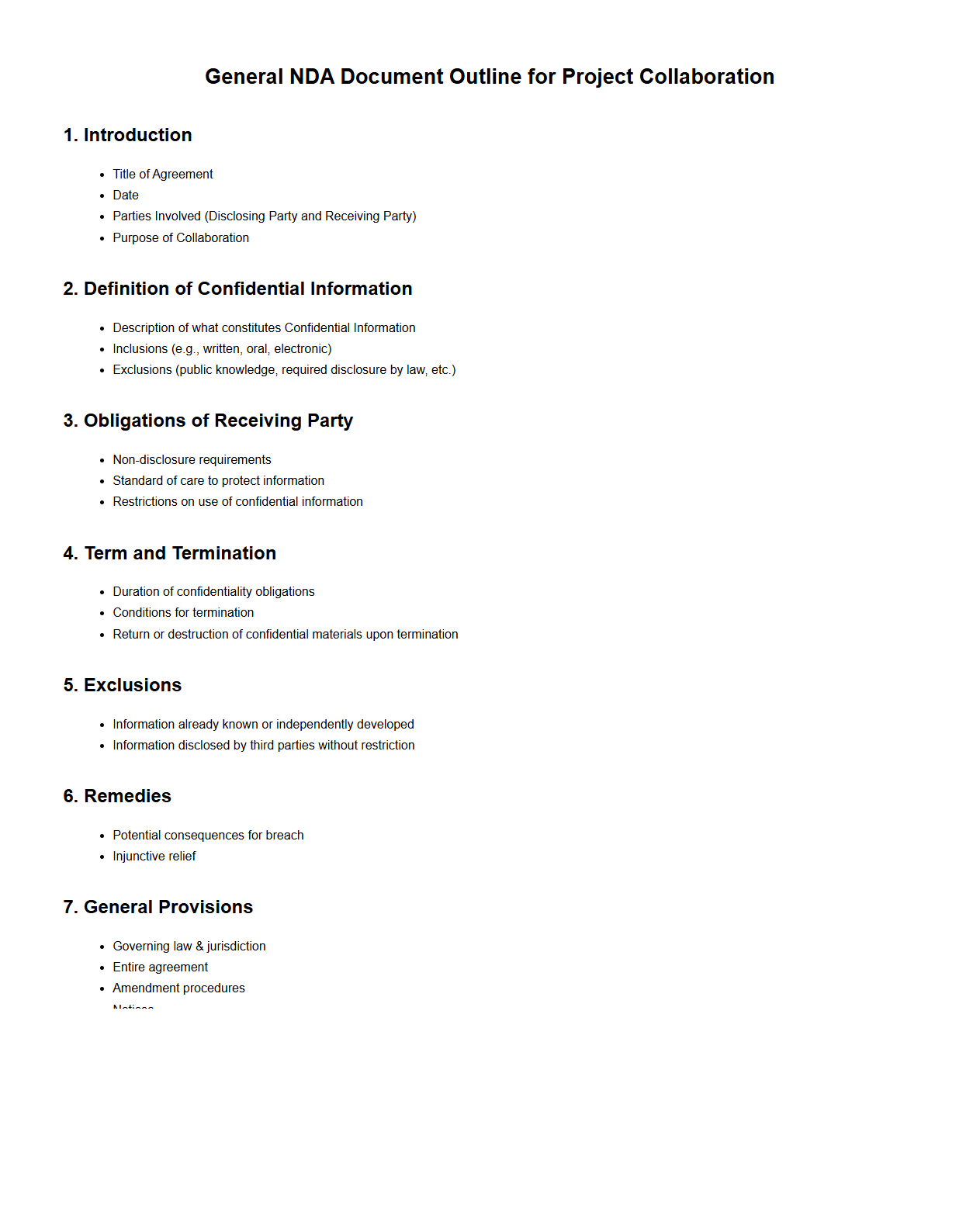
General NDA Document Outline for Project Collaboration
A
General NDA Document Outline for Project Collaboration is a structured framework that defines confidentiality terms between parties working together on a project. It typically includes sections such as definitions of confidential information, obligations of confidentiality, scope of use, and duration of the agreement. This outline ensures clear protection of sensitive information while facilitating trust and secure communication throughout the collaboration.
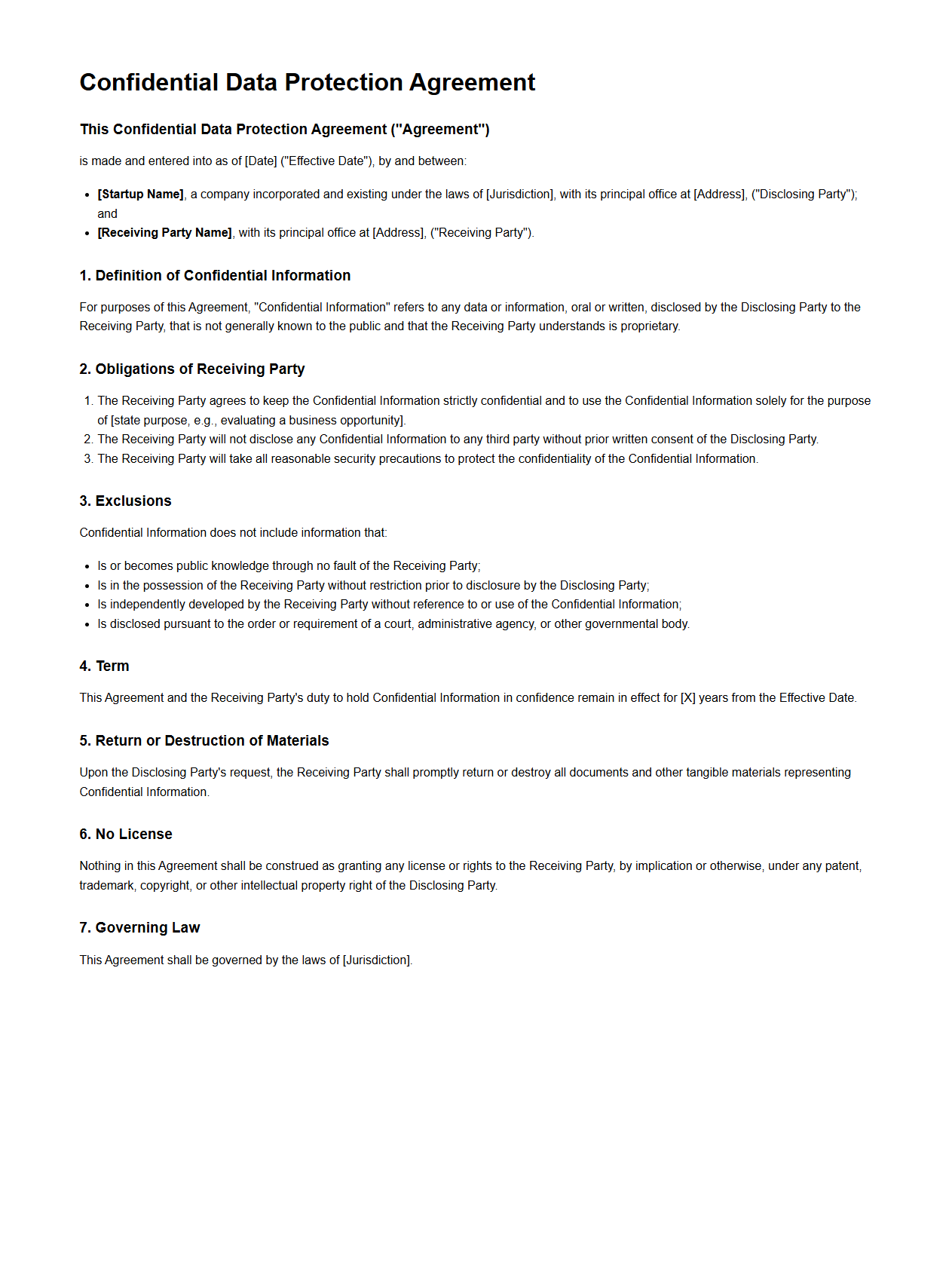
Confidential Data Protection Agreement Sample for Startups
A
Confidential Data Protection Agreement Sample for Startups is a legal template designed to help new businesses secure sensitive information by outlining the responsibilities and restrictions related to data sharing. This document typically defines key terms, specifies the scope of confidential information, and details the obligations of both parties to prevent unauthorized use or disclosure. Using such an agreement is essential for startups to safeguard proprietary data, protect intellectual property, and maintain trust with partners and investors.
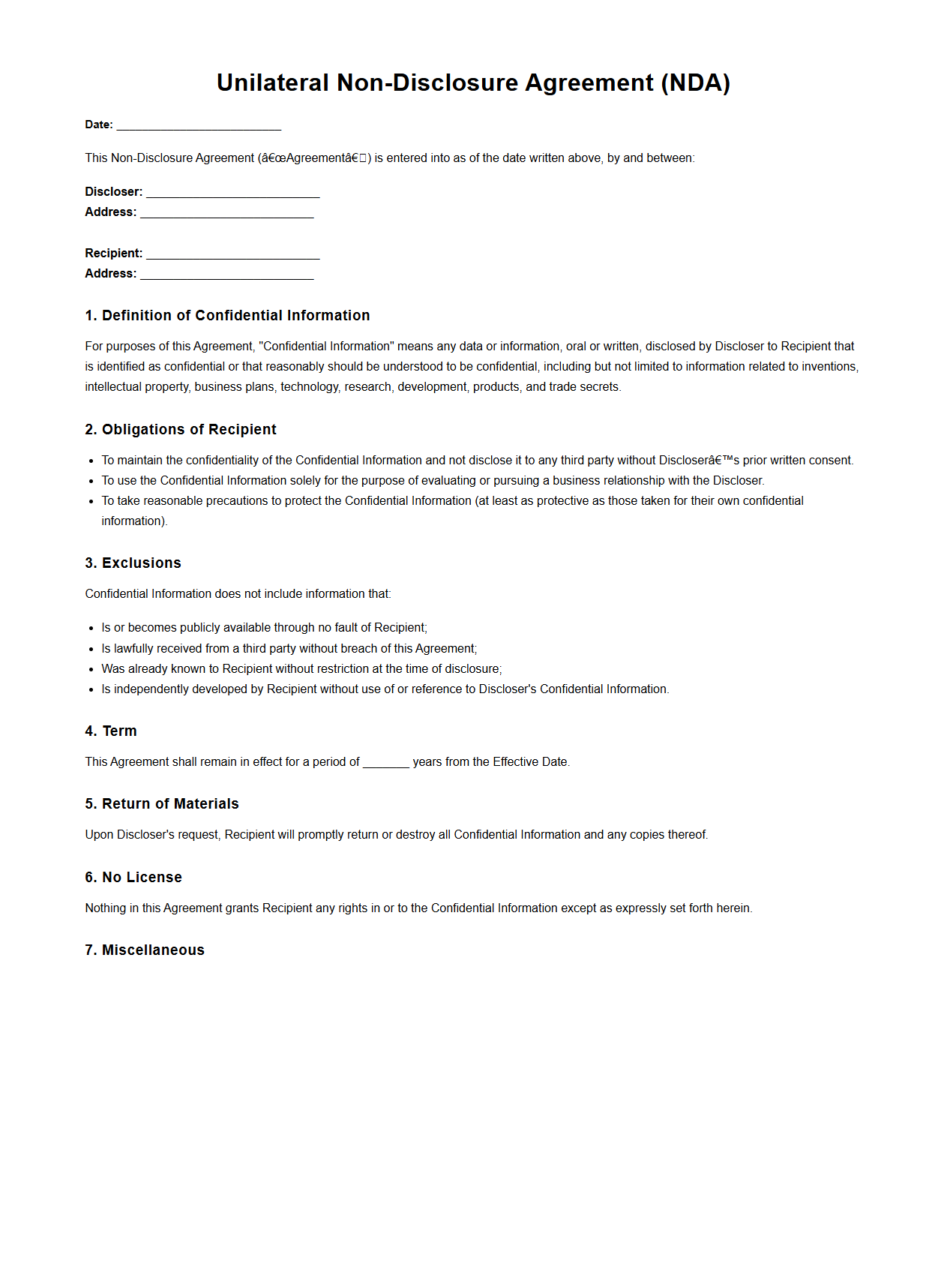
Blank Unilateral Non-Disclosure Form for Intellectual Property
A
Blank Unilateral Non-Disclosure Form for Intellectual Property is a legal document designed to protect confidential information shared by one party with another. This form ensures that the receiving party legally agrees not to disclose or misuse the intellectual property details provided. It is essential in safeguarding proprietary inventions, designs, or trade secrets during business negotiations or collaborations.
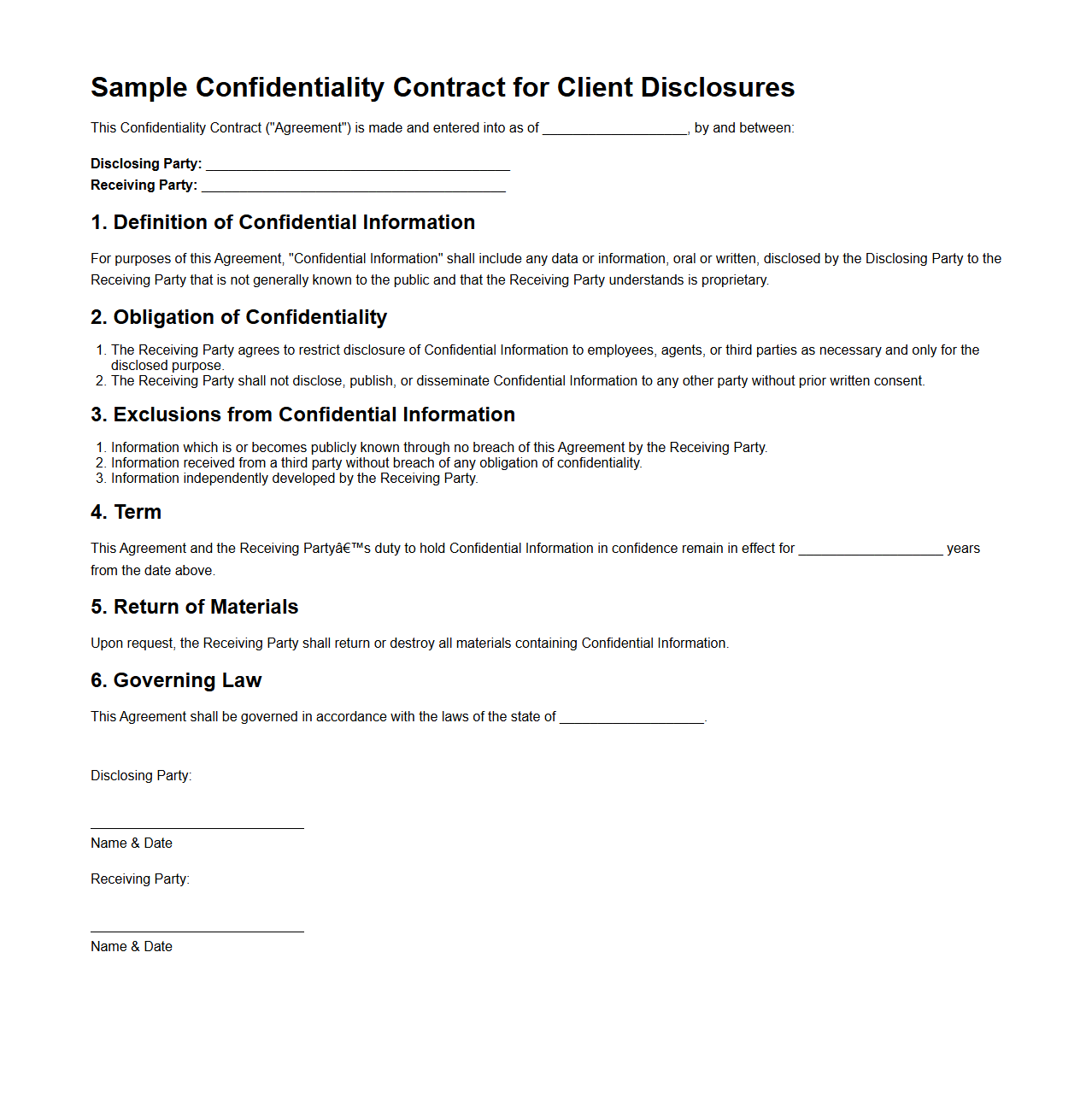
Sample Confidentiality Contract for Client Disclosures
A
Sample Confidentiality Contract for Client Disclosures document outlines the legally binding terms that protect sensitive client information shared during business interactions. It specifies the obligations of parties to maintain privacy, restrict unauthorized use or disclosure, and ensure compliance with applicable data protection regulations. This contract is essential for safeguarding proprietary data and maintaining trust between clients and service providers.
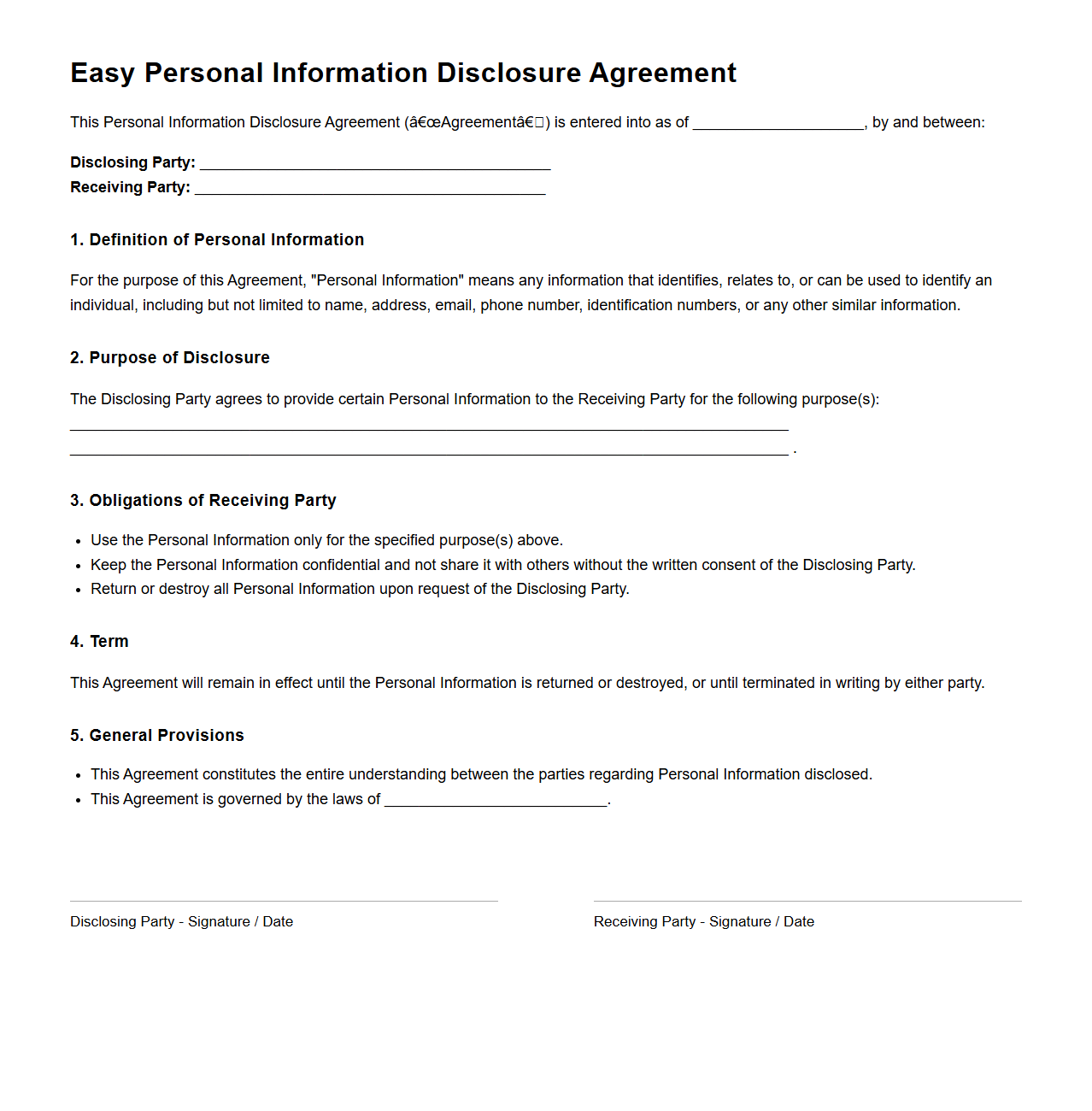
Easy Personal Information Disclosure Agreement Template
An
Easy Personal Information Disclosure Agreement Template document serves as a customizable legal framework that outlines the terms under which personal data can be shared between parties. It ensures compliance with data protection regulations by clearly defining the scope, purpose, and duration of information disclosure. This template simplifies the process of drafting agreements, reducing legal risks and fostering trust in data handling practices.
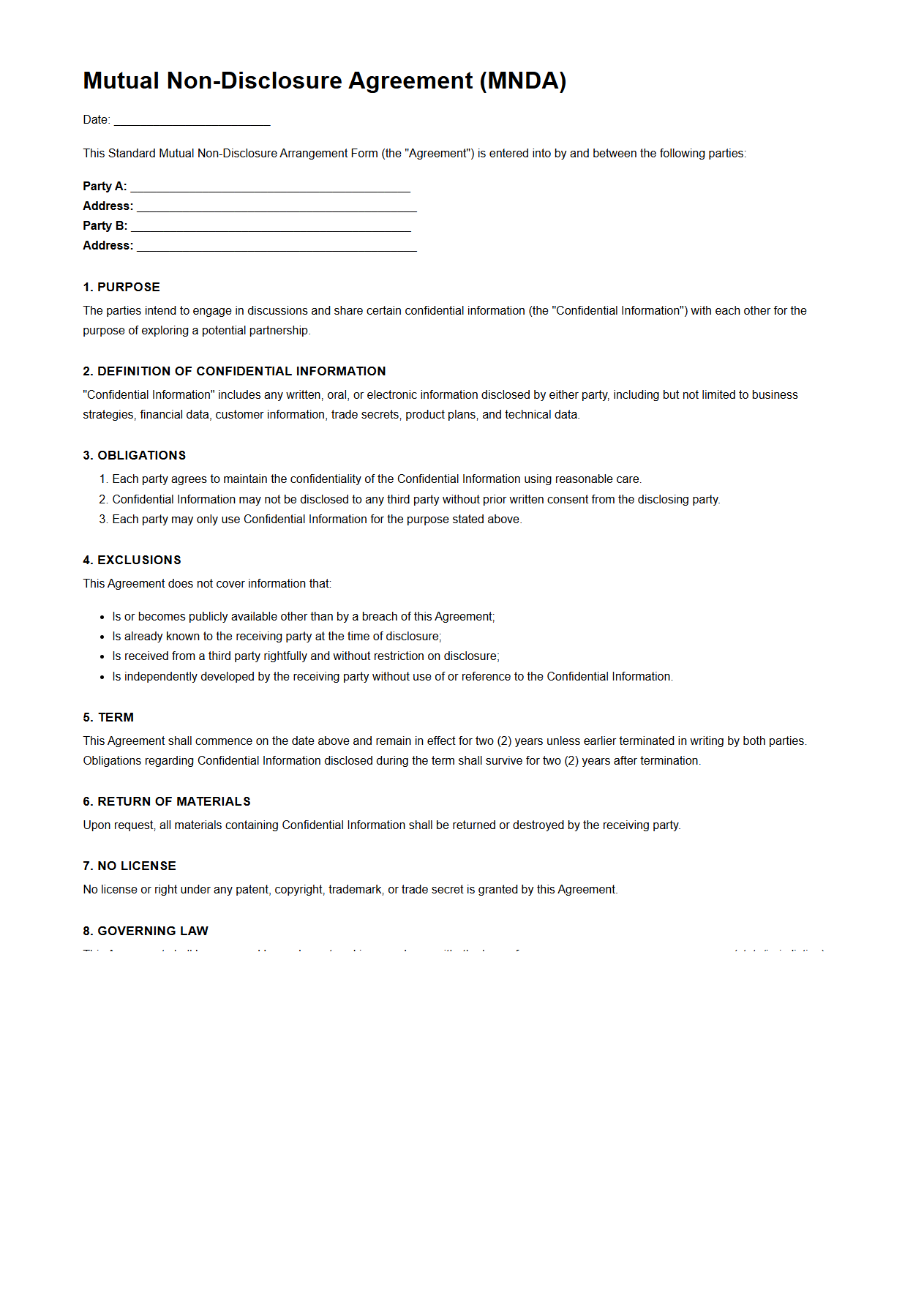
Standard Mutual Non-Disclosure Arrangement Form for Partnerships
The
Standard Mutual Non-Disclosure Arrangement Form for Partnerships is a legally binding document designed to protect confidential information exchanged between business partners. It ensures that sensitive data, trade secrets, and proprietary information remain secure and are not disclosed to unauthorized third parties. This arrangement fosters trust and collaboration by clearly defining the scope, obligations, and duration of confidentiality between the involved parties.
What clauses should a blank confidentiality agreement include for handling proprietary research data?
A blank confidentiality agreement should include a definition of proprietary research data to clearly outline the scope of protected information. It must contain a clause on the obligations of the receiving party to maintain strict confidentiality and prevent unauthorized access. Additionally, a section on permitted use should specify how the data can be used exclusively for authorized purposes.
How does a blank confidentiality letter address third-party information disclosures?
The letter should contain a non-disclosure clause prohibiting the recipient from sharing information with any third parties without prior written consent. It must also define exceptions under which third-party disclosures are allowed, such as legal requirements or authorized subcontractors. Lastly, it should require the receiving party to ensure confidentiality by any third party who gains access to the information.
What sample language covers digital vs. physical sensitive information storage?
The agreement should specify that all sensitive information, whether digital or physical, must be stored using appropriate security measures. For digital data, it should mandate use of encryption and access controls, while physical documents require secured locations like locked cabinets. Sample language might state: "All proprietary information shall be protected by industry-standard cybersecurity protocols and secure physical storage to prevent unauthorized access."
Which parties should sign a blank confidentiality agreement to ensure legal enforceability?
Both the disclosing party and the receiving party must sign the agreement to create binding obligations. If the receiving party is a company, an authorized representative should execute the document on its behalf. This mutual signing ensures clarity and legal enforceability of the confidentiality terms.
How can time limits for confidentiality be set in a template letter?
The template should include a clear duration clause specifying the time period the confidentiality obligations remain in effect. It can define a fixed term (e.g., 5 years) or state that confidentiality continues until the information becomes public. Including this clause helps to formally limit the recipient's confidentiality responsibilities.