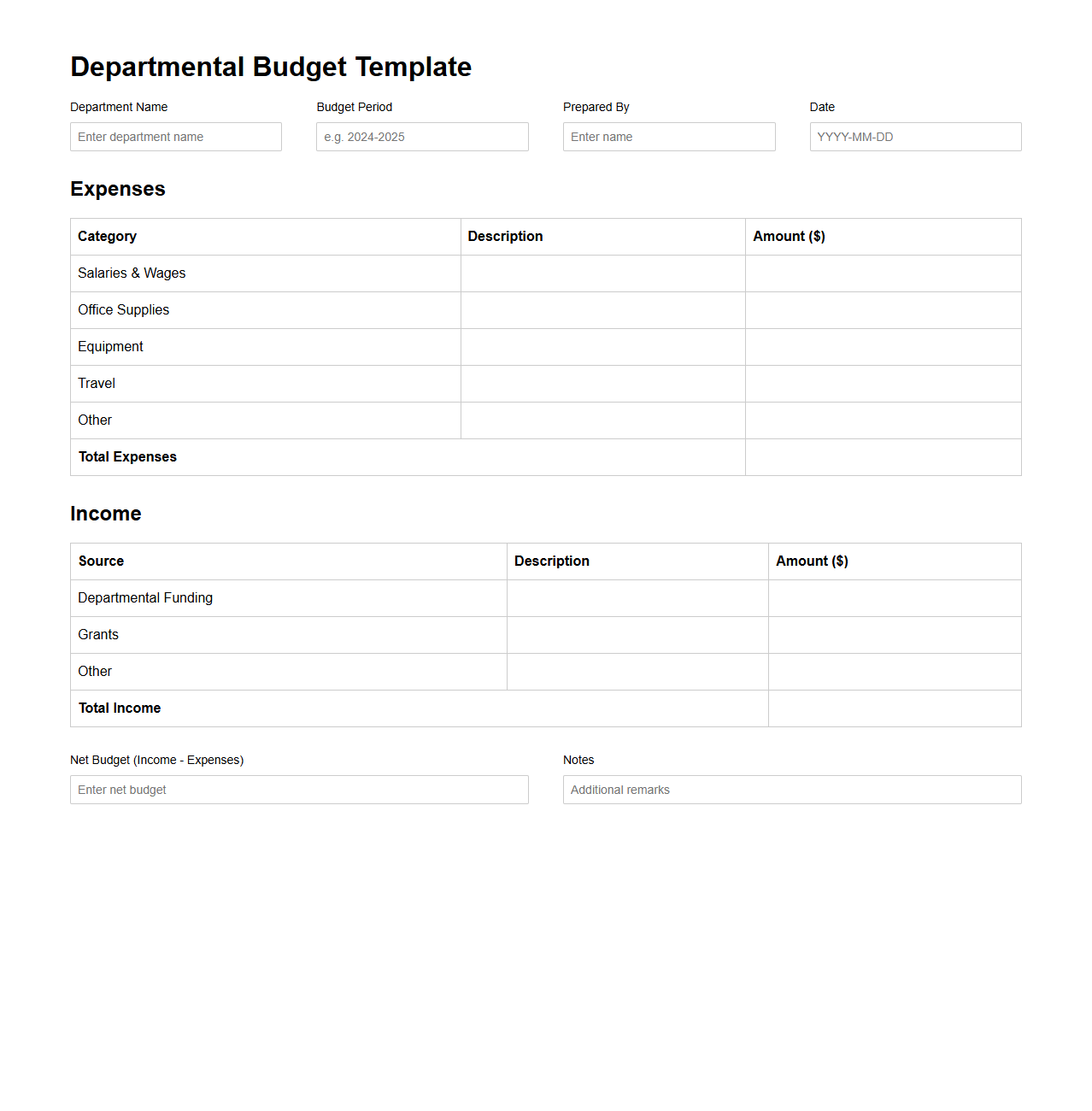
The Blank Departmental Budget Template for Organization Management serves as a versatile tool designed to streamline financial planning across various departments. It allows managers to allocate resources efficiently, track expenses, and forecast future budget needs with clarity. This template enhances overall organizational financial control by providing a structured, easy-to-use format for budget preparation and monitoring.
Simple Departmental Budget Template for Organizational Planning
A
Simple Departmental Budget Template for Organizational Planning is a structured financial tool designed to help departments allocate resources effectively while tracking income and expenses. It facilitates accurate forecasting, cost control, and alignment with overall organizational goals by providing clear categories for operational, personnel, and project-specific costs. This template streamlines budget management, enabling managers to make data-driven decisions and optimize departmental performance.
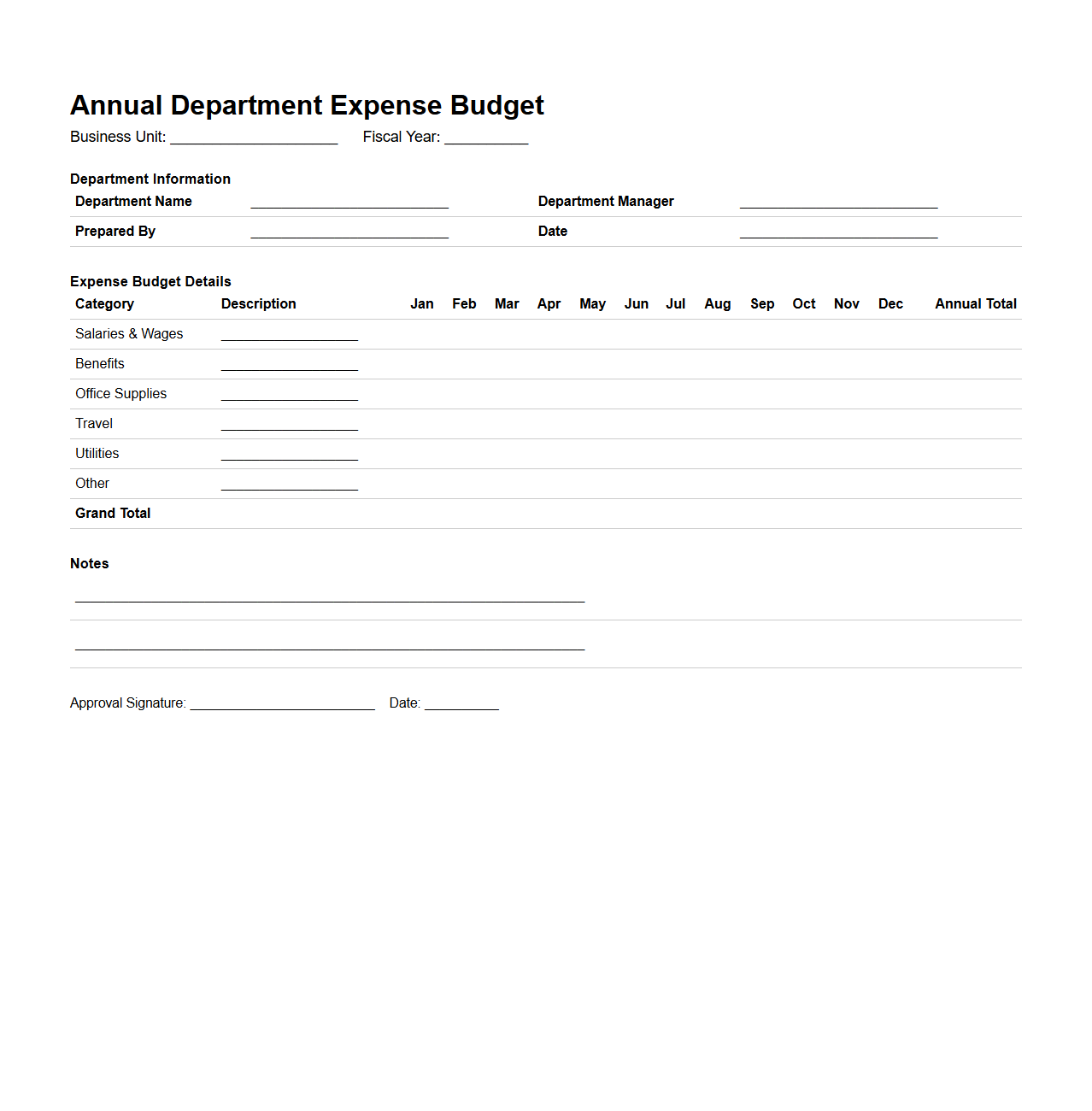
Annual Department Expense Budget Template for Business Units
An
Annual Department Expense Budget Template for Business Units is a structured document designed to help organizations systematically plan and track departmental spending over a fiscal year. It includes categories for fixed and variable costs, enabling accurate forecasting and resource allocation within each business unit. This template supports financial transparency and empowers managers to control expenses effectively while aligning with overall company budget goals.
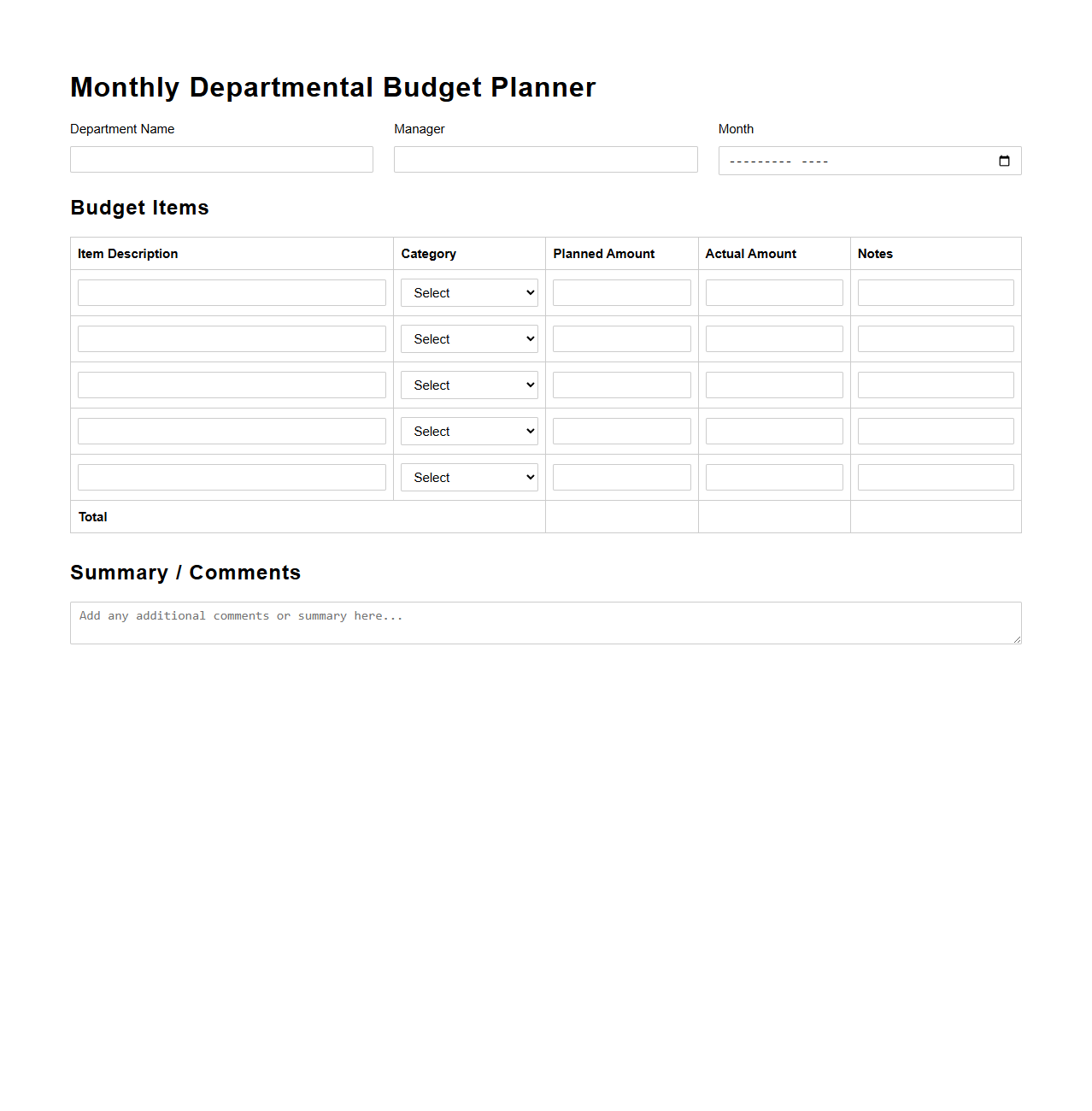
Monthly Departmental Budget Planner for Corporate Management
The
Monthly Departmental Budget Planner for Corporate Management is a strategic tool designed to track and allocate financial resources across various departments effectively. It enables corporate managers to forecast expenses, monitor budget adherence, and identify cost-saving opportunities on a monthly basis. This document ensures aligned financial planning with organizational goals, enhancing overall budget control and decision-making.
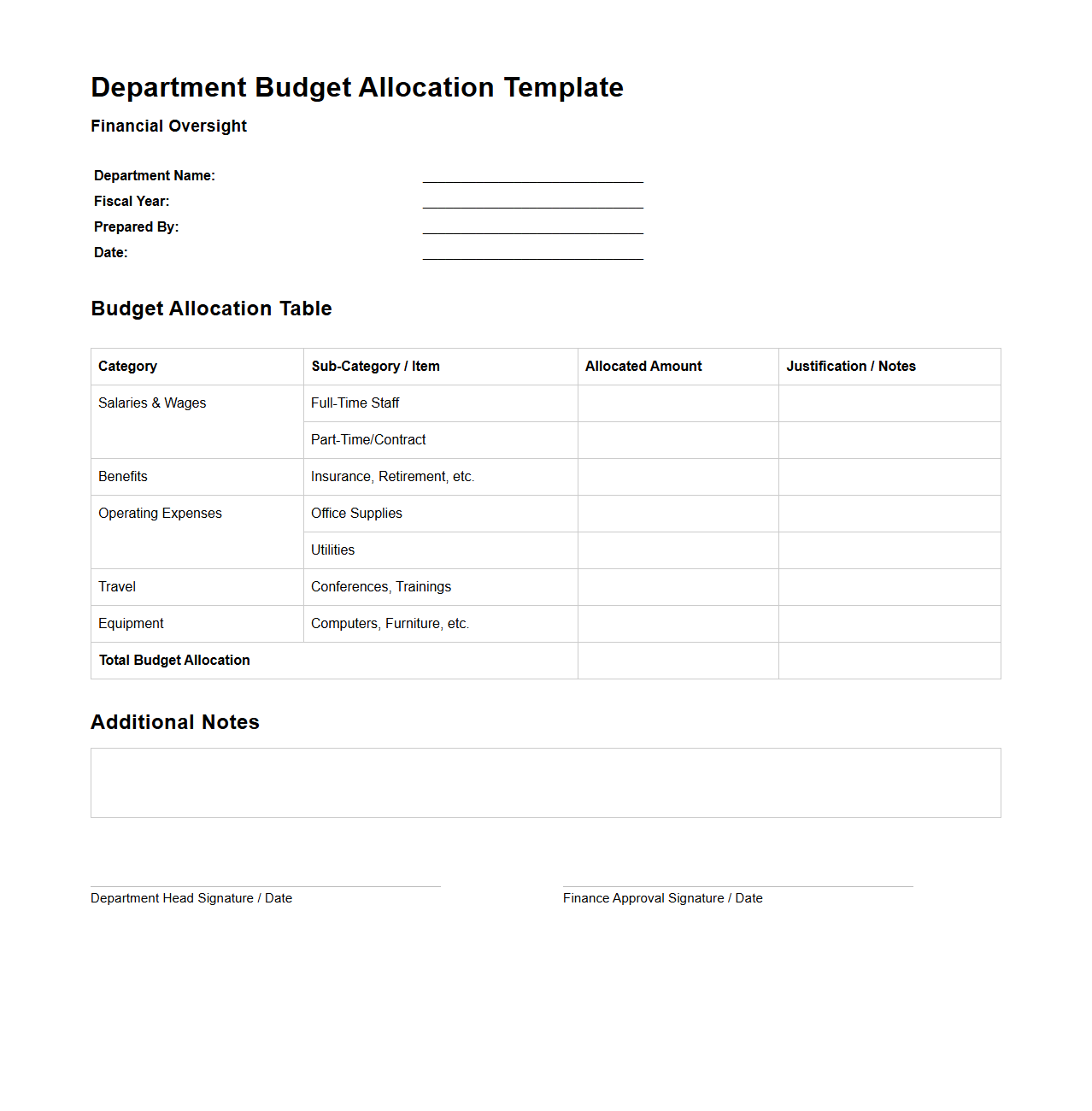
Department Budget Allocation Template for Financial Oversight
The
Department Budget Allocation Template for Financial Oversight document is a structured tool designed to systematically distribute financial resources across various departments within an organization. It facilitates transparent tracking, comparison, and analysis of budgetary allocations to ensure effective financial management and accountability. This template supports strategic decision-making by highlighting spending priorities, enabling departments to align their budgets with organizational goals.
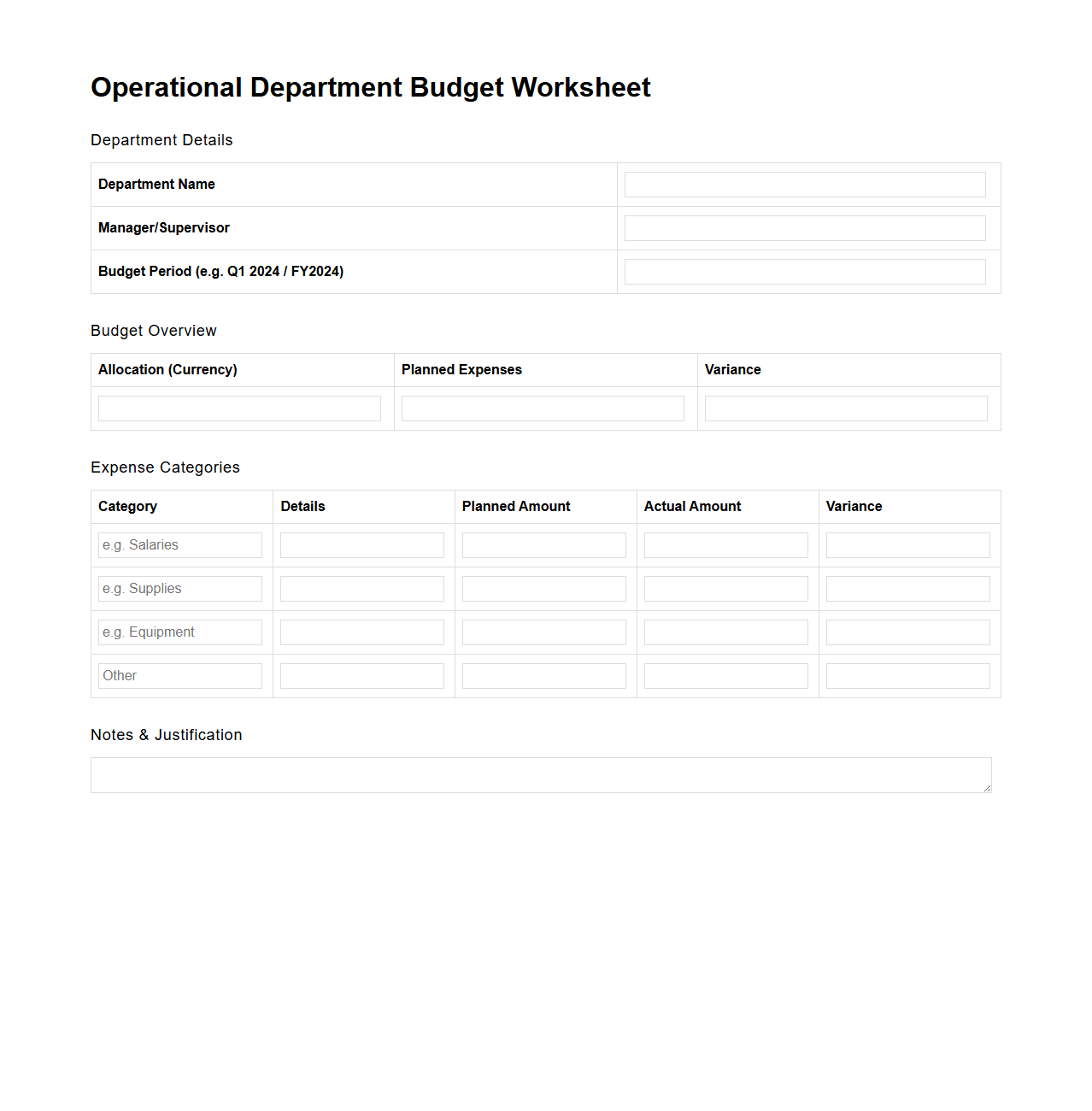
Operational Department Budget Worksheet for Organizations
The
Operational Department Budget Worksheet for organizations is a detailed financial planning tool used to outline expected expenses and revenues within a specific department. It helps managers allocate resources efficiently, monitor expenditures against forecasts, and align departmental spending with overall organizational goals. This worksheet typically includes categories such as personnel costs, supplies, equipment, and overhead, providing a comprehensive overview for effective budget management.
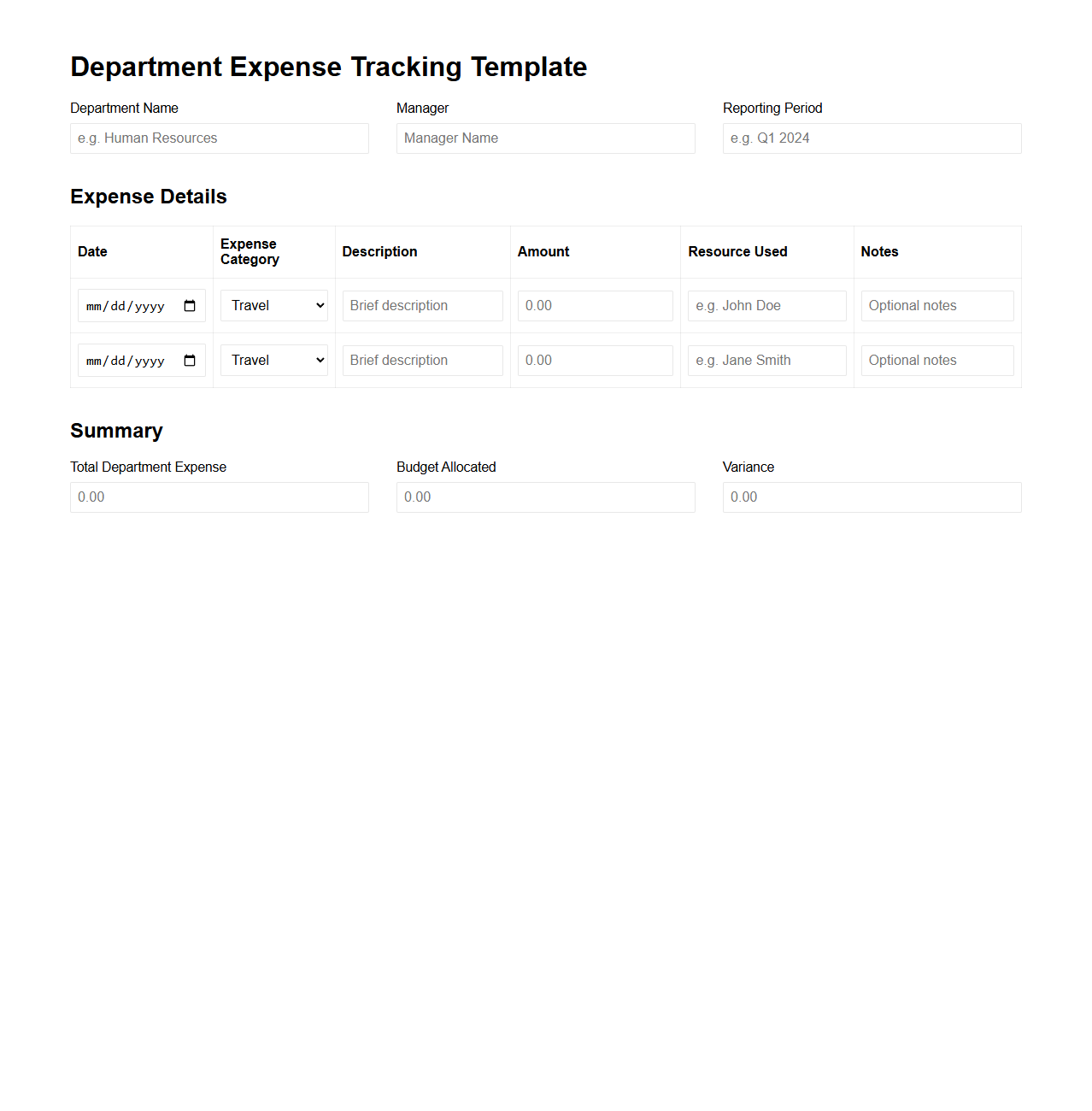
Department Expense Tracking Template for Resource Management
A
Department Expense Tracking Template for Resource Management document is a structured tool designed to monitor and record all departmental expenditures efficiently. It helps managers allocate budgets accurately, track spending patterns, and identify cost-saving opportunities by organizing financial data systematically. This template supports transparent resource management, ensuring optimal utilization of funds across various projects and operational activities.
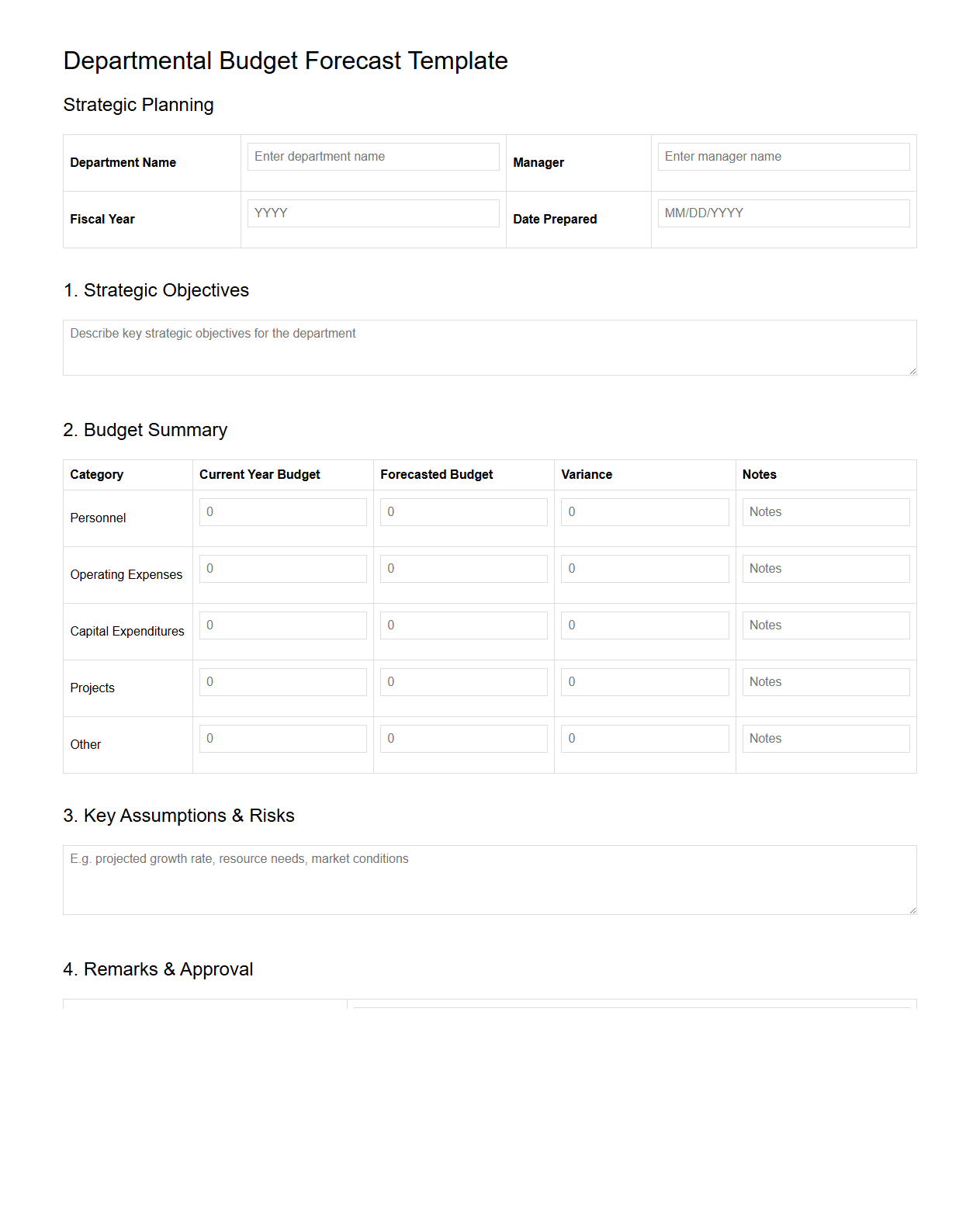
Departmental Budget Forecast Template for Strategic Planning
A
Departmental Budget Forecast Template for Strategic Planning is a structured document designed to project future financial needs and allocations within a specific department. It facilitates alignment of budget resources with strategic goals by estimating expenses, revenues, and funding gaps over a defined planning horizon. This template supports informed decision-making and resource optimization by integrating key financial metrics and assumptions relevant to departmental objectives.
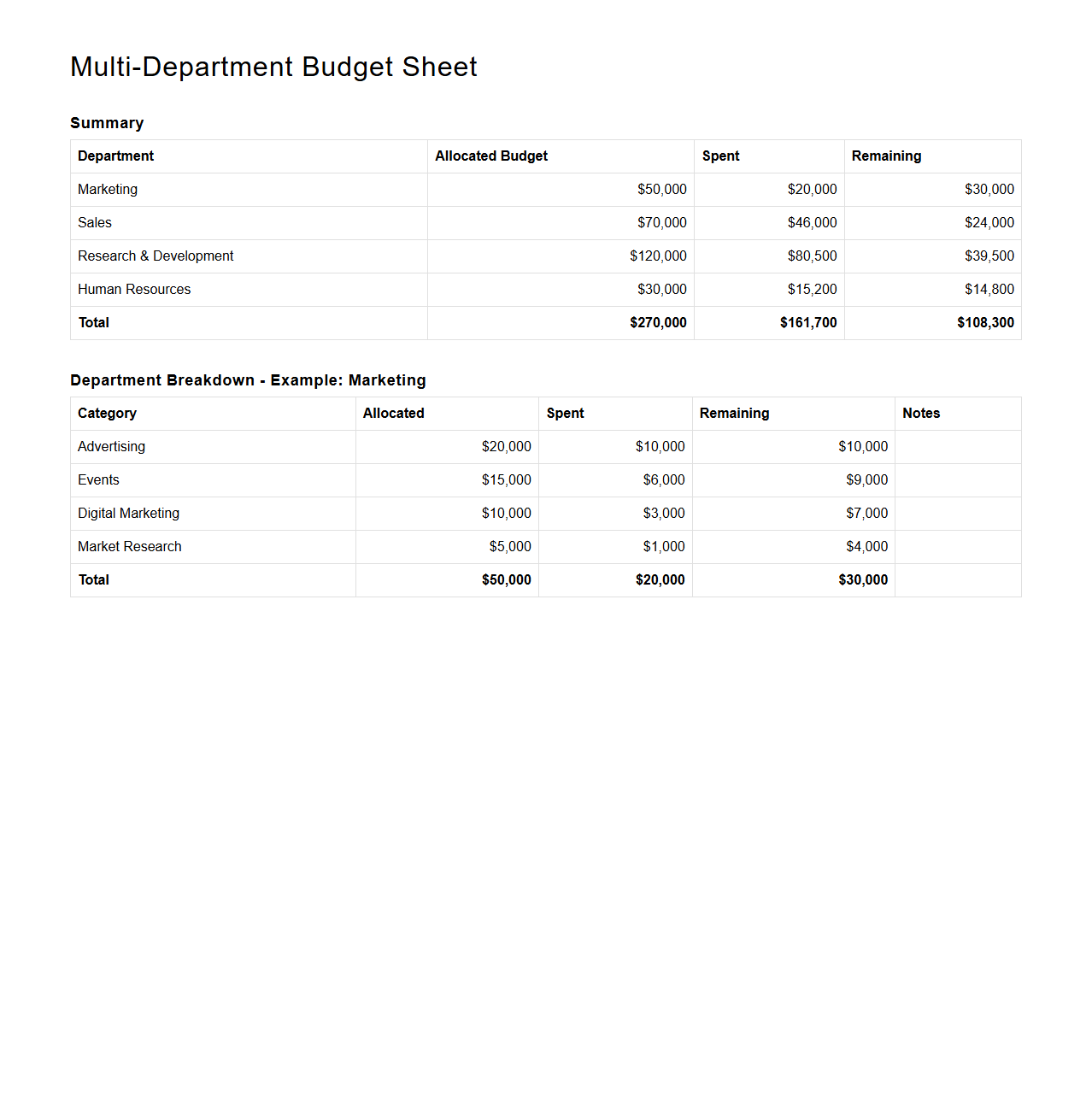
Multi-Department Budget Sheet for Company Finance
A
Multi-Department Budget Sheet for Company Finance is a comprehensive financial document that consolidates budget allocations, expenditures, and forecasts across various departments within an organization. It enables detailed tracking and comparison of resources, ensuring efficient capital distribution and financial control. This sheet supports strategic planning by providing clear visibility into departmental financial performance and identifying areas for cost optimization.
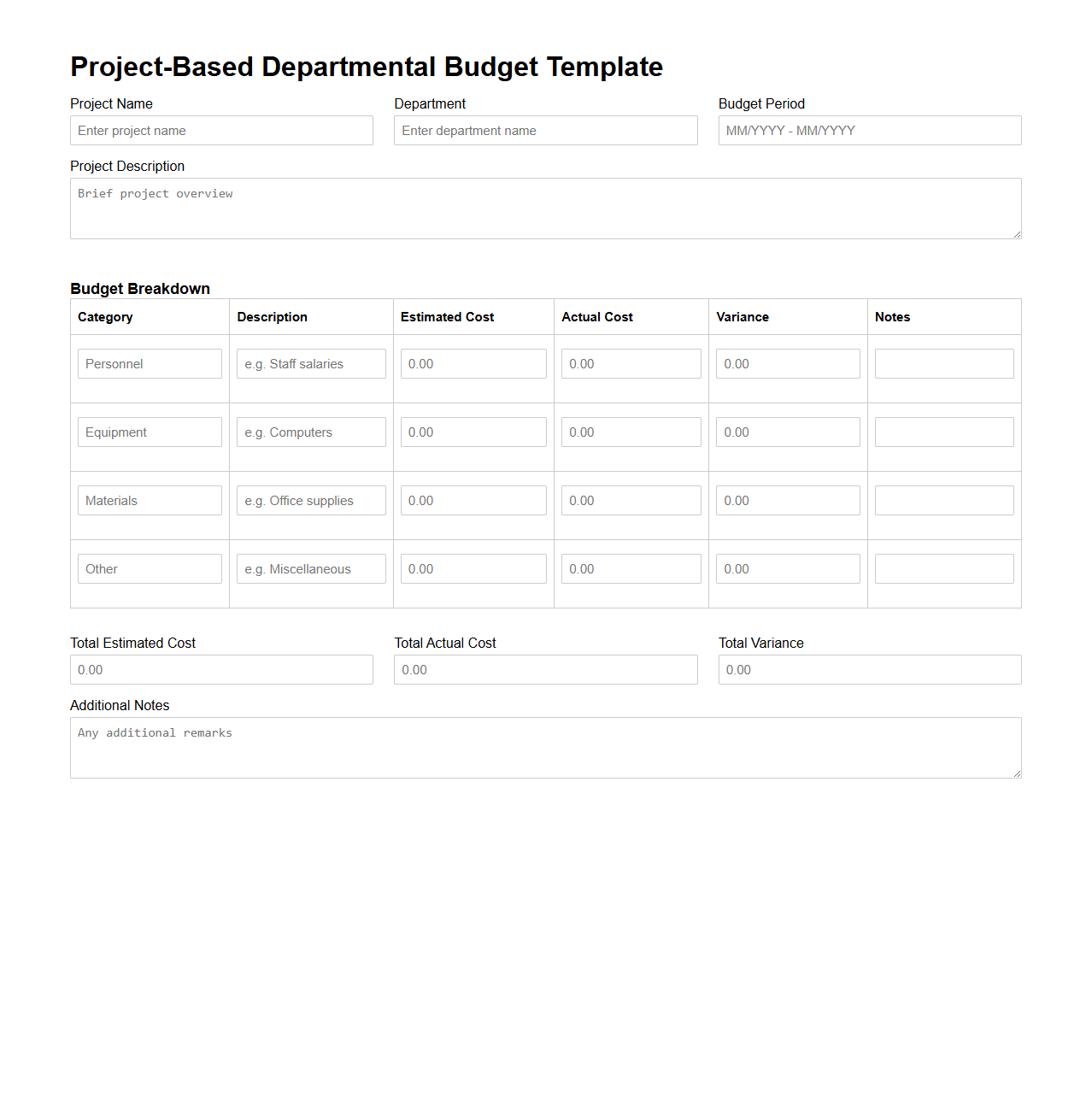
Project-Based Departmental Budget Template for Internal Teams
The
Project-Based Departmental Budget Template for internal teams is a structured financial planning tool designed to allocate and monitor budget resources for specific projects within departments. It enables precise tracking of expenses, resource allocation, and cost forecasting aligned with project milestones and objectives. This template enhances transparency and accountability in managing departmental finances, ensuring efficient use of funds across multiple projects.
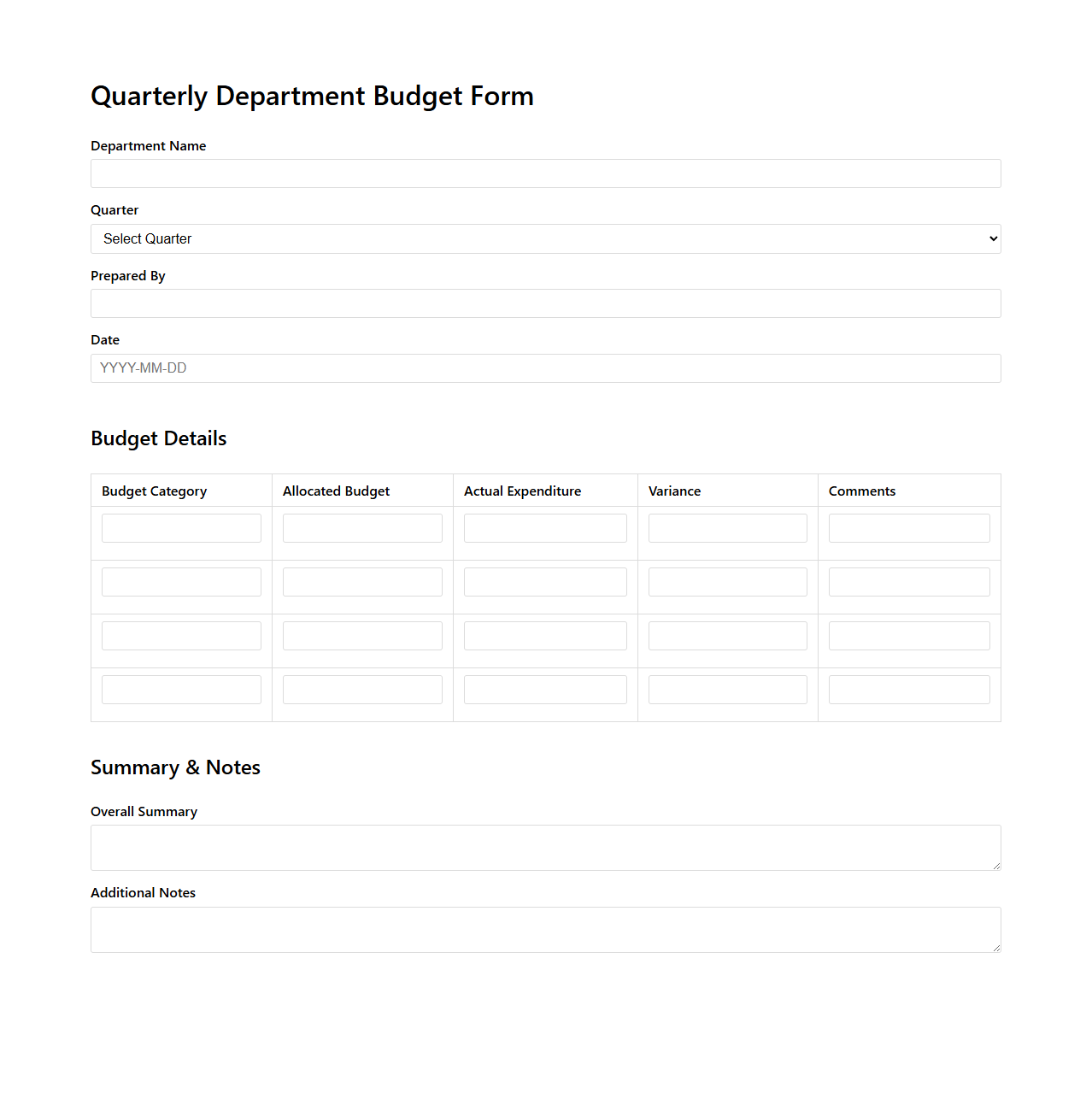
Quarterly Department Budget Form for Organizational Reporting
The
Quarterly Department Budget Form for Organizational Reporting is a critical financial document designed to track and manage departmental expenditures and budget allocations over a three-month period. It facilitates detailed analysis of spending patterns, ensuring alignment with overall organizational financial goals and enabling timely adjustments to avoid budget overruns. This document typically includes line items for operational costs, project expenses, and forecasted needs, making it essential for accurate financial planning and accountability in organizational reporting.
What line items are essential in a blank departmental budget template for organization management?
A blank departmental budget template must include major categories such as personnel costs, operational expenses, and capital expenditures. It should also have provisions for overhead costs, supplies, and contingency funds to ensure comprehensive financial planning. Including these essential line items helps organizations maintain clarity and control over department finances.
How do approval workflows integrate with departmental budget document letters?
Approval workflows are embedded within the departmental budget document letters through predefined review and authorization stages that ensure accountability. These workflows typically involve sequential approvals from department heads, finance officers, and executive management. Integrating workflows digitally streamlines the process and provides transparent tracking of budget approvals.
What key metrics should be tracked in a departmental budget request letter?
Key metrics to track in a departmental budget request letter include requested amount, historical spending, and projected return on investment (ROI). Tracking cost variances, percentage of budget utilization, and department-specific financial performance indicators is also critical. These metrics provide insight into budget efficiency and support informed decision-making.
How can departments justify variances in a blank budget allocation form?
Departments justify variances in a blank budget allocation form by providing detailed explanations for overspending or underspending relative to previous periods. They should include both quantitative data and qualitative factors such as operational changes or unforeseen expenses. Clear documentation of these budget variances ensures transparency and accountability.
What compliance documentation should accompany a blank departmental budget letter?
A blank departmental budget letter should be accompanied by compliance documentation such as internal control certifications, regulatory compliance statements, and audit reports. It is important to include policy adherence confirmations and risk assessment summaries. These documents validate budget accountability and ensure alignment with organizational and legal standards.