A Blank Contingency Plan Template for Risk Management provides a structured framework to identify potential risks and outline response strategies effectively. This template helps organizations prepare for unexpected events by detailing clear action steps, responsible personnel, and resource allocation. Utilizing a comprehensive contingency plan ensures minimized operational disruptions and enhanced resilience during crises.
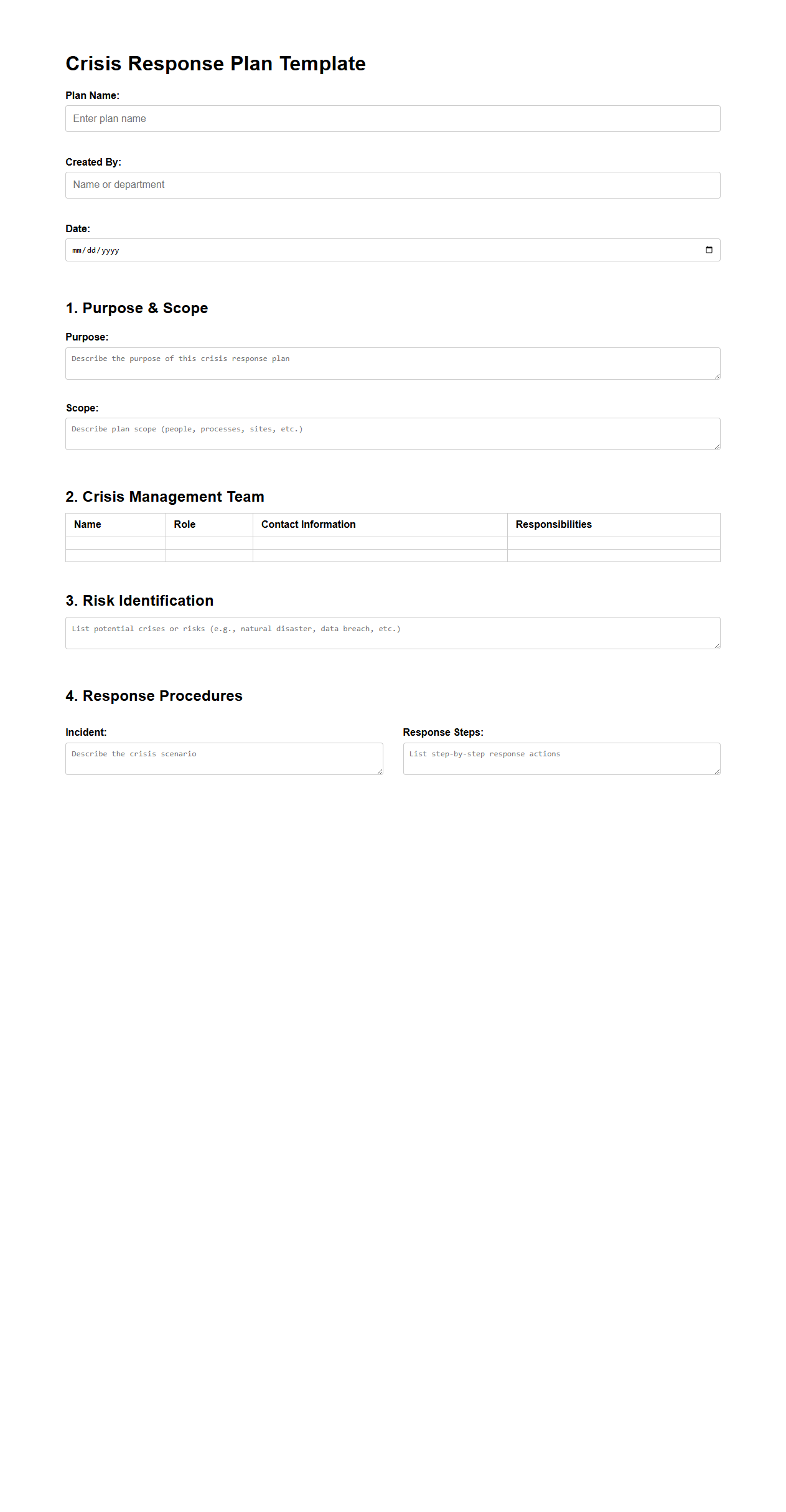
Blank Crisis Response Plan Template for Risk Management
A
Blank Crisis Response Plan Template for Risk Management is a structured document designed to help organizations systematically prepare for, respond to, and recover from potential crises. It outlines key components such as risk identification, communication protocols, roles and responsibilities, and action steps to mitigate impacts. This template serves as a customizable framework enabling businesses to develop a comprehensive crisis management strategy that minimizes disruptions and safeguards assets.
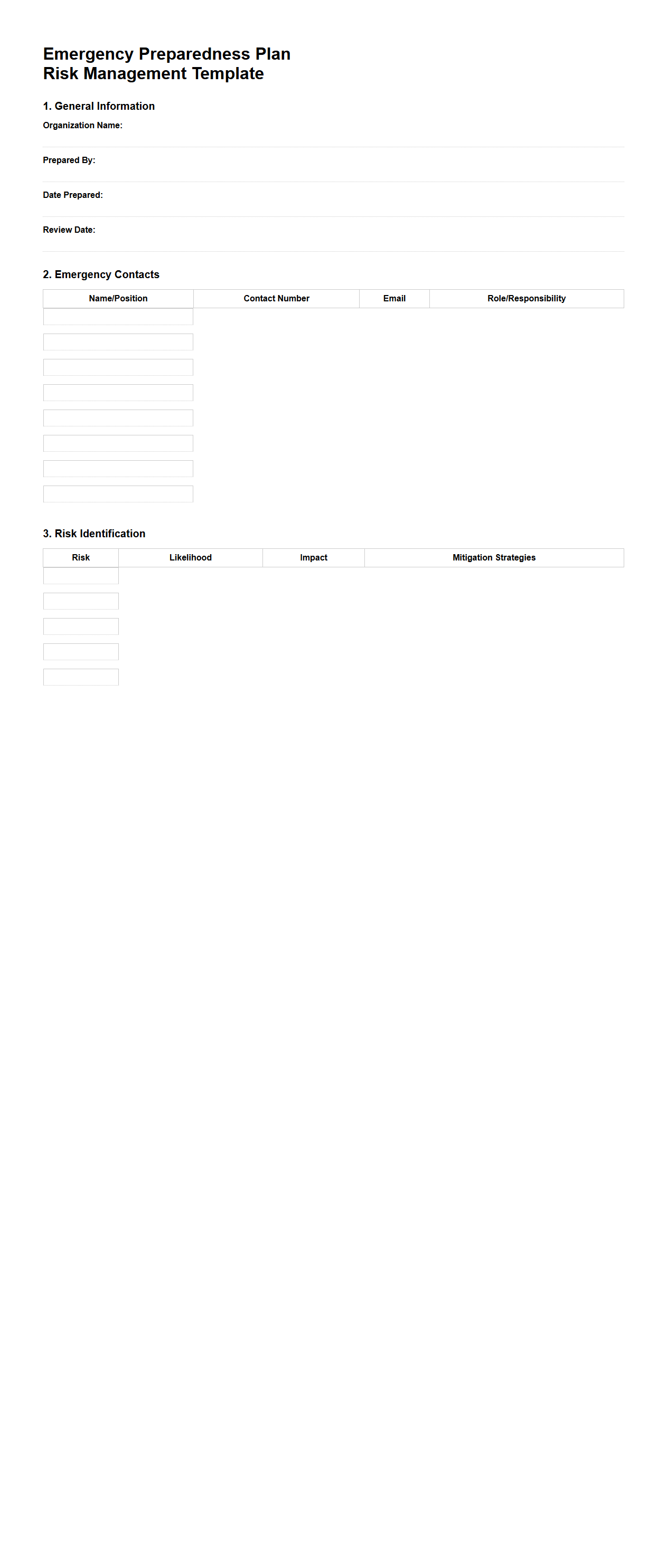
Blank Emergency Preparedness Plan Template for Risk Management
A
Blank Emergency Preparedness Plan Template for Risk Management document serves as a structured framework designed to help organizations identify potential risks and establish clear response strategies. It includes sections for hazard assessment, communication protocols, resource allocation, and recovery procedures to ensure comprehensive readiness for various emergencies. This template enables efficient customization to specific organizational needs, promoting resilience and minimizing operational disruptions during crises.
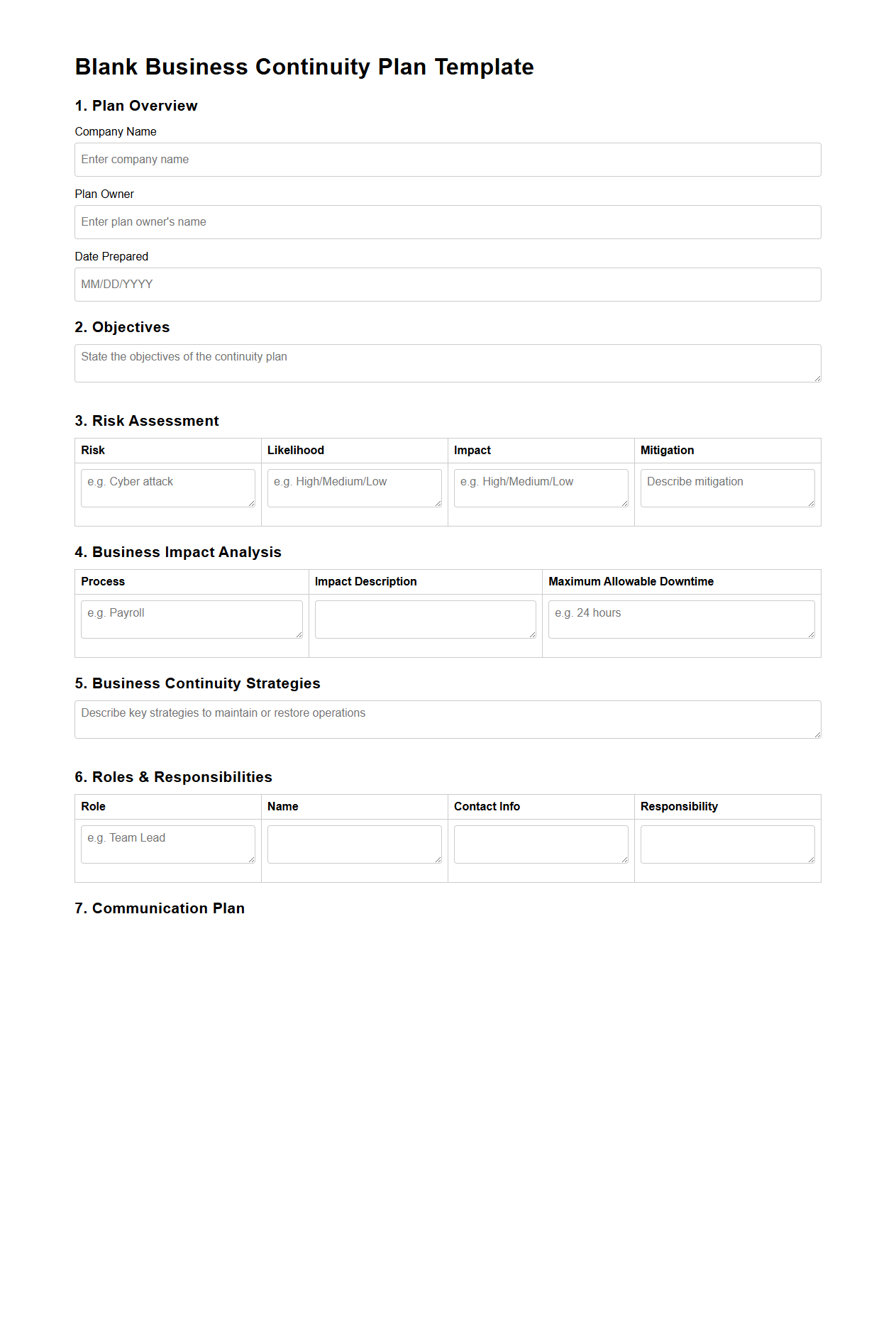
Blank Business Continuity Plan Template for Risk Management
A
Blank Business Continuity Plan Template for Risk Management is a structured document designed to help organizations identify potential risks and outline strategies to maintain critical operations during disruptions. It provides customizable sections to detail risk assessment, response protocols, recovery procedures, and communication plans. Utilizing this template ensures preparedness, minimizes downtime, and supports efficient crisis management efforts.
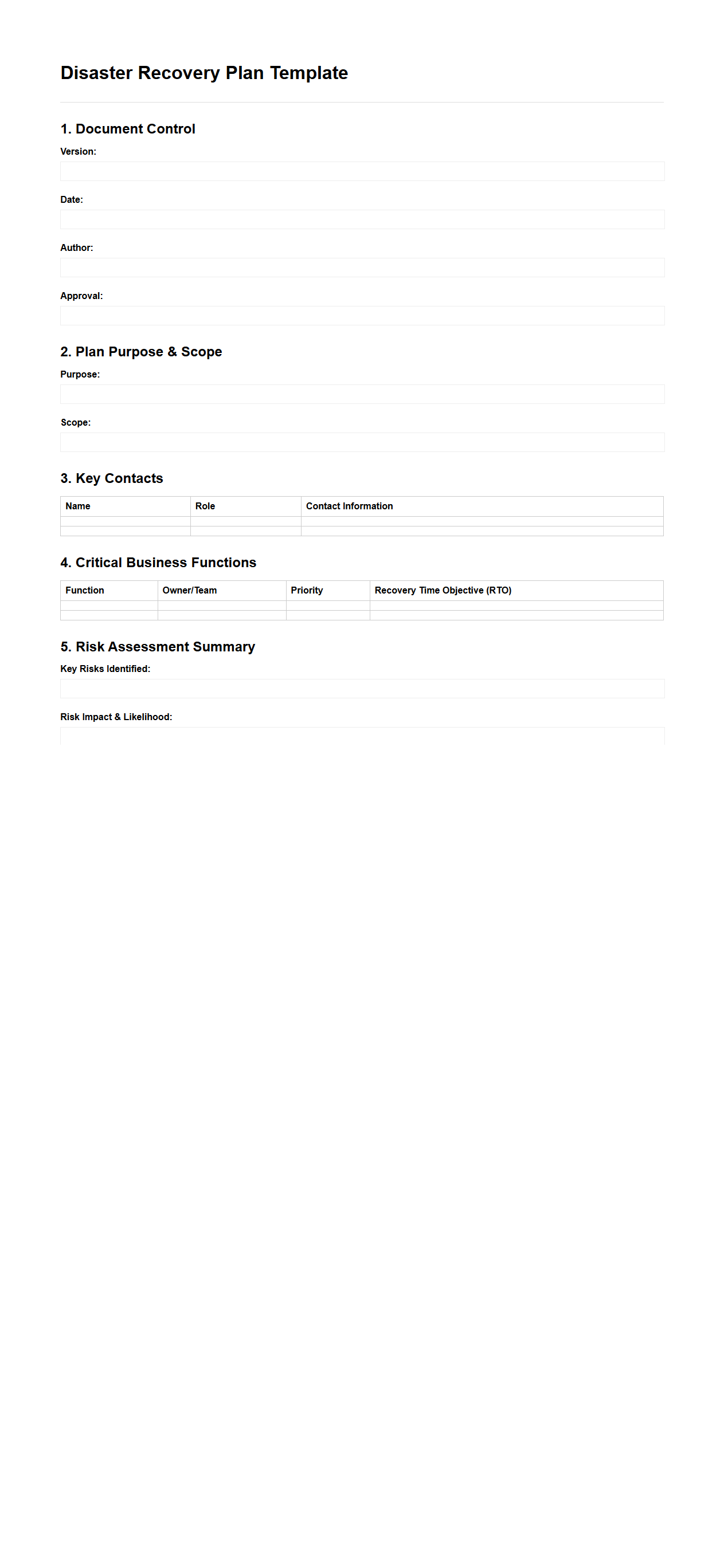
Blank Disaster Recovery Plan Template for Risk Management
A
Blank Disaster Recovery Plan Template for Risk Management document provides a structured framework to identify potential risks and outline step-by-step procedures for data restoration and business continuity after a disaster. It helps organizations systematically assess vulnerabilities, assign responsibilities, and prioritize recovery efforts to minimize downtime and financial loss. Using this template ensures a comprehensive and scalable approach to disaster preparedness tailored to specific operational needs.
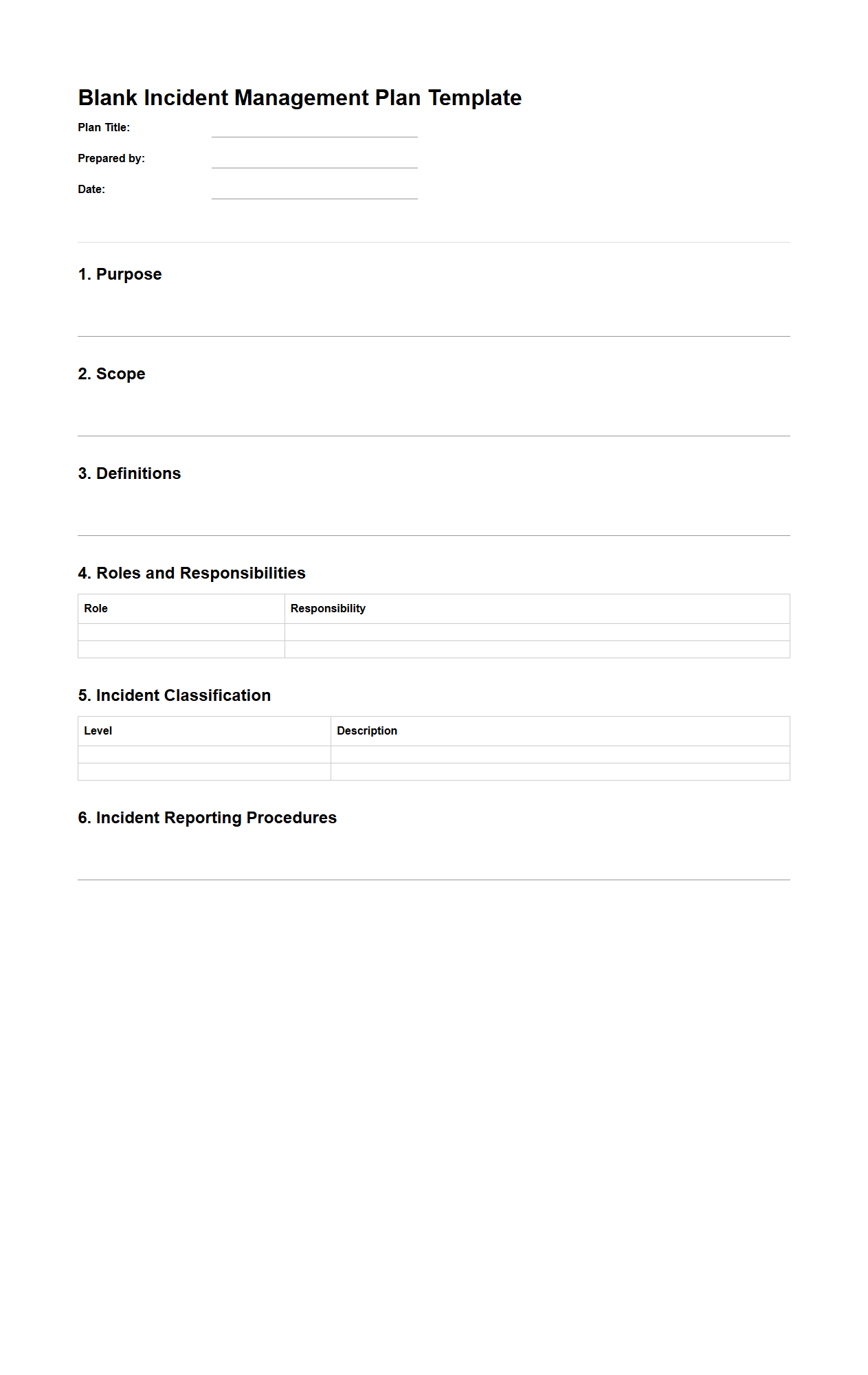
Blank Incident Management Plan Template for Risk Management
A
Blank Incident Management Plan Template for Risk Management is a structured framework designed to help organizations systematically prepare for, respond to, and recover from unexpected incidents. This document outlines key procedures, roles, and responsibilities essential for effective risk mitigation and ensures consistency in handling incidents across various scenarios. Utilizing this template enhances organizational resilience by providing a clear, customizable guide for timely decision-making and resource allocation during crises.
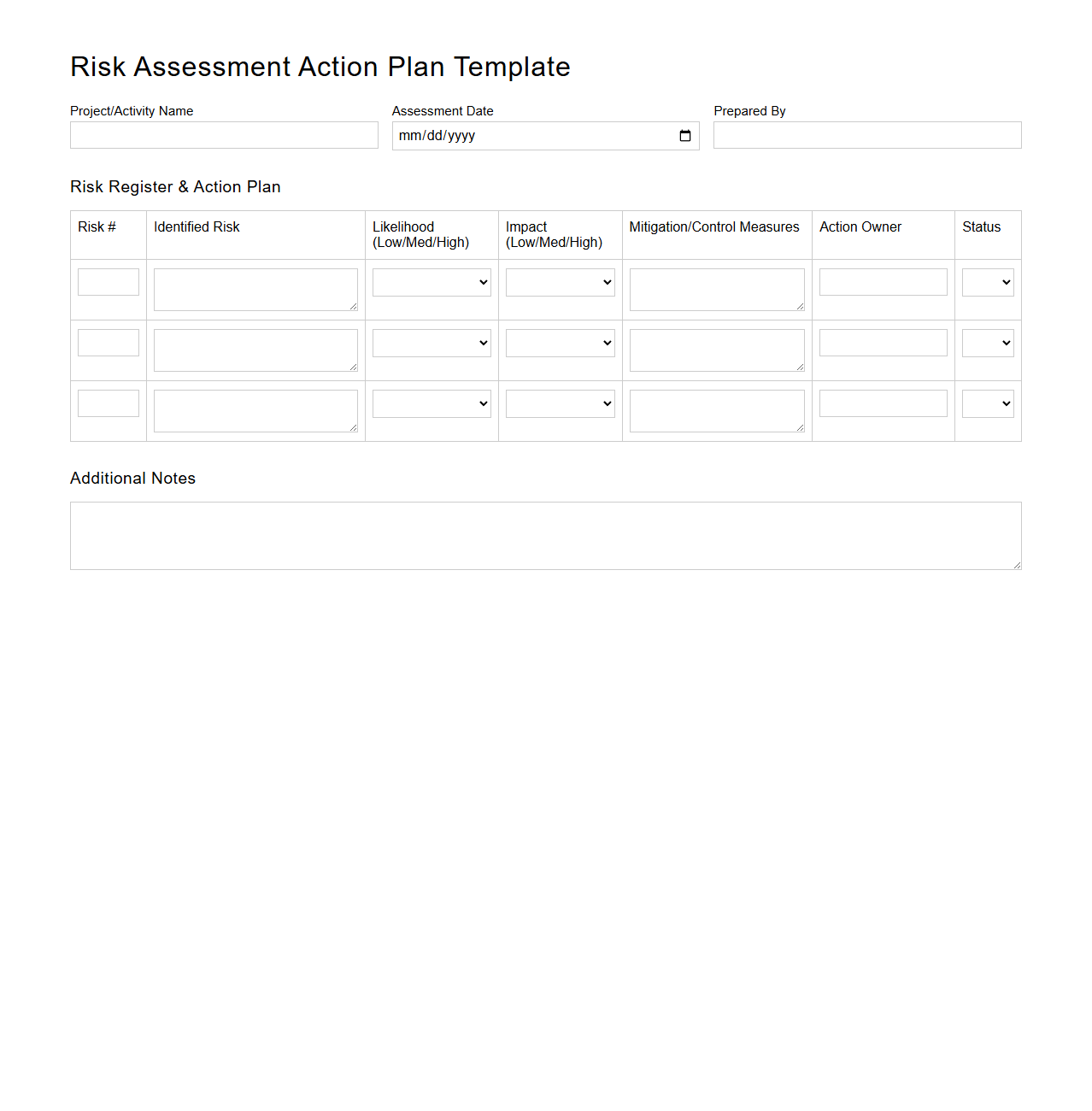
Blank Risk Assessment Action Plan Template for Risk Management
A
Blank Risk Assessment Action Plan Template for Risk Management is a structured document designed to identify, evaluate, and address potential risks within a project or organization. It provides clear sections for listing hazards, assessing their impact and likelihood, prioritizing risks, and outlining specific mitigation actions with assigned responsibilities and deadlines. This template ensures systematic risk control measures are implemented, promoting proactive management and reducing the chance of unexpected disruptions.
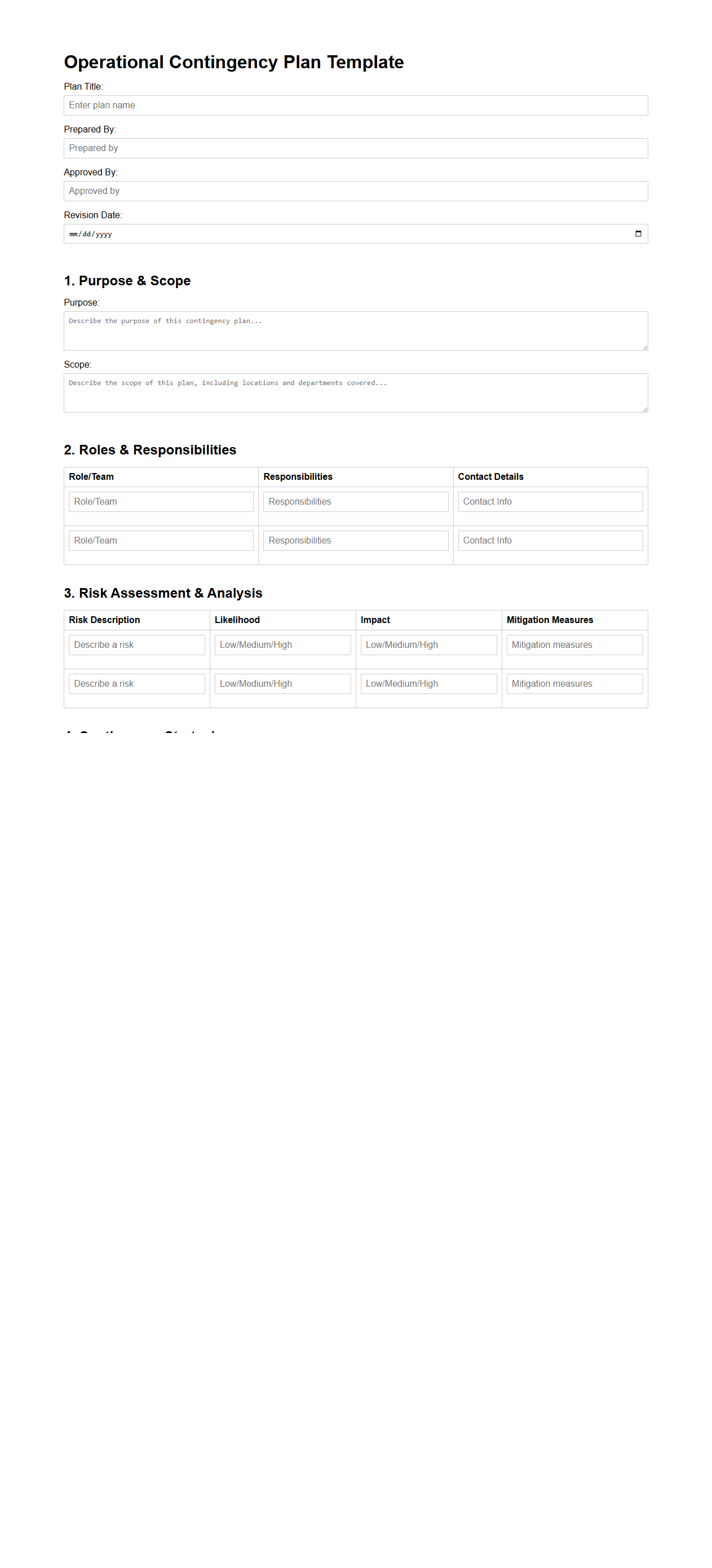
Blank Operational Contingency Plan Template for Risk Management
A
Blank Operational Contingency Plan Template for Risk Management is a structured framework designed to help organizations prepare for unexpected disruptions by outlining specific actions and responsibilities. It includes predefined sections for identifying potential risks, assessing their impact, and detailing step-by-step response procedures to ensure business continuity. This template serves as a critical tool for effective risk mitigation and rapid recovery during emergencies.
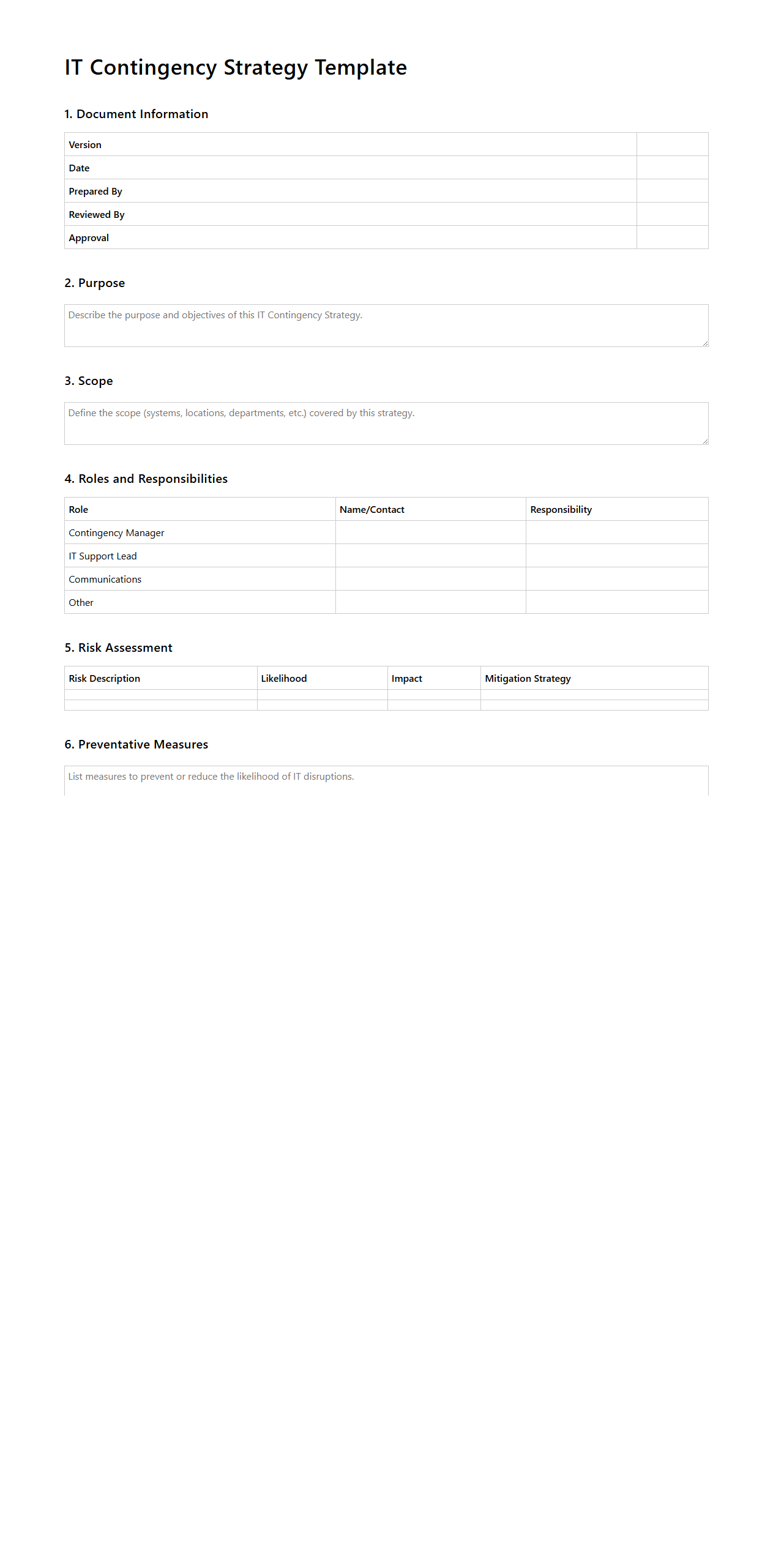
Blank IT Contingency Strategy Template for Risk Management
The
Blank IT Contingency Strategy Template for Risk Management document serves as a structured framework to outline the procedures and protocols necessary for responding to and recovering from IT disruptions. It helps organizations identify potential risks, establish recovery objectives, and assign roles and responsibilities to ensure business continuity. This template supports the development of tailored contingency plans to minimize downtime and data loss during IT incidents.
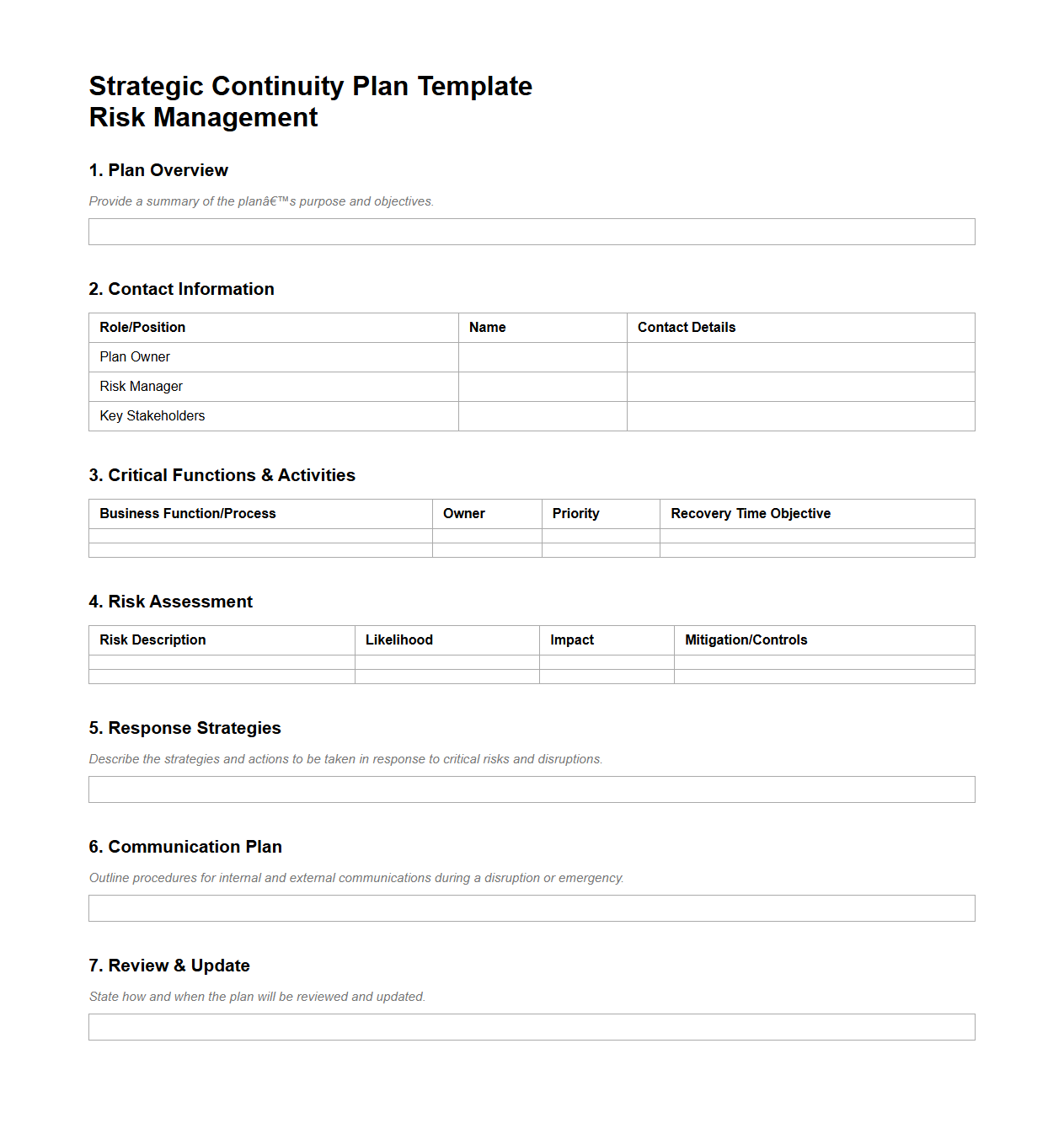
Blank Strategic Continuity Plan Template for Risk Management
A
Blank Strategic Continuity Plan Template for Risk Management is a structured document designed to help organizations systematically identify, assess, and address potential risks that could disrupt business operations. It provides a customizable framework for outlining risk mitigation strategies, recovery procedures, and resource allocation to ensure organizational resilience. This template supports consistent risk management practices by enabling clear documentation and communication of continuity plans across teams.
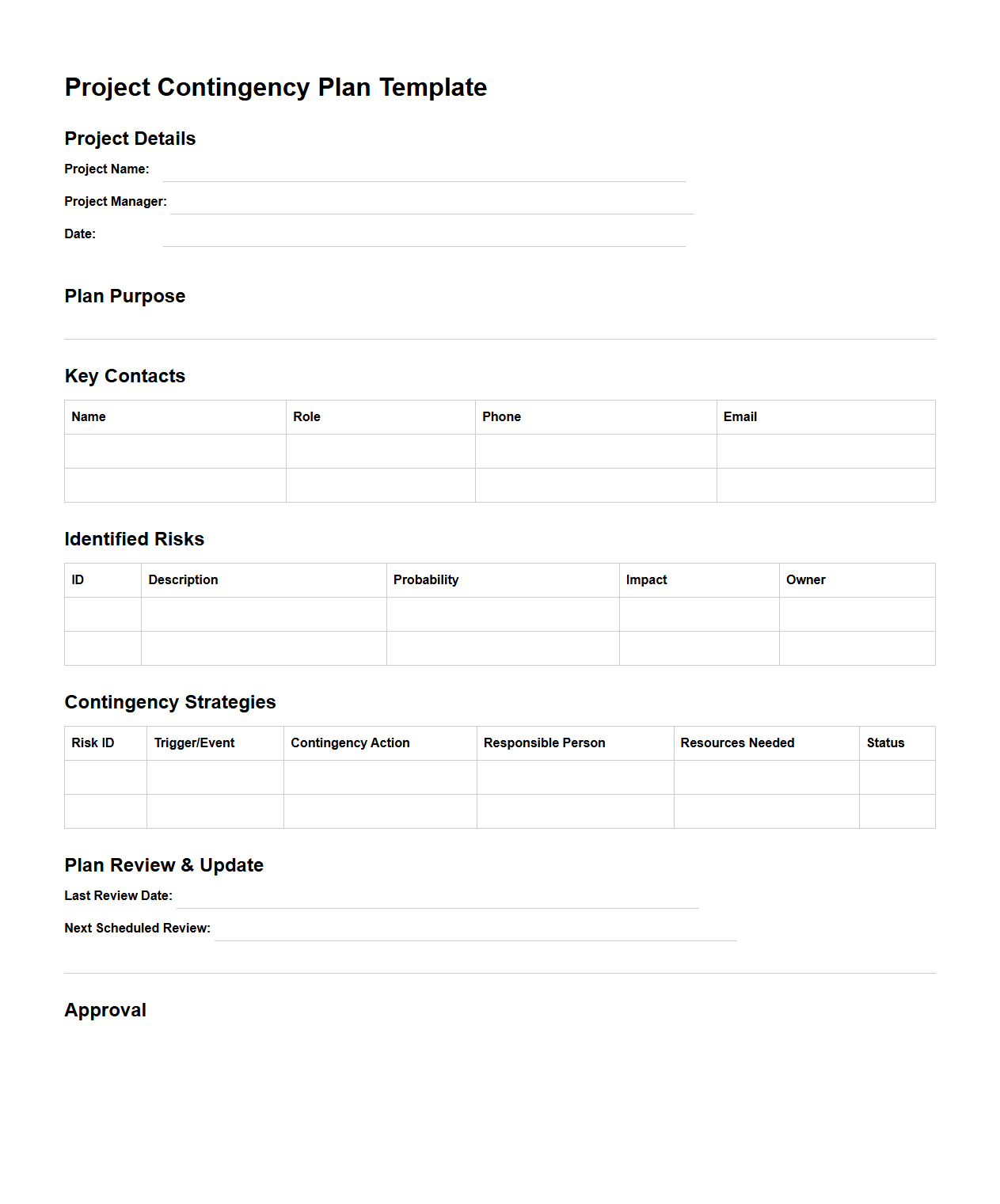
Blank Project Contingency Plan Template for Risk Management
A
Blank Project Contingency Plan Template for Risk Management is a structured framework designed to identify potential project risks and outline predefined responses to mitigate their impact. This document helps project managers systematically prepare for uncertainties by detailing actions, responsible parties, and resource allocations. It ensures streamlined decision-making and maintains project continuity when unexpected events occur.
What are the essential sections missing in a Blank Contingency Plan template for document risk management?
A Blank Contingency Plan template often lacks critical sections such as risk identification and impact analysis, which are vital for understanding potential threats. It may also miss detailed roles and responsibilities, essential for organized response during a document risk event. Additionally, the absence of recovery procedures and communication protocols can leave the plan incomplete for effective risk management.
Which document-specific risks should be prioritized when customizing a Blank Contingency Plan?
Document-specific risks like data corruption, unauthorized access, and loss or theft of information must be prioritized to safeguard sensitive content. Including risks related to digital encryption failure and physical damage from environmental factors is also essential. Prioritization ensures the plan addresses the most impactful threats to document integrity and availability.
How does a Blank Contingency Plan address digital versus physical document security breaches?
A Blank Contingency Plan differentiates digital breaches by detailing IT response steps, including cyberattack mitigation and data recovery protocols. For physical breaches, the plan outlines security measures such as controlled access, surveillance, and immediate incident reporting. This dual approach ensures comprehensive protection for both digital and physical document environments.
What key stakeholders should review a Blank Contingency Plan for document risk management?
Key stakeholders like IT security teams, compliance officers, and document managers play a crucial role in reviewing the contingency plan. Legal advisors and executive leadership should also be involved to ensure alignment with regulatory requirements and organizational goals. Their collaboration guarantees the plan is practical, compliant, and effectively addresses all risks.
How frequently should a Blank Contingency Plan for document risks be reviewed and updated?
A Blank Contingency Plan should be reviewed and updated at least annually to stay current with evolving risks and regulatory changes. Additionally, updates should occur after any significant security incidents or changes in document management systems. Regular revisions maintain the plan's relevance and effectiveness in mitigating document-related risks.