A Blank Problem Statement Template for Projects serves as a structured guide to clearly define the issue your project aims to address. It helps project teams focus on identifying the root cause, scope, and impact of the problem without ambiguity. Using this template ensures consistency and clarity in project planning and communication.
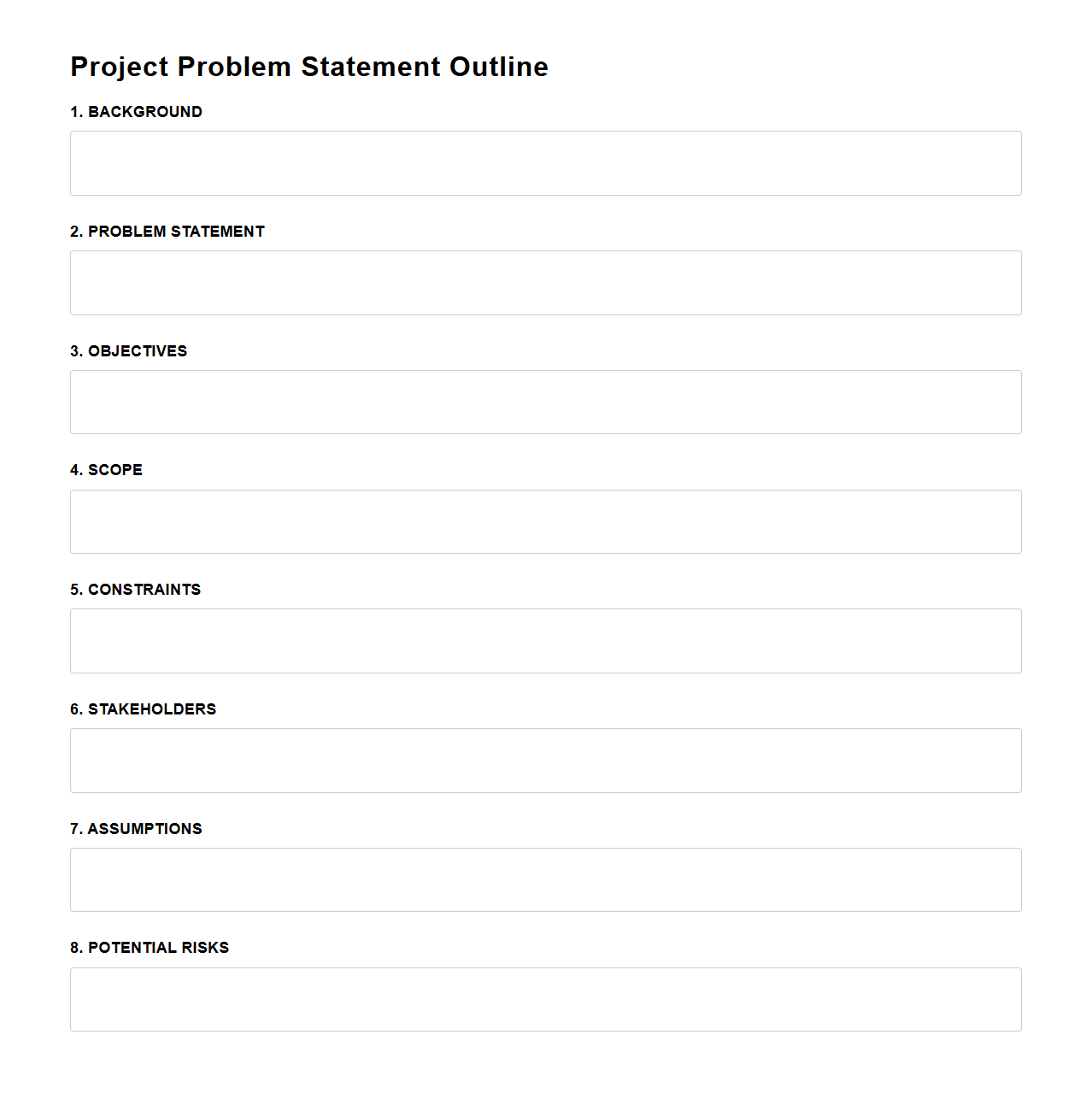
Project Problem Statement Outline
A
Project Problem Statement Outline document clearly defines the core issue or challenge a project aims to address, providing a structured framework that includes the problem background, impact, and specific objectives. This outline helps stakeholders understand the problem's context and supports alignment on project goals, enabling effective decision-making and resource allocation. It serves as a crucial foundation for developing solutions and measuring project success.
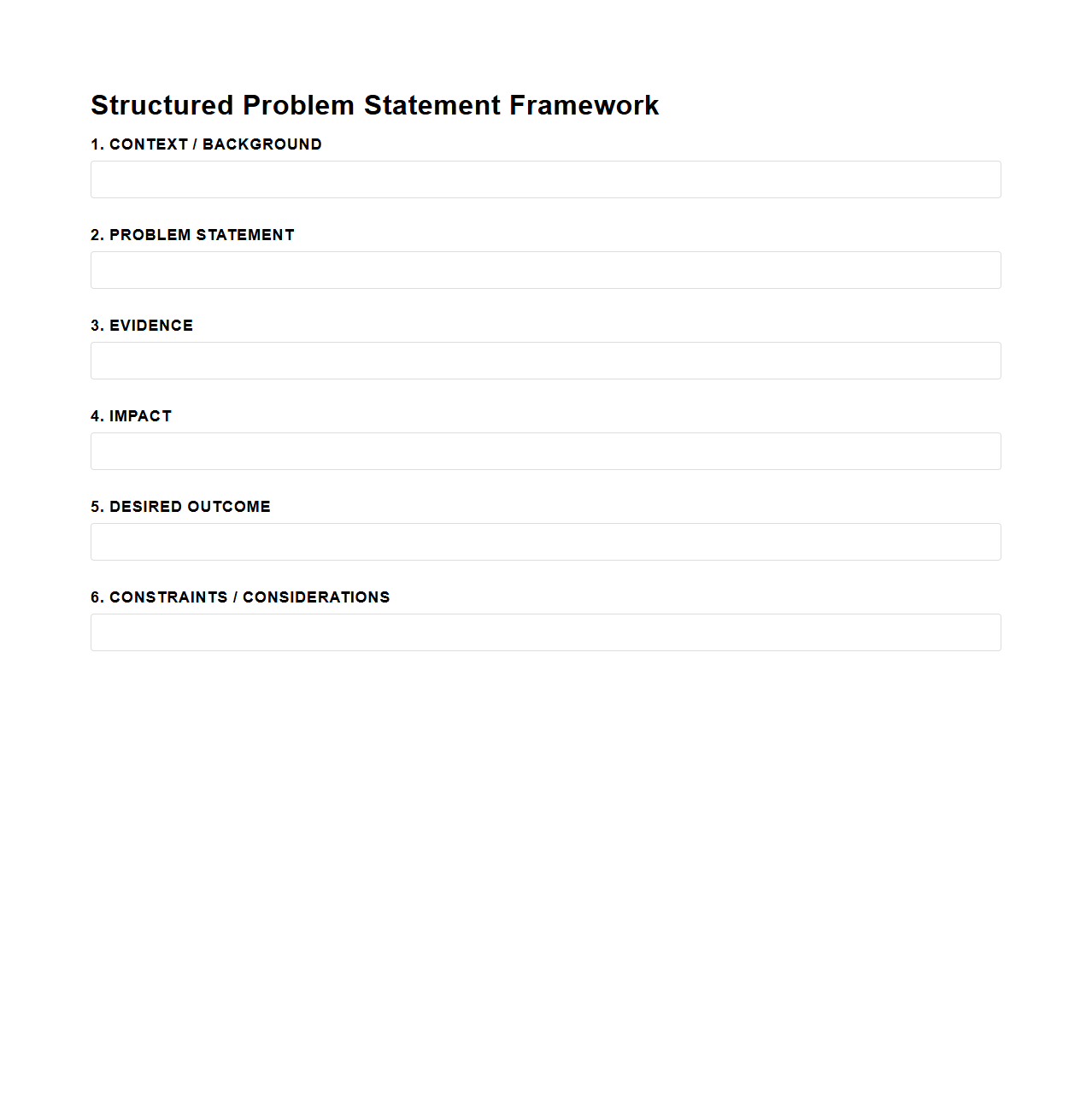
Structured Problem Statement Framework
A
Structured Problem Statement Framework document clearly defines a problem by breaking it down into specific components such as the issue, its impact, and the stakeholders involved. It provides a systematic approach to identify root causes and aligns team understanding to drive effective solutions. This framework enhances decision-making by offering a concise and focused problem analysis.
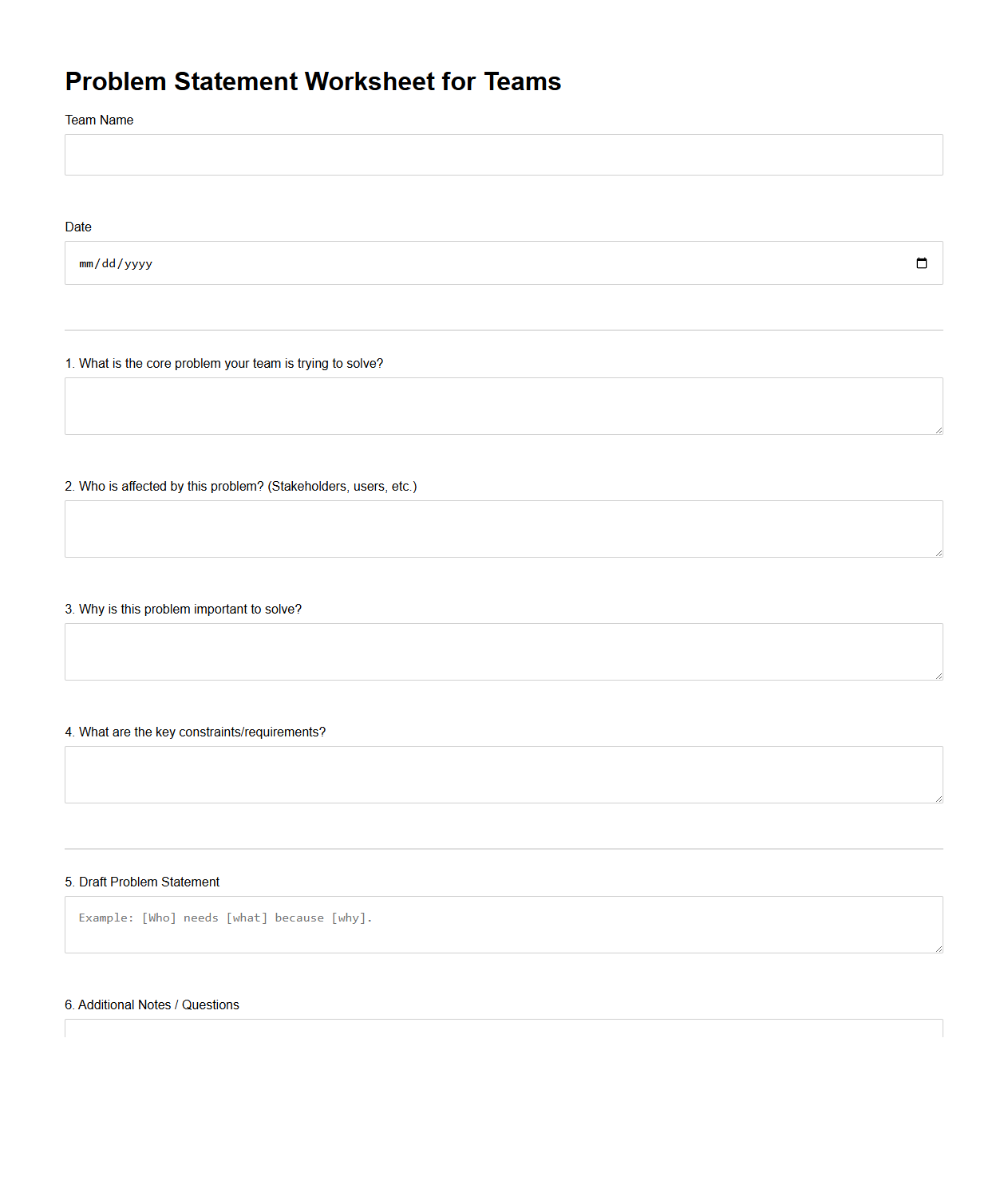
Problem Statement Worksheet for Teams
The
Problem Statement Worksheet for Teams document serves as a structured tool to clearly define and articulate a team's core problem or challenge. It helps teams break down complex issues into specific, actionable components by focusing on key aspects such as impact, cause, and desired outcomes. This worksheet enhances collaboration and alignment by providing a common understanding and framework for problem-solving efforts.
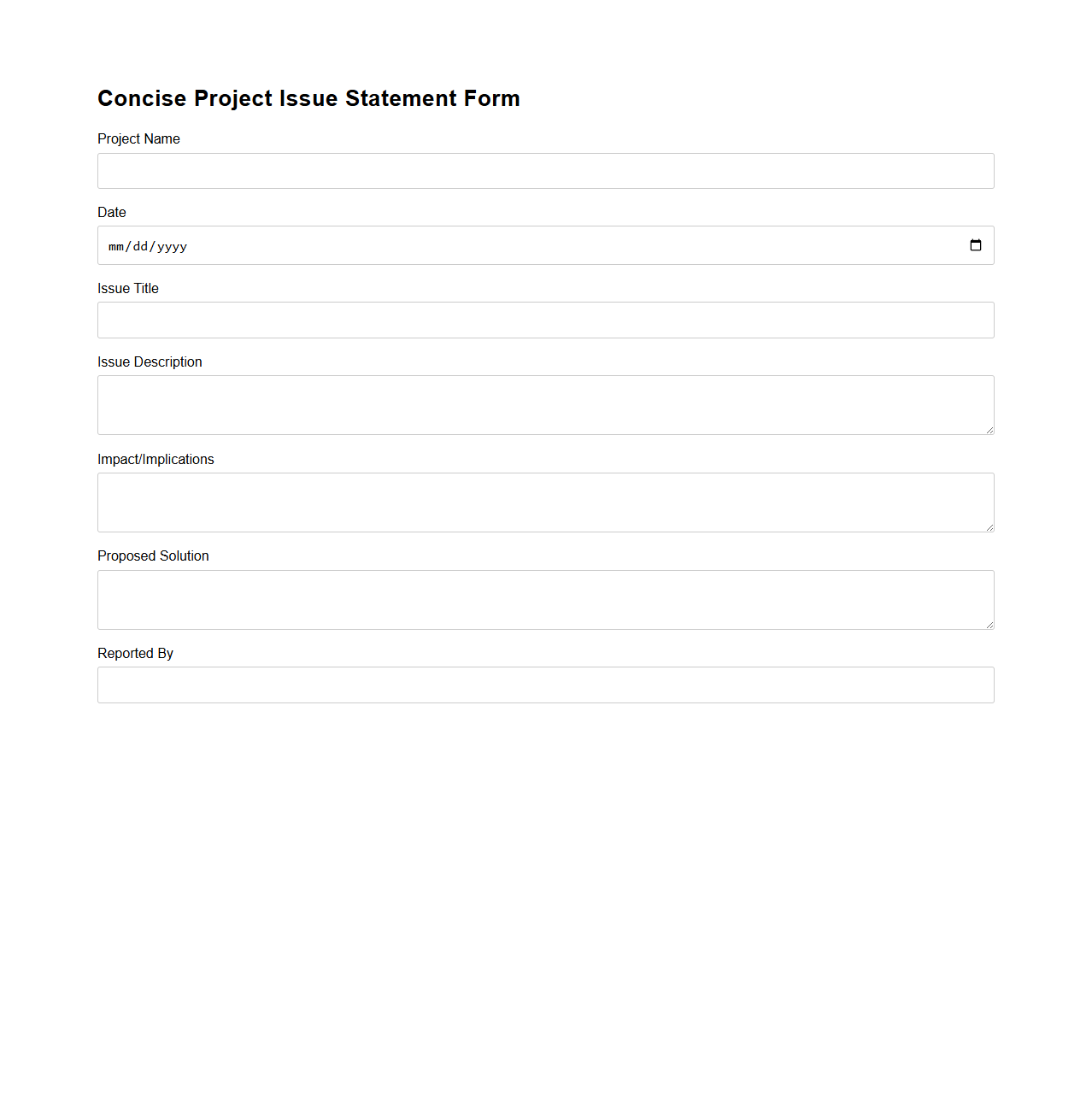
Concise Project Issue Statement Form
A
Concise Project Issue Statement Form document clearly identifies and describes a specific problem or challenge within a project, enabling teams to address it effectively. It captures essential details such as the issue's nature, impact, stakeholders involved, and potential risks, ensuring streamlined communication and resolution processes. This form supports project management best practices by providing a focused and actionable framework for issue tracking and decision-making.
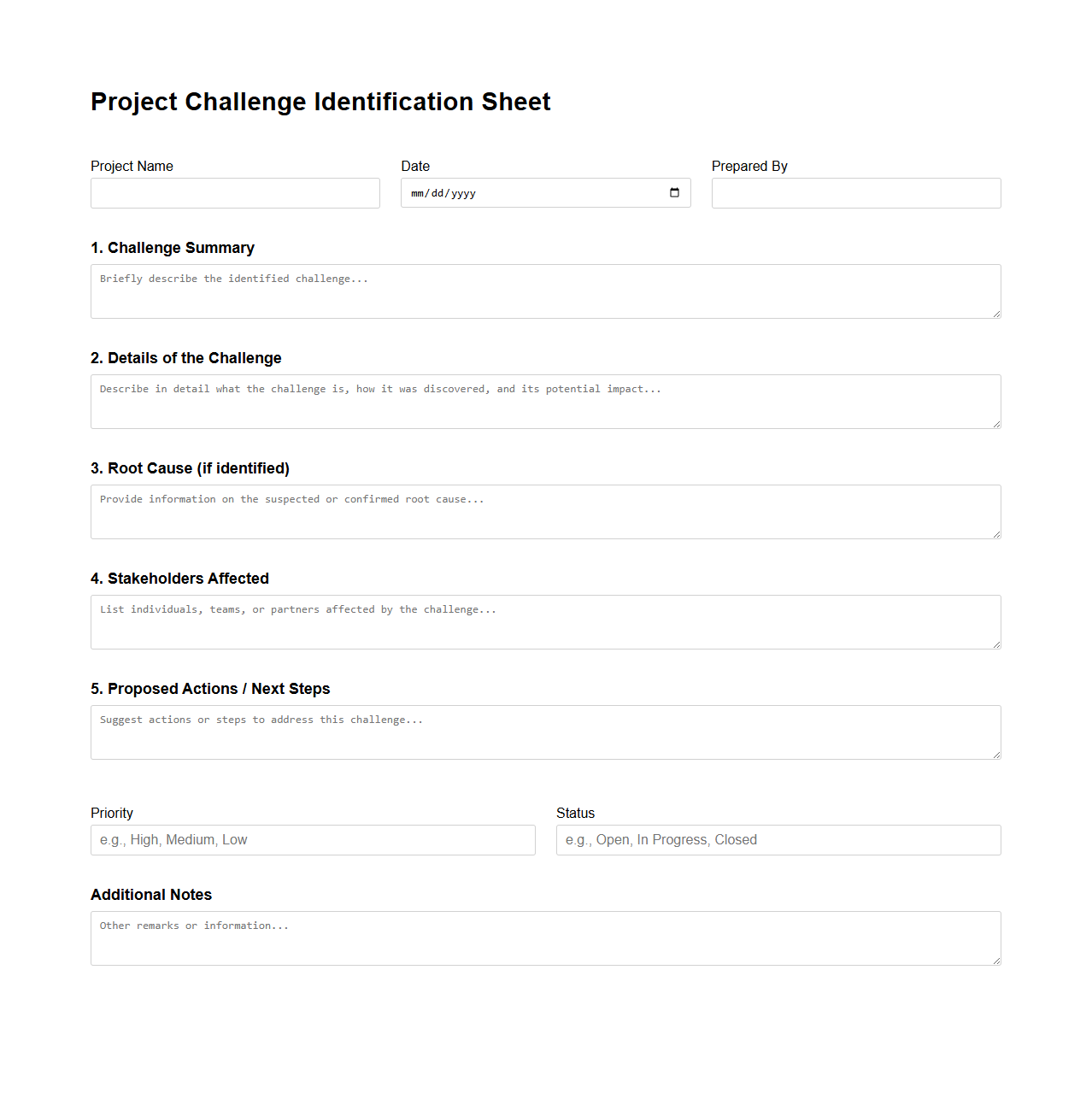
Project Challenge Identification Sheet
The
Project Challenge Identification Sheet document serves as a systematic tool to pinpoint, document, and analyze potential obstacles within a project. It enables project managers and teams to assess risks, clarify issues, and develop targeted strategies for mitigation. By maintaining this record, organizations enhance problem-solving efficiency and improve overall project outcomes.
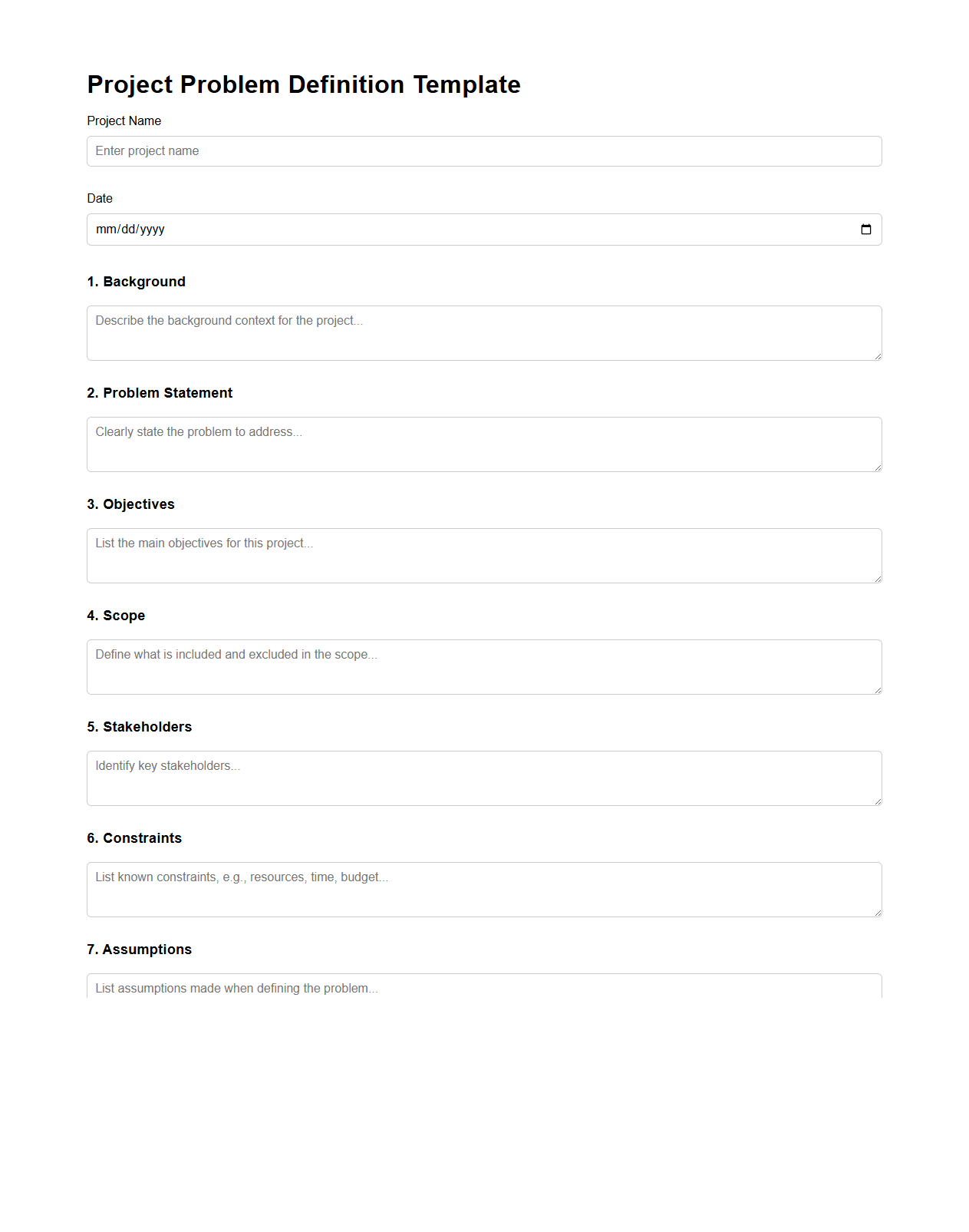
Project Problem Definition Template
The
Project Problem Definition Template document serves as a structured framework to clearly identify and articulate the core issue a project aims to address. It outlines the problem statement, its impact on stakeholders, and the desired outcomes, ensuring alignment among project teams and decision-makers. This template enhances project clarity, guiding effective solution development and resource allocation.
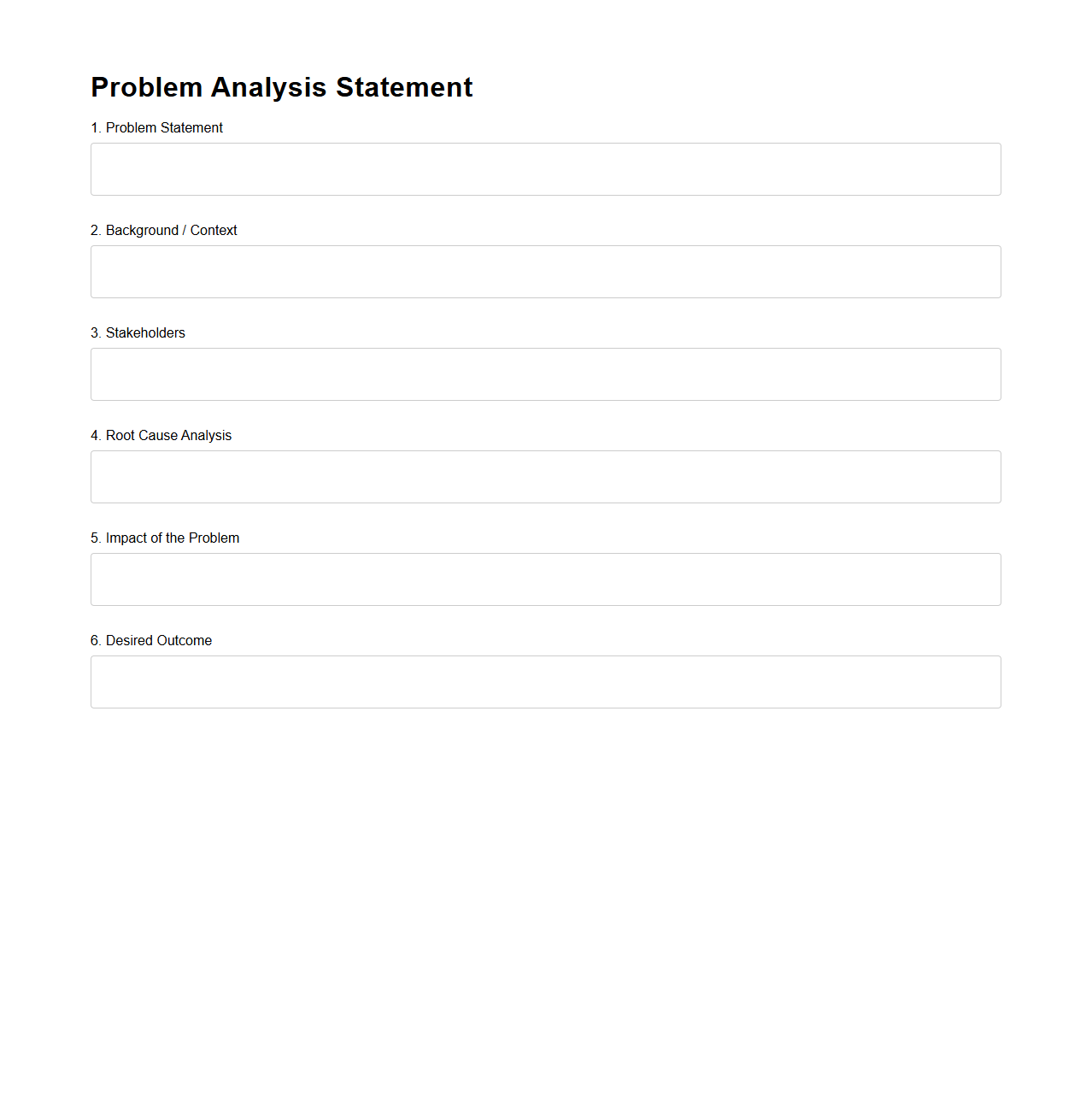
Problem Analysis Statement Layout
A
Problem Analysis Statement Layout document systematically outlines the key issue by detailing its causes, effects, and context to support effective decision-making. It serves as a structured framework for identifying challenges, evaluating impacts, and guiding strategic solutions within project management or business analysis. This document typically includes problem definition, stakeholder perspectives, and measurable objectives to ensure clarity and alignment.
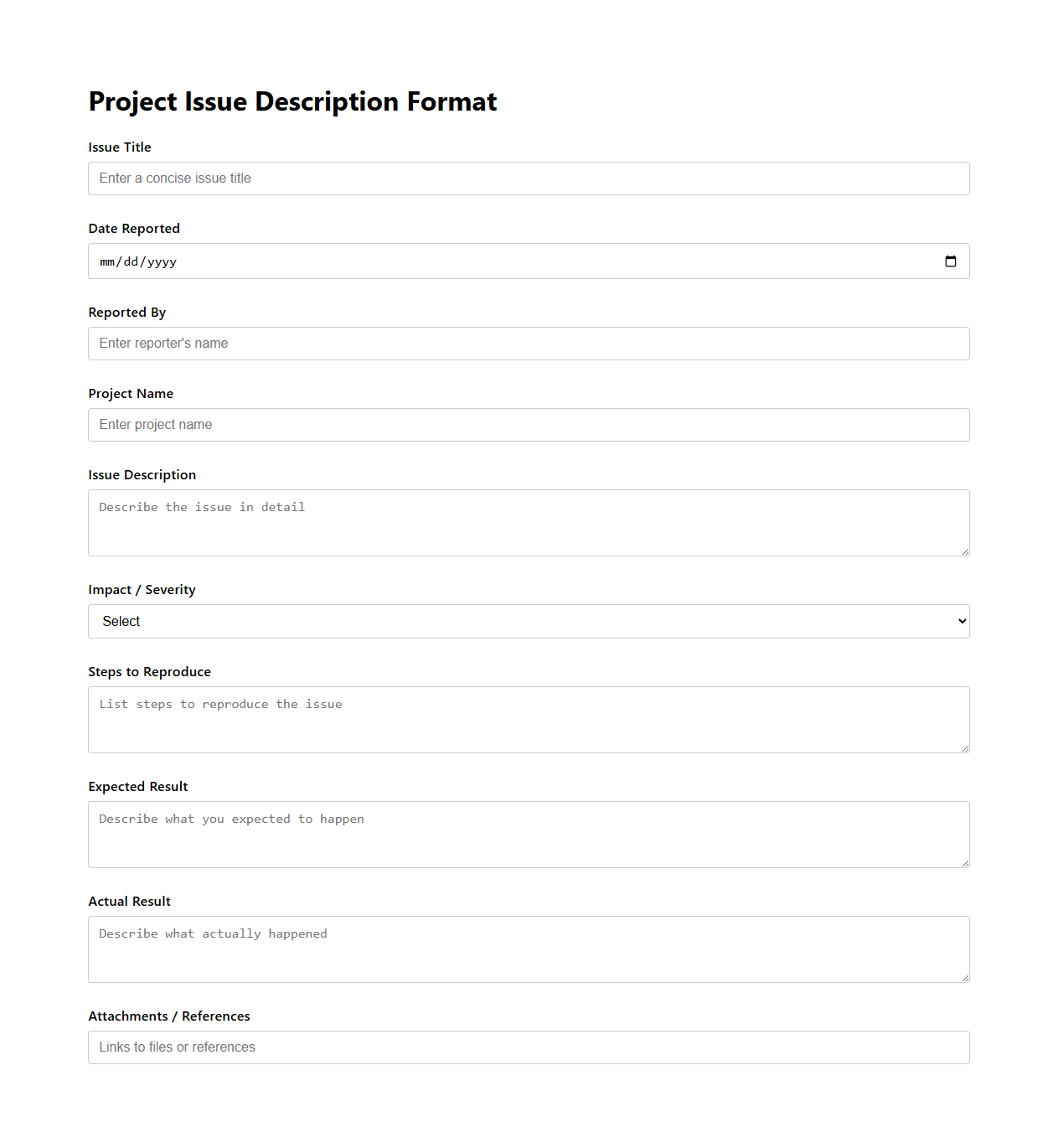
Project Issue Description Format
A
Project Issue Description Format document standardizes how problems encountered during a project are recorded, ensuring consistency and clarity. It typically includes fields such as issue identification, description, impact analysis, responsible parties, and proposed resolution steps. This format helps teams efficiently track, manage, and resolve issues to minimize project delays and maintain workflow integrity.
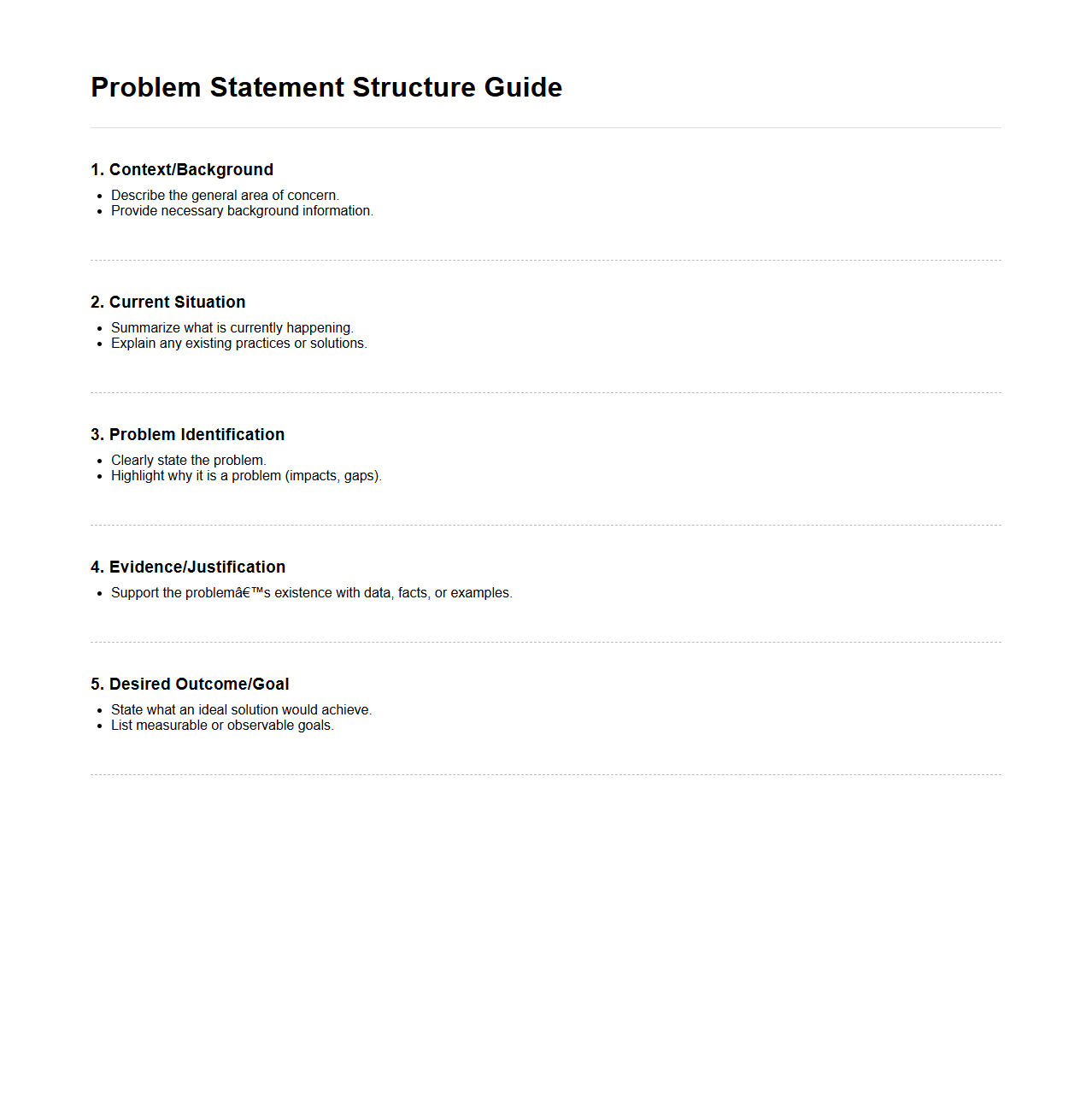
Problem Statement Structure Guide
The
Problem Statement Structure Guide document provides a clear framework for articulating issues, ensuring precise identification of challenges and their context. It outlines essential components such as the problem description, impact analysis, and scope to facilitate effective communication and solution development. This guide is crucial for project teams, researchers, and stakeholders aiming to create focused and actionable problem statements.
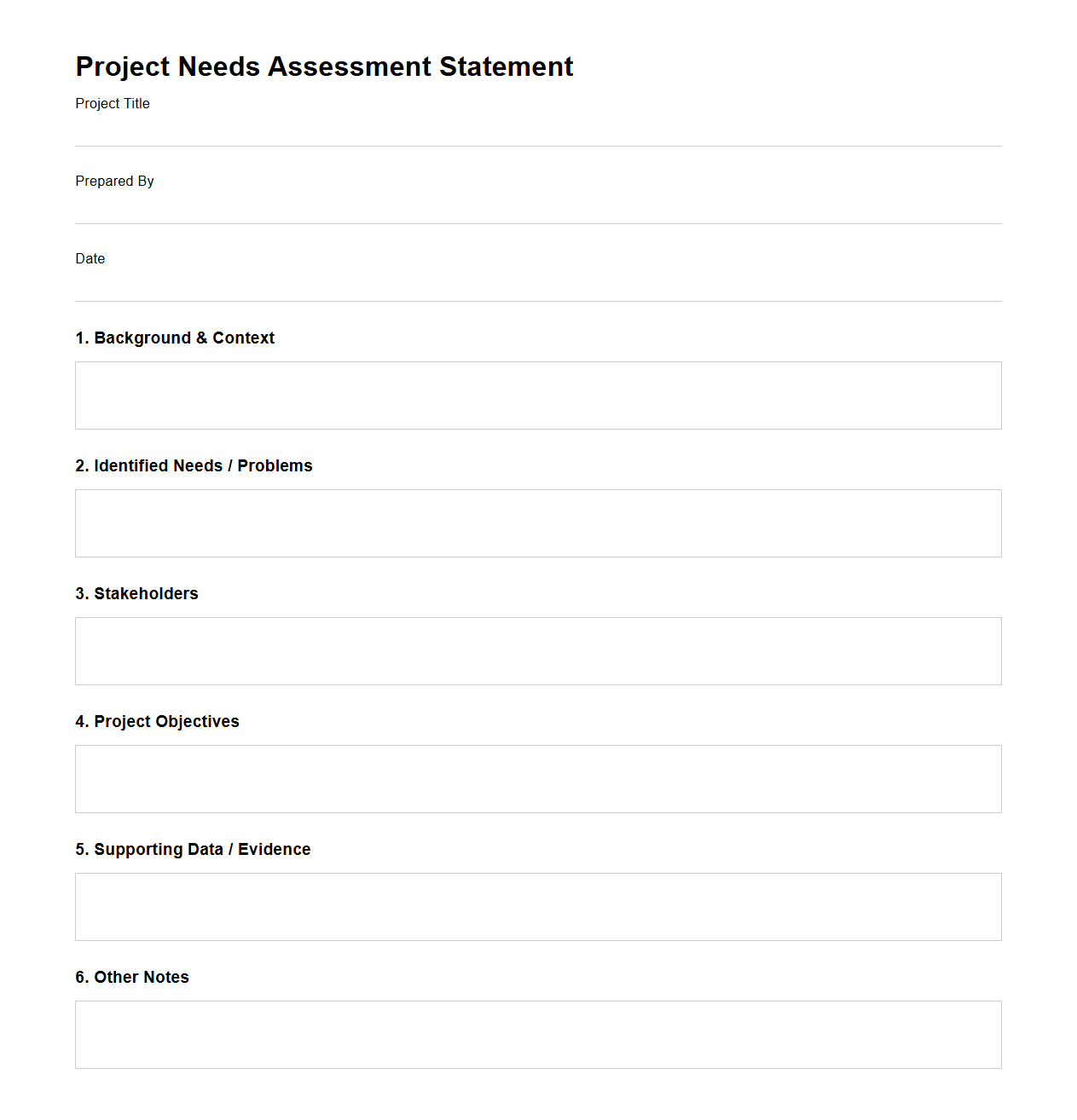
Project Needs Assessment Statement
A
Project Needs Assessment Statement document identifies and evaluates the specific requirements and challenges a project aims to address. It provides a clear justification for the project's existence by outlining the gaps, problems, or opportunities that necessitate the initiative. This document serves as a foundational guide for project planning, ensuring alignment with stakeholder expectations and resource allocation.
What key elements should be included in a blank problem statement template for project documentation?
A blank problem statement template must include the description of the problem clearly and concisely to ensure all stakeholders understand the issue. It should outline the current state versus the desired state, highlighting the gap that the project aims to bridge. Additionally, it must specify the impact or consequences if the problem remains unresolved, emphasizing the urgency and relevance.
How does a blank problem statement guide the scope definition in project planning?
A blank problem statement serves as a foundational tool that precisely defines the project boundaries and focus areas based on the identified problem. It helps prevent scope creep by ensuring the project team addresses only what is necessary to resolve the specified issue. This clarity facilitates better resource allocation and timeline estimation, aligning the project goals with stakeholder expectations.
Which common pitfalls occur when drafting a blank problem statement for project teams?
One frequent pitfall is the problem statement being too vague or broad, which leads to misaligned objectives and confusion. Another issue is focusing on symptoms rather than the root cause, which results in ineffective solutions. Lastly, ignoring stakeholder input can cause the problem statement to lack critical perspectives, reducing team buy-in and project success.
How can a blank problem statement template be tailored to different project methodologies?
For Agile projects, the template should emphasize iterative problem refinement and flexibility to accommodate change. In Waterfall methodologies, it requires a more detailed, upfront problem definition to ensure thorough planning. Hybrid approaches benefit from a balanced template that integrates clear problem articulation with adaptability throughout the project lifecycle.
What metrics determine the effectiveness of a blank problem statement in project proposals?
The clarity and specificity of the problem statement can be measured by stakeholder comprehension and alignment during initial reviews. Its effectiveness is also gauged by how well it guides the development of actionable objectives and deliverables. Finally, successful resolution rates and the reduction of scope changes during the project lifecycle indicate a well-crafted problem statement.