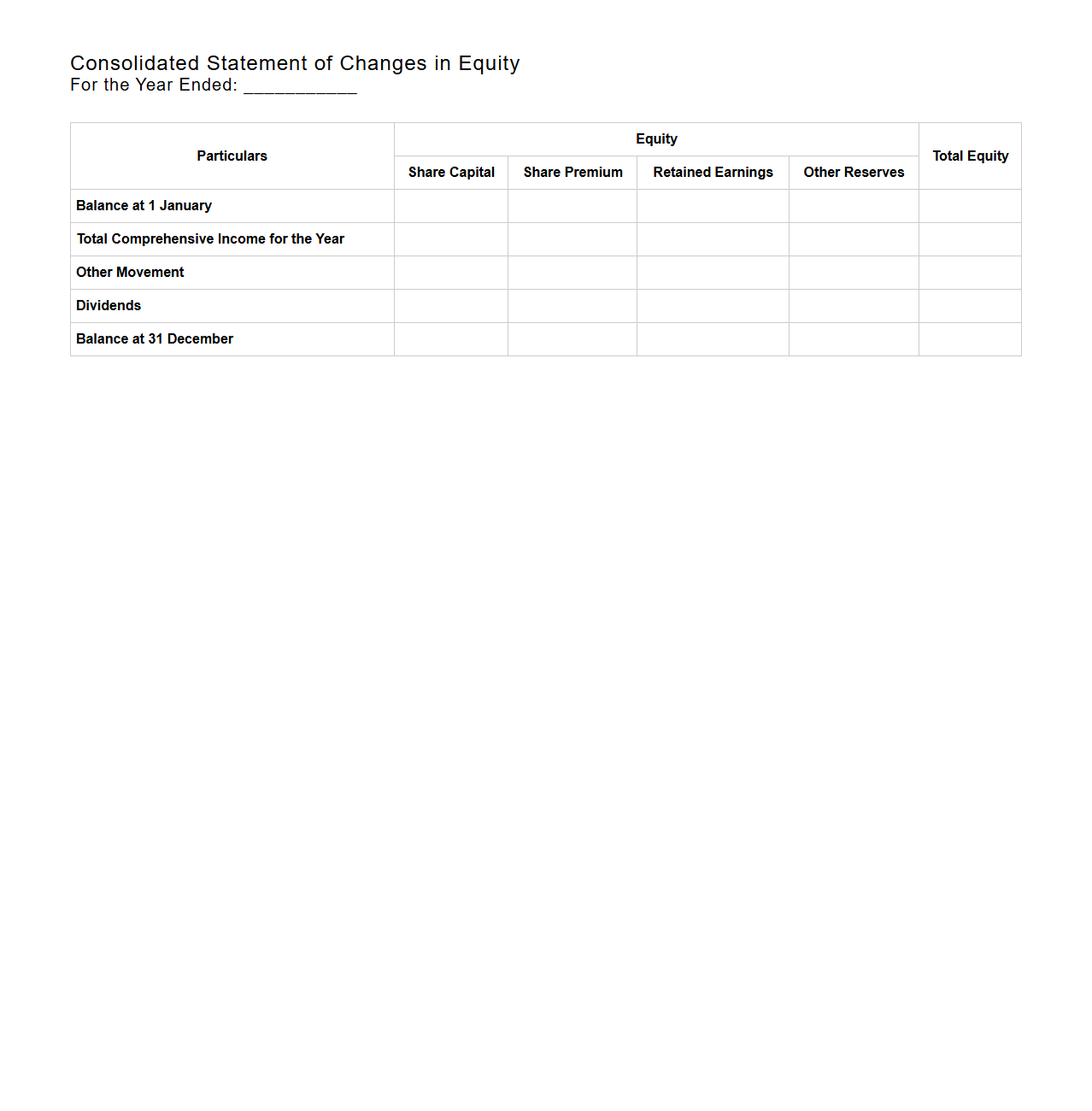
The Blank Statement of Changes in Equity Template for Companies provides a structured format to document equity movements over a reporting period. It captures details such as share capital, retained earnings, and other reserves, ensuring clear financial transparency. This template aids in maintaining accurate records essential for auditing and stakeholder reporting.
Blank Consolidated Statement of Changes in Equity Form
The
Blank Consolidated Statement of Changes in Equity Form is a financial document used by companies to present changes in equity accounts during a specific period. It provides a detailed breakdown of components such as share capital, retained earnings, reserves, and other equity movements, helping stakeholders evaluate the impact of transactions on overall shareholder equity. This form is essential for transparent financial reporting, compliance with accounting standards, and accurate consolidation of group financial statements.
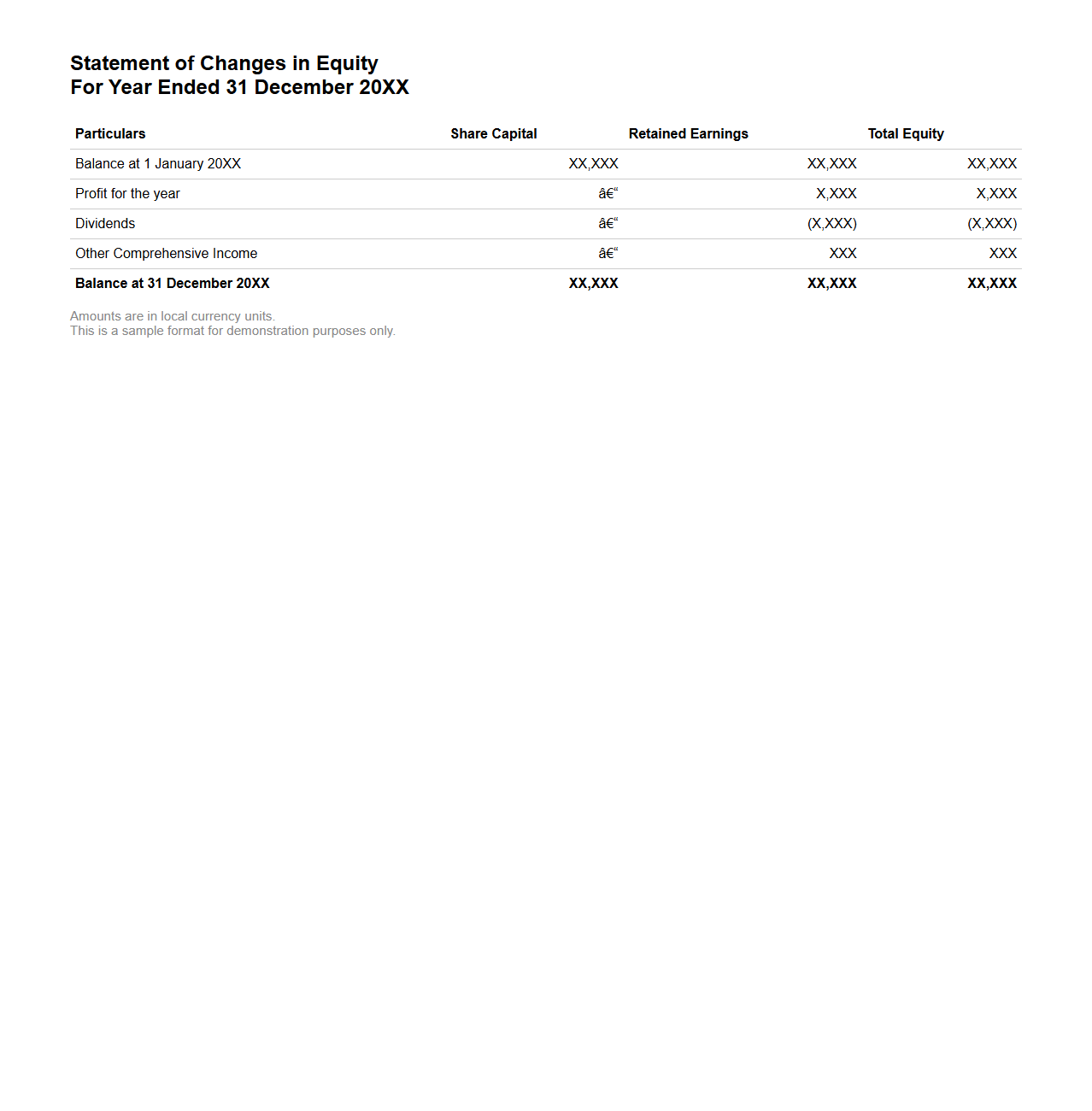
Basic Statement of Changes in Equity Sample
A
Basic Statement of Changes in Equity sample document illustrates how a company's equity components, such as share capital, retained earnings, and reserves, have changed over a specific period. It provides a clear record of transactions affecting equity, including profits or losses, dividend distributions, issuance or repurchase of shares, and other adjustments. This document serves as an essential tool for investors and stakeholders to assess the company's financial health and capital management.
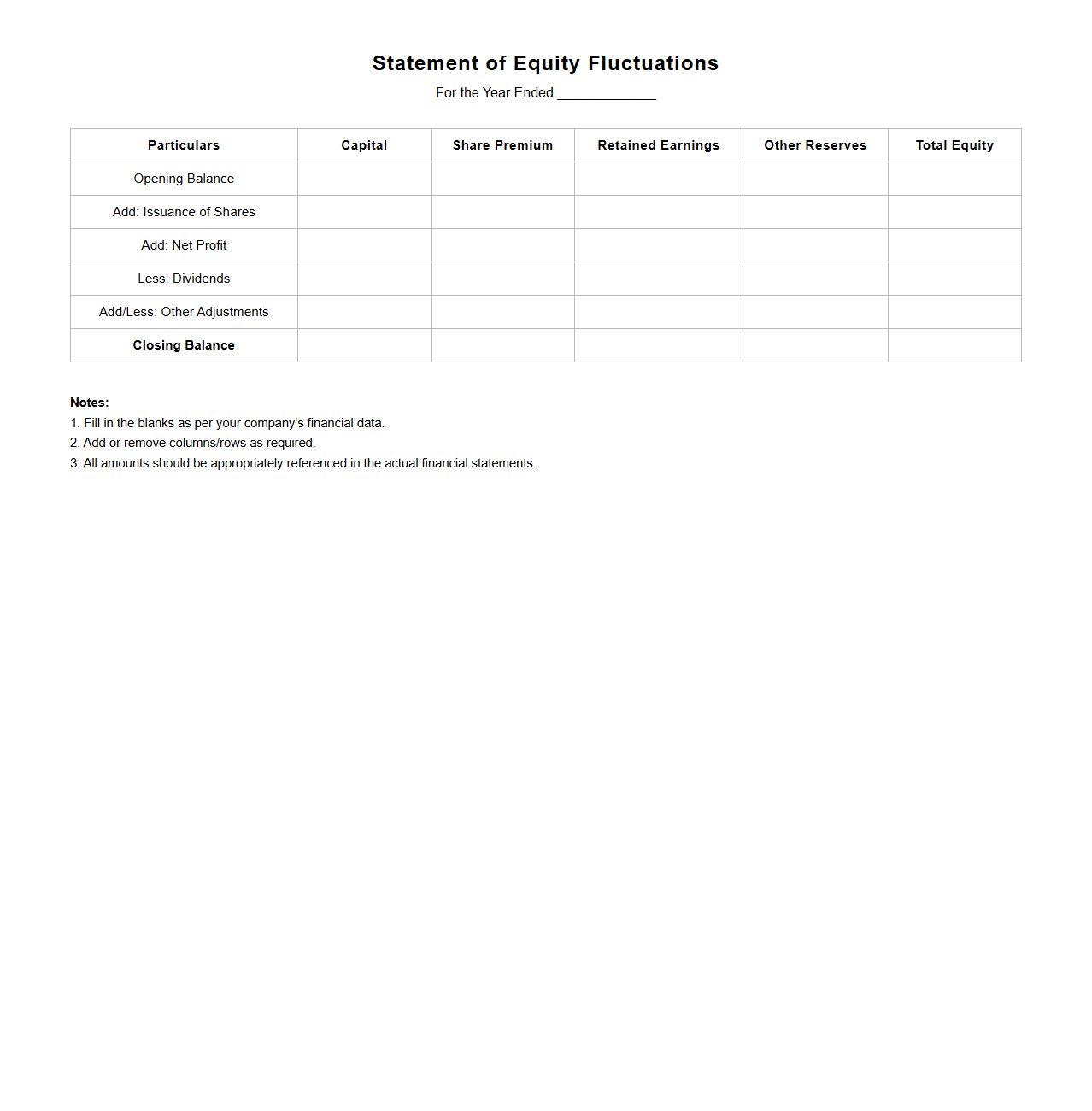
Statement of Equity Fluctuations Blank Sheet
A
Statement of Equity Fluctuations Blank Sheet document is a financial template used to record and analyze changes in shareholders' equity over a specific period. It tracks items such as retained earnings, share capital, dividends, and other equity transactions, providing clear insights into the company's financial health. This document is essential for accountants and financial analysts to ensure accurate equity reporting and compliance with accounting standards.
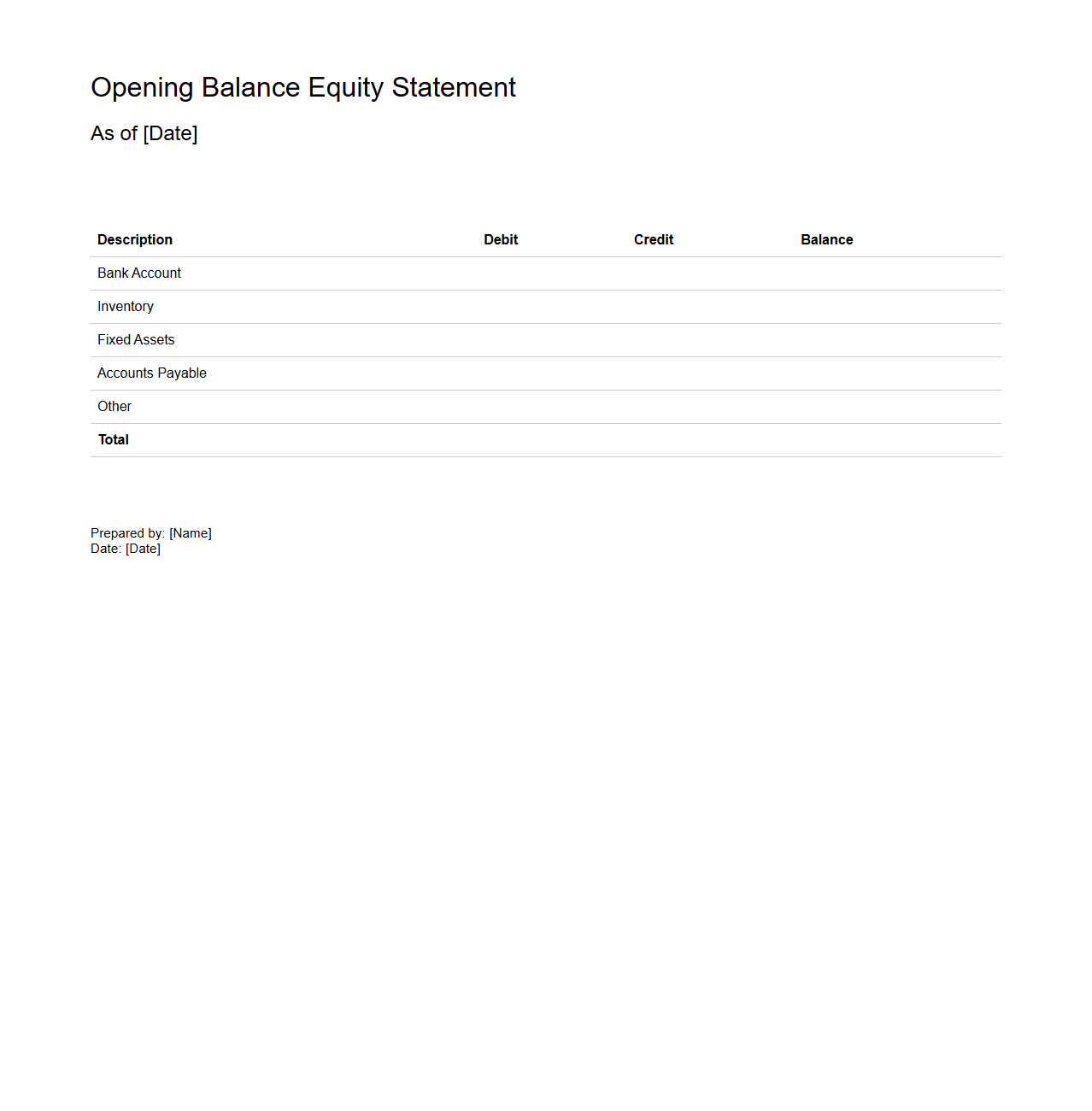
Opening Balance Equity Statement Template
The
Opening Balance Equity Statement Template document is designed to record the initial equity balances when setting up a new accounting system or starting a new fiscal period. It ensures accurate tracking of ownership interest by listing all opening equity accounts and their corresponding balances. This template facilitates clear financial reporting and supports proper reconciliation during the setup process.
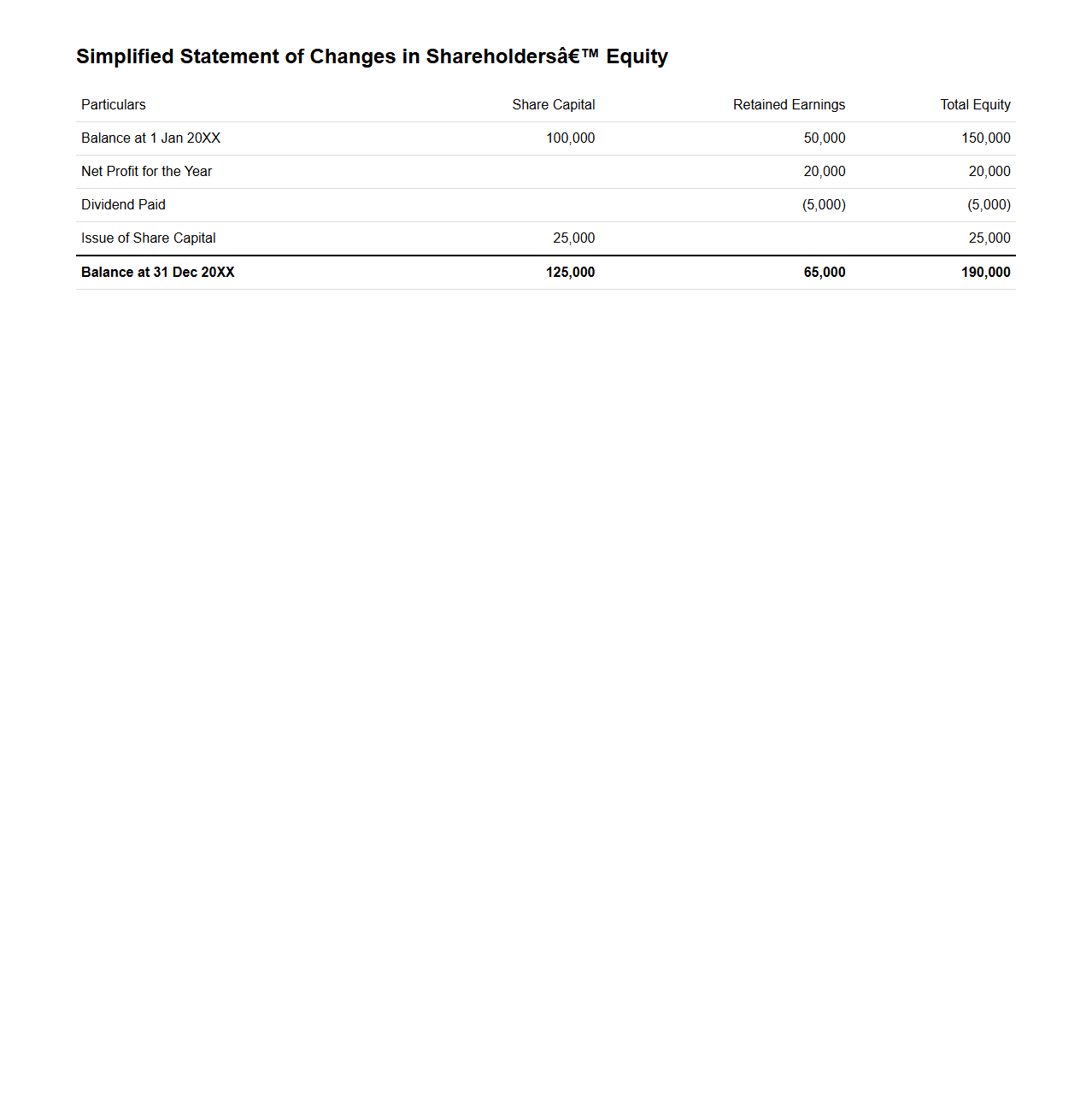
Simplified Statement of Changes in Shareholders’ Equity
The
Simplified Statement of Changes in Shareholders' Equity is a financial document that summarizes the movements in equity accounts over a reporting period, including share capital, retained earnings, and reserves. It provides a clear overview of how shareholder contributions, dividends, net income, and other comprehensive income affect the overall equity balance. This statement is essential for investors and analysts to assess changes in ownership interest and financial health of a company.
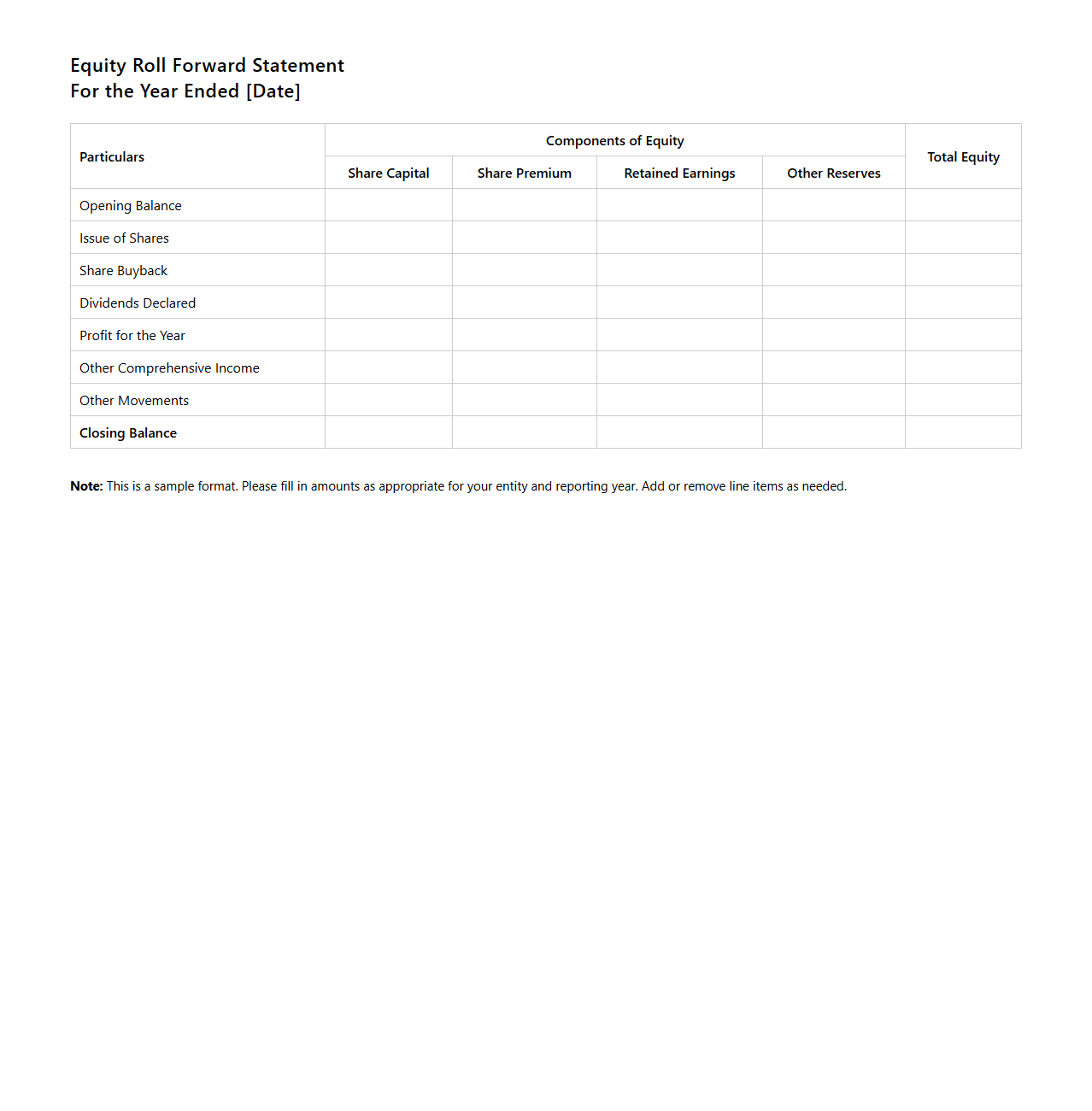
Equity Roll Forward Statement Format
The
Equity Roll Forward Statement Format document outlines the structured presentation of changes in shareholders' equity over a specific period, detailing components such as retained earnings, share capital, and other comprehensive income. It systematically tracks the beginning and ending balances, incorporating transactions like issuance of shares, dividends, and net income adjustments. This format ensures clarity and transparency in financial reporting, aiding stakeholders in understanding the movements in equity accounts.
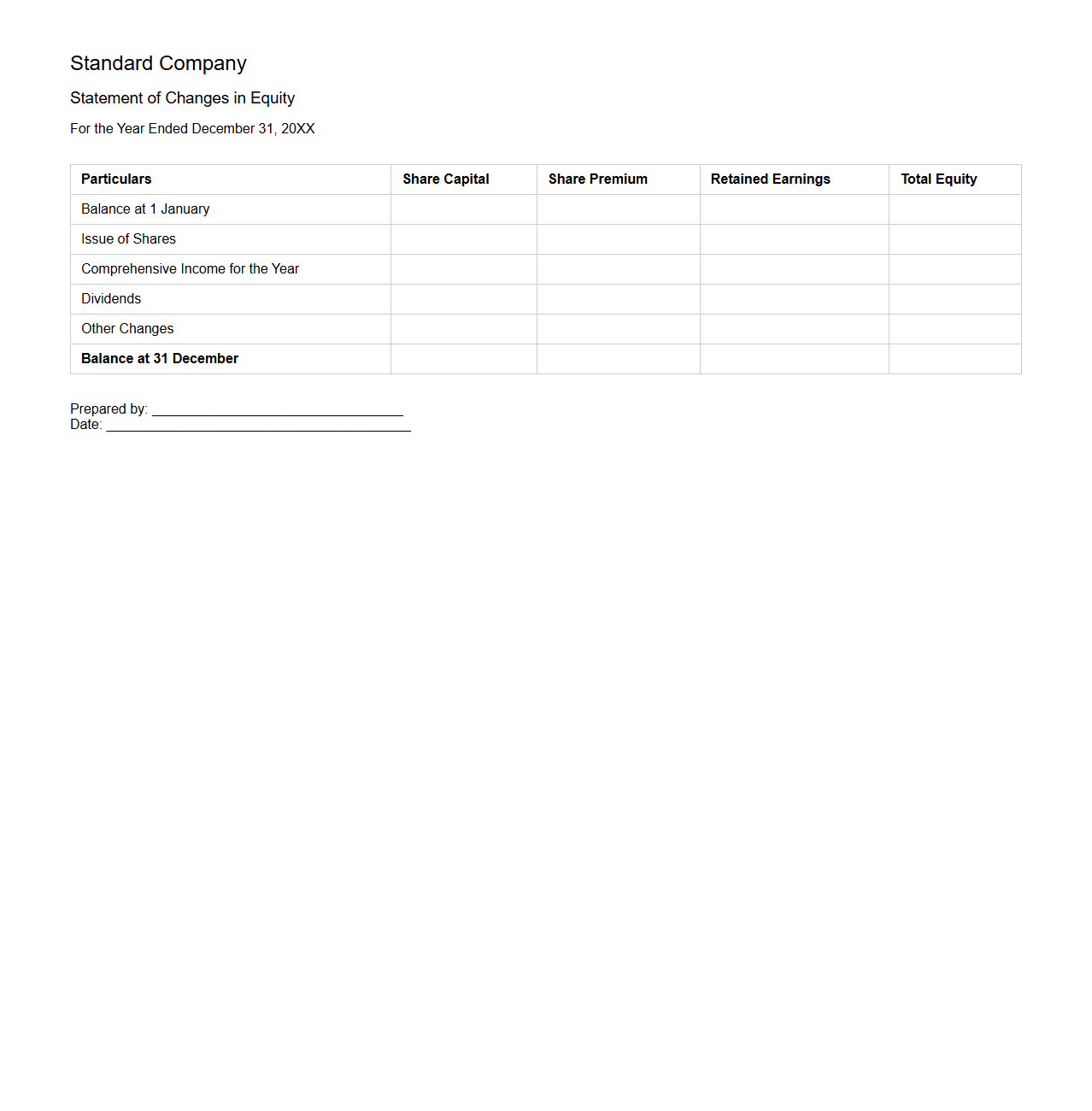
Standard Company Equity Movement Statement
The
Standard Company Equity Movement Statement document details changes in shareholders' equity over a specific period, outlining items such as net income, dividends, share issuances, and repurchases. This financial statement provides critical insights into how equity components like retained earnings and paid-in capital evolve, aiding stakeholders in assessing a company's financial health. Accurate tracking of equity movements supports transparent reporting and informed investment decisions.
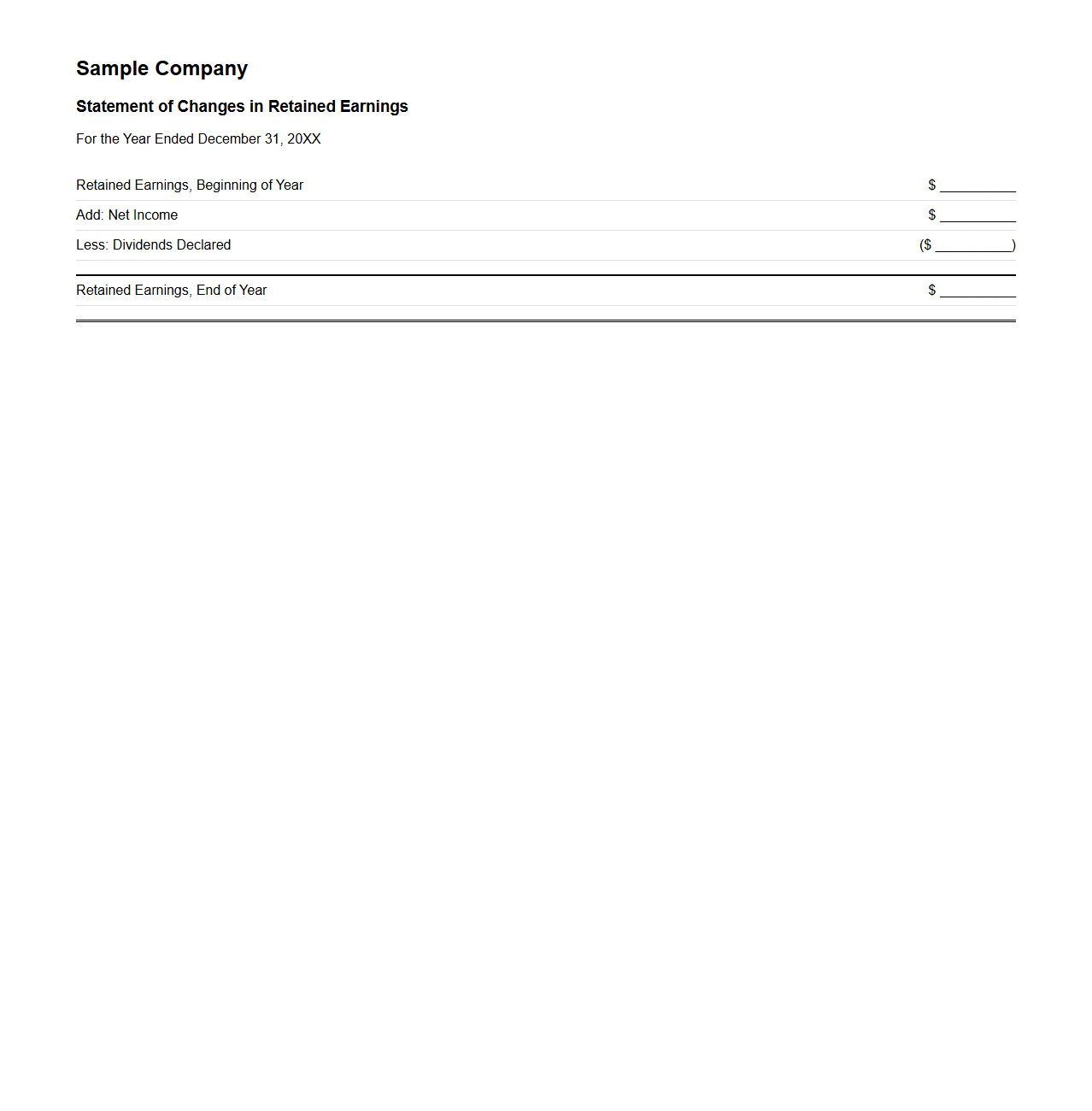
Basic Retained Earnings Changes Statement
The
Basic Retained Earnings Changes Statement document outlines the fluctuations in a company's retained earnings over a specific period. It details additions from net income and deductions such as dividends paid to shareholders, providing a clear summary of how earnings are reinvested or distributed. This statement is crucial for stakeholders to assess the company's profitability reinvestment and financial stability.
Annual Equity Reconciliation Blank Sheet
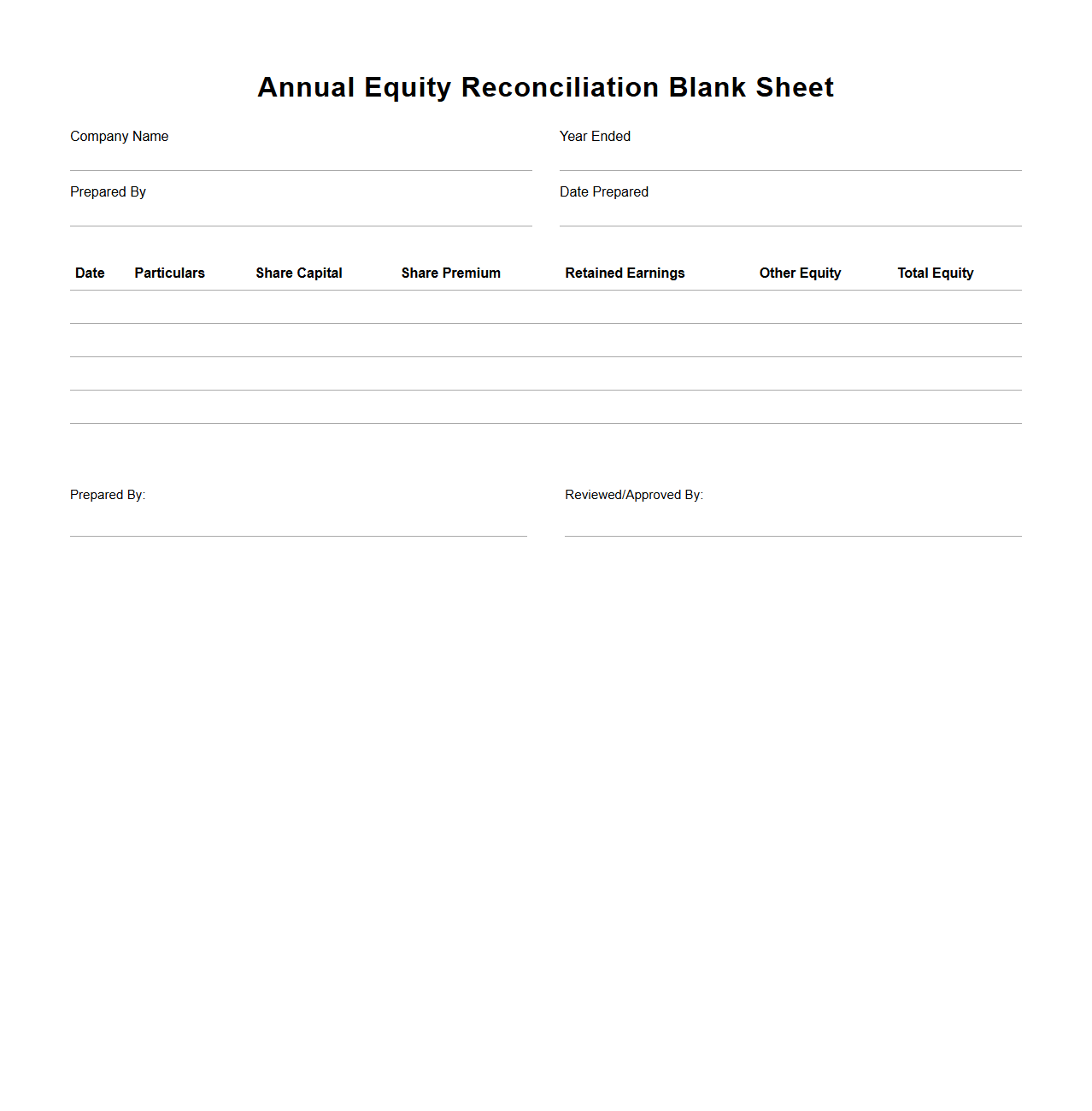
The
Annual Equity Reconciliation Blank Sheet document serves as a structured template used by companies to systematically track and verify changes in equity accounts over a fiscal year. It ensures accurate alignment of beginning equity balances with ending balances by documenting transactions such as stock issuances, dividends, and retained earnings adjustments. This tool is crucial for maintaining transparent financial records and supporting audit processes.
Statement of Partners’ Equity Changes Form
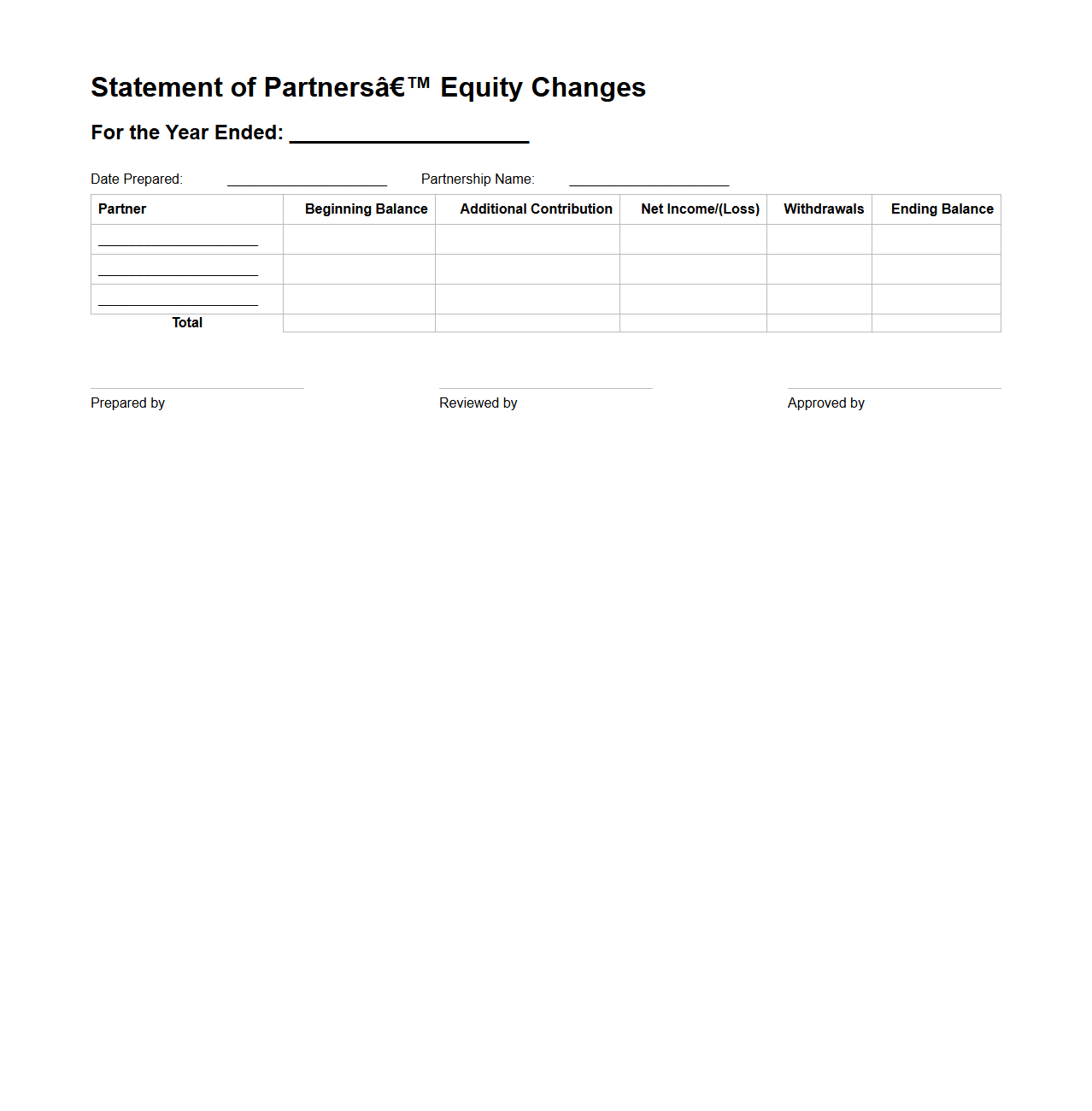
The Statement of Partners' Equity Changes Form is a financial document that details the fluctuations in each partner's ownership interest within a partnership over a specific period. It records contributions, distributions, and share of profits or losses, providing transparency in the movement of equity accounts. This form is essential for accurate accounting and legal compliance, ensuring all partners are informed about their
equity status changes.
What key components are mandatory in a blank Statement of Changes in Equity template for companies?
A blank Statement of Changes in Equity template must include sections for opening equity balances, comprehensive income, and transactions with owners. It is essential to present components such as share capital, reserves, retained earnings, and total equity. Detailed tracking of changes during the reporting period ensures transparency and compliance with accounting standards.
How is share capital typically presented in a blank company equity statement?
Share capital is generally displayed as a distinct column or section, showing the opening balance, movements like new issues or buybacks, and the closing balance. This presentation clearly reflects the company's equity financing changes over the period. Accurate representation helps stakeholders assess the company's capital structure and ownership distribution.
Which columns should be included for reserves in a blank Statement of Changes in Equity?
Reserves in a blank template should include columns for types such as revaluation reserves, statutory reserves, and other comprehensive income reserves. Each reserve category needs individual tracking for opening balances, movements, and closing balances. This segmentation ensures clarity on how retained earnings and equity components fluctuate throughout the financial year.
What notes or disclosures commonly accompany a blank equity statement for audit purposes?
Accompanying notes for a blank equity statement usually detail the accounting policies, assumptions, and methods used in calculating equity movements. Disclosures may cover share issuance details, dividend distributions, and reconciliation of equity components. These explanations assist auditors in verifying the accuracy and completeness of the statement.
How are prior period adjustments reflected in a blank Statement of Changes in Equity form?
Prior period adjustments are incorporated by adjusting opening balances in the statement, often shown as a separate line item for clarity. These adjustments correct errors or changes in accounting policies from previous financial periods. Transparent presentation of such adjustments is crucial for maintaining the integrity and comparability of financial information.