The Blank School Budget Template for Educational Institutions provides a streamlined format to plan, allocate, and track financial resources effectively. Designed to accommodate various expense categories, it helps schools maintain transparency and ensure proper fund management. This template is essential for efficient budgeting and financial decision-making in educational institutions.
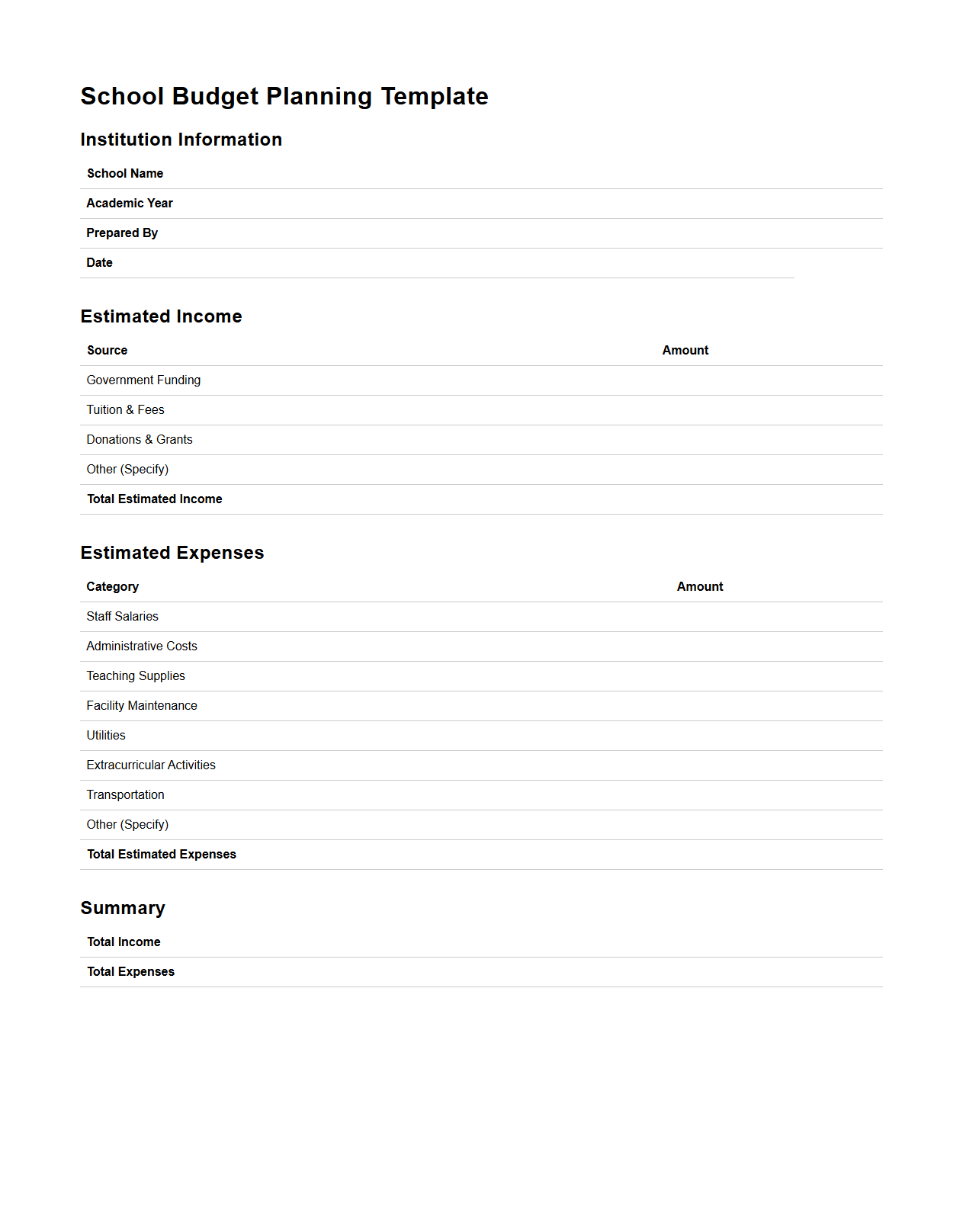
School Budget Planning Template for Academic Institutions
A
School Budget Planning Template for academic institutions is a structured document designed to organize and forecast financial resources for an academic year. It helps schools allocate funds efficiently across various categories such as salaries, supplies, maintenance, and extracurricular activities. This template ensures transparent financial management and supports strategic decision-making to meet both educational goals and operational needs.
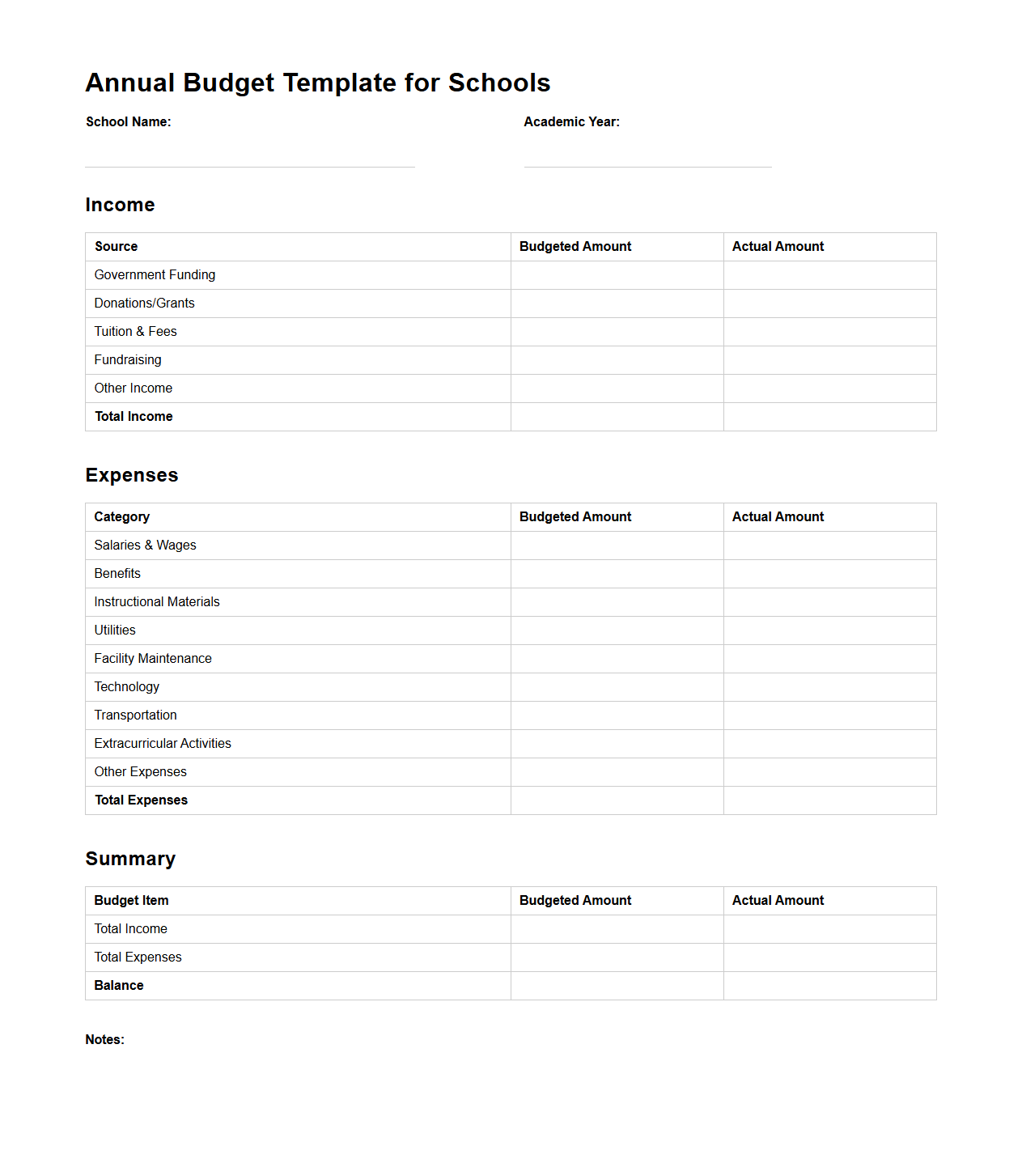
Annual Budget Template for Schools
An
Annual Budget Template for Schools is a structured financial planning document designed to help educational institutions allocate resources effectively throughout the academic year. It outlines projected revenues, expenses, and funding sources, ensuring transparency and accountability in managing school finances. This template aids administrators in tracking expenditures, planning for future needs, and maintaining compliance with district or state financial regulations.
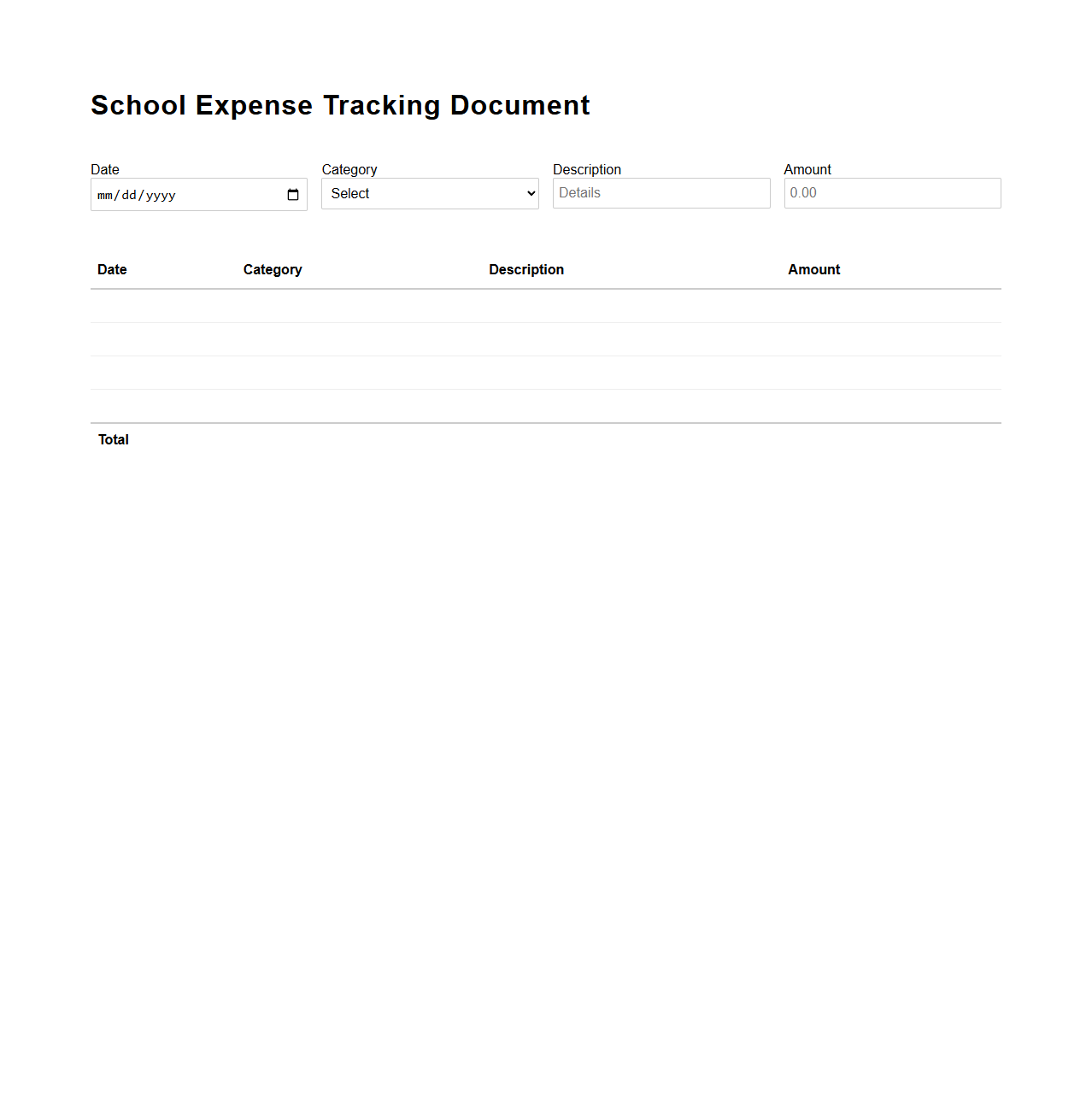
School Expense Tracking Document
A
School Expense Tracking Document is a detailed record used by students, parents, and administrators to monitor and manage educational costs efficiently. It includes categories such as tuition fees, supplies, transportation, and extracurricular activities, providing clear insights into spending patterns. Maintaining this document helps ensure accurate budgeting and financial planning throughout the academic year.
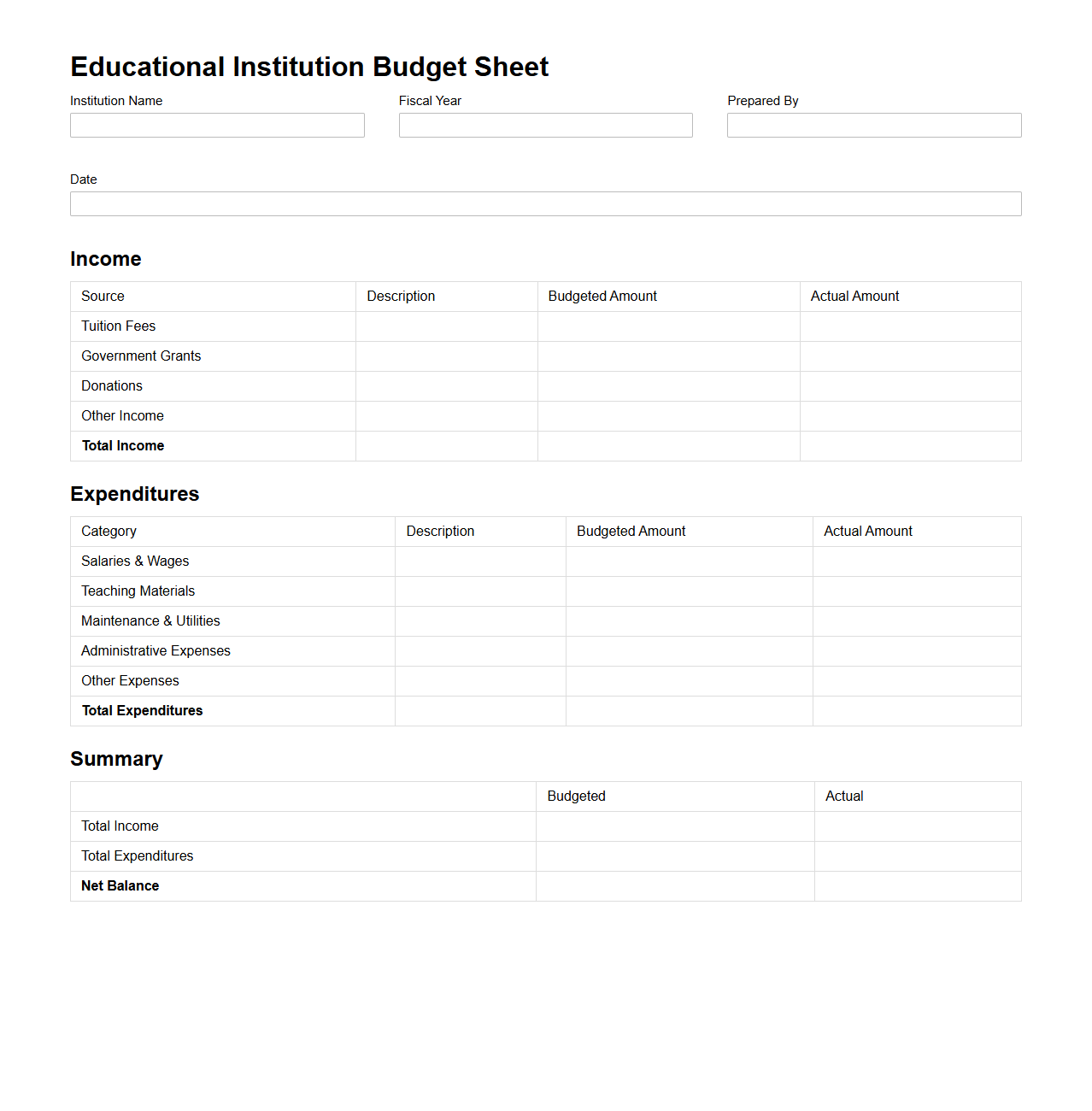
Educational Institution Budget Sheet
An
Educational Institution Budget Sheet document is a detailed financial plan that outlines the projected income and expenses for a school, college, or university over a specific period. It includes categories such as tuition fees, salaries, maintenance costs, equipment purchases, and extracurricular activities funding. This document serves as a critical tool for managing resources effectively, ensuring fiscal responsibility, and supporting strategic planning within the institution.
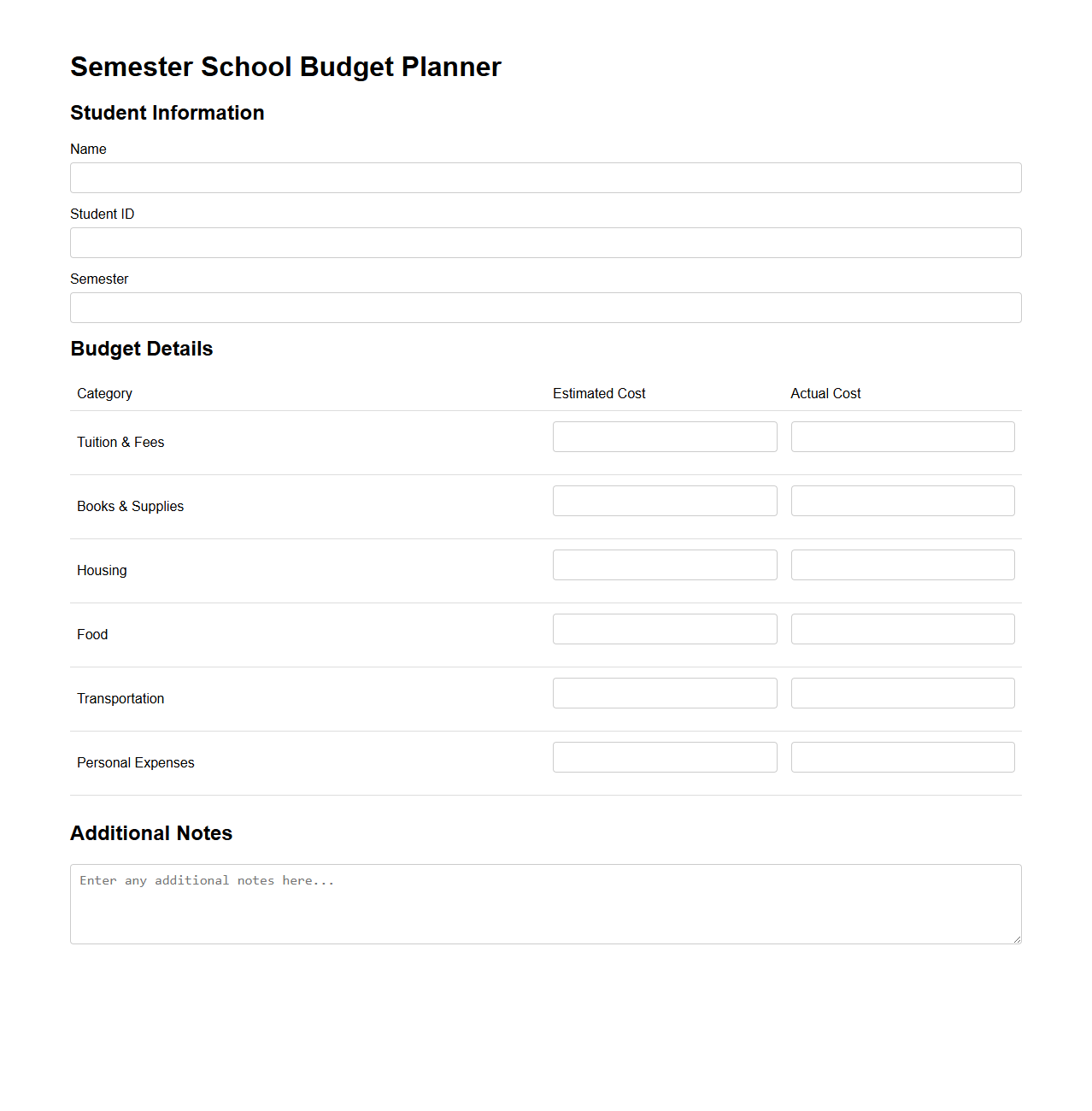
Semester School Budget Planner
The
Semester School Budget Planner document is a comprehensive tool designed to help educational institutions effectively allocate and manage funds for a specific academic term. It includes detailed sections for estimating revenues, planning expenses, and tracking financial performance to ensure optimal use of resources. By facilitating organized budgeting, this planner supports informed decision-making and promotes financial accountability throughout the semester.
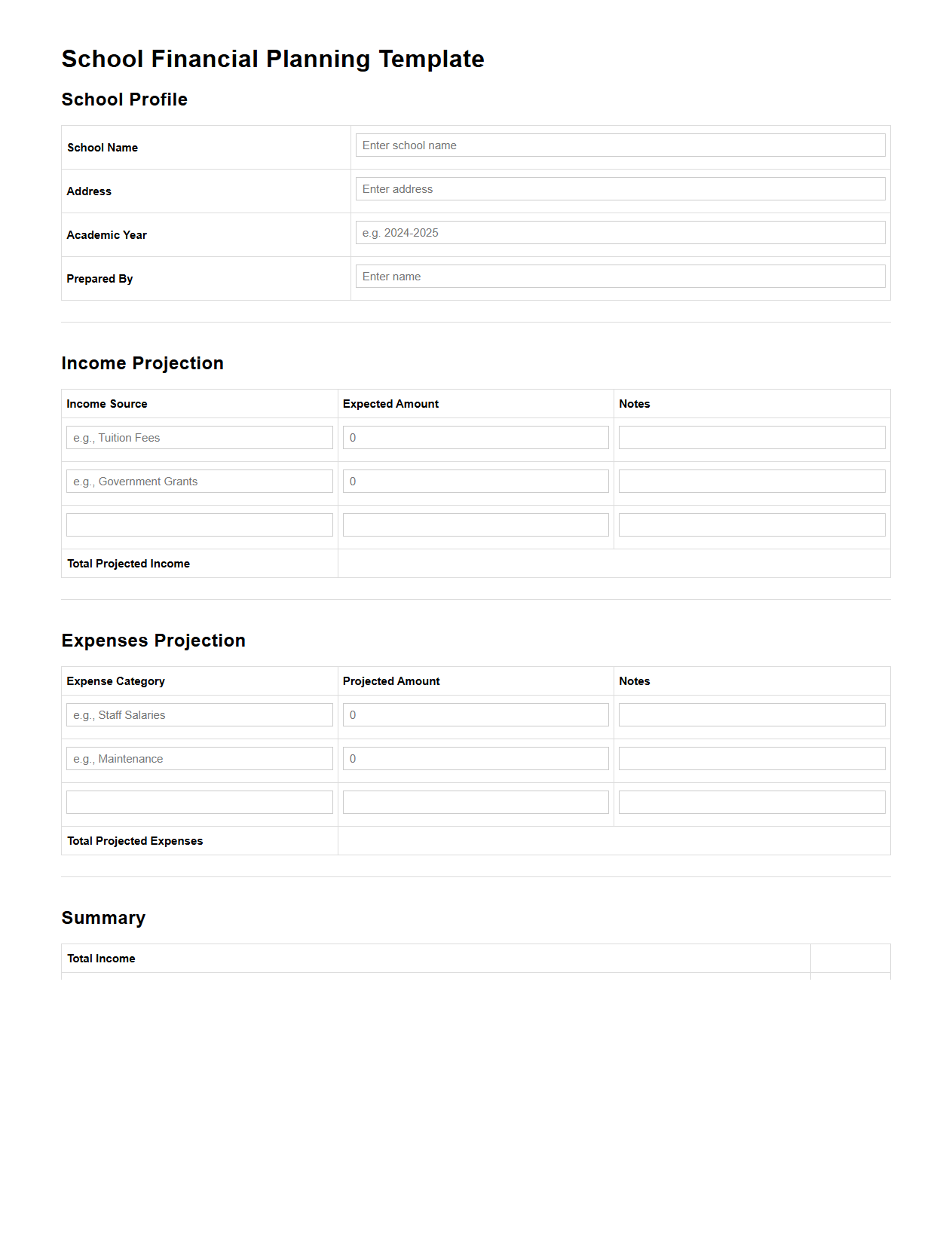
School Financial Planning Template
A
School Financial Planning Template document serves as a structured framework for managing and forecasting a school's budget, expenses, and revenues. It helps administrators allocate funds efficiently to various departments, monitor financial progress, and ensure compliance with fiscal policies. This template typically includes sections for tuition fees, grants, operational costs, staff salaries, and capital expenditures, enabling comprehensive financial oversight.
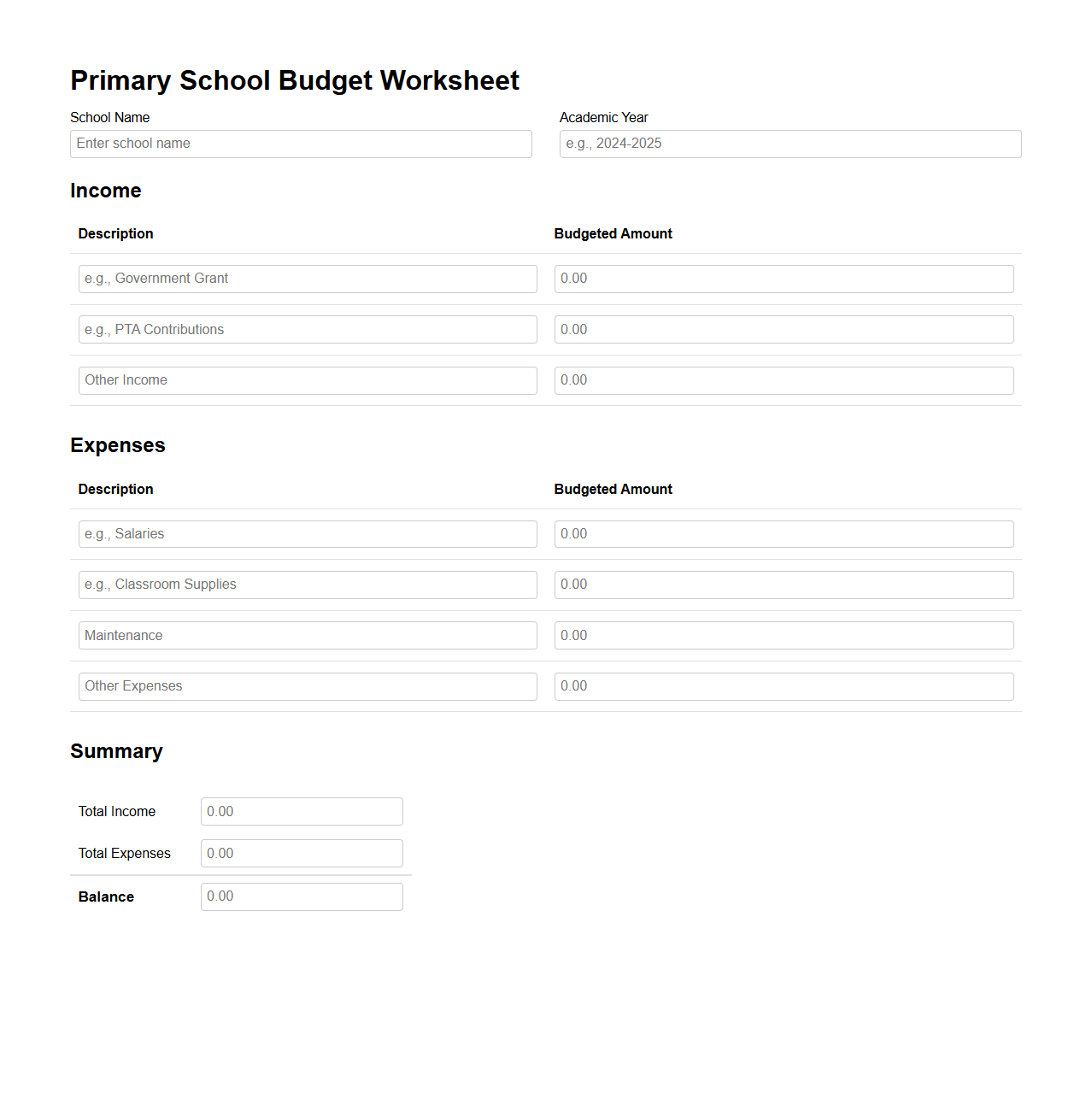
Primary School Budget Worksheet
A
Primary School Budget Worksheet document is a financial planning tool designed to help administrators allocate funds efficiently across various school departments and activities. It outlines projected expenses and revenues, enabling schools to manage resources for instructional materials, staffing, facilities, and extracurricular programs. This worksheet supports transparent financial decision-making and ensures that budget priorities align with educational goals.
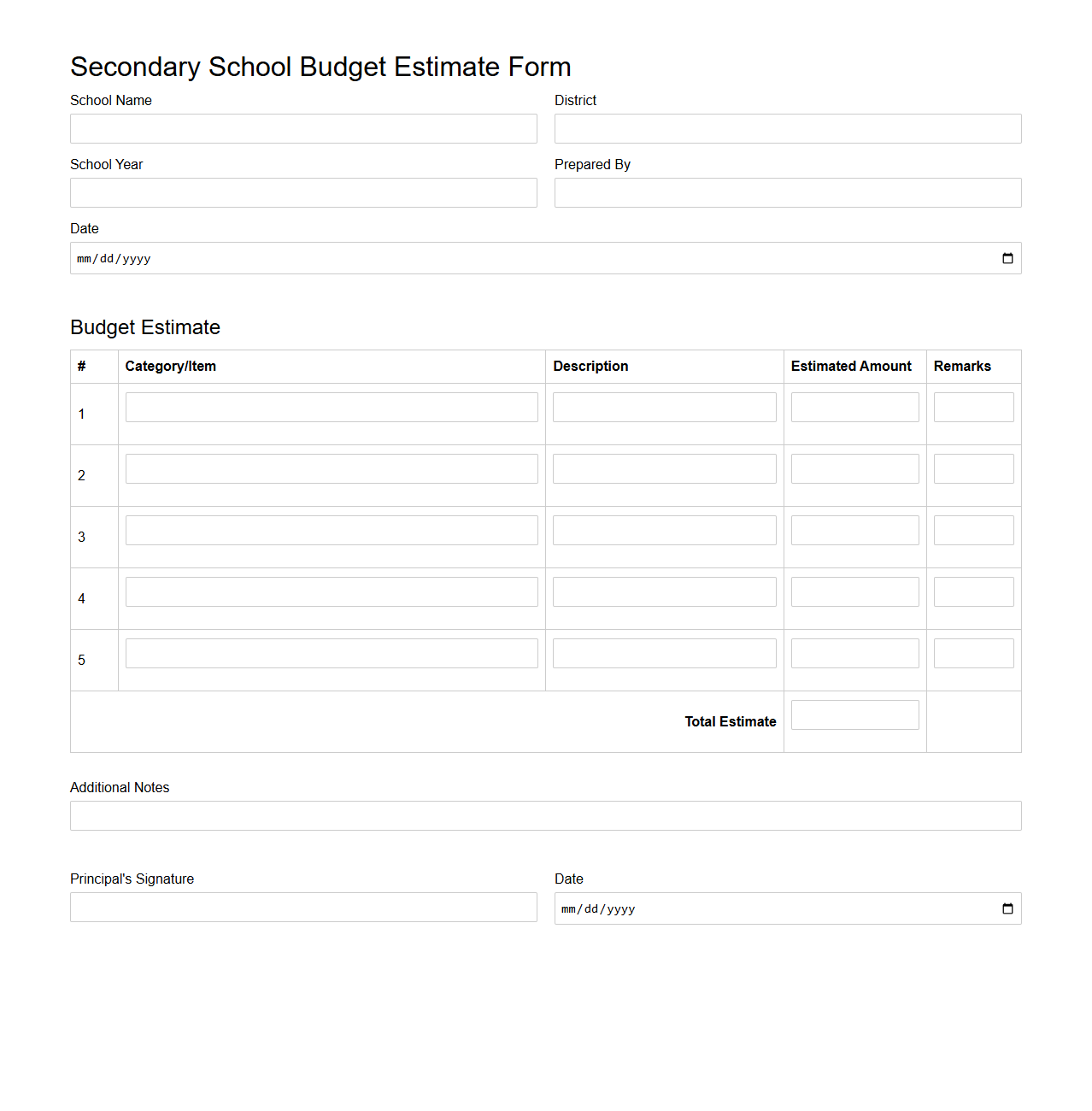
Secondary School Budget Estimate Form
The
Secondary School Budget Estimate Form is a financial planning document used by secondary schools to outline anticipated expenses and allocate resources for the upcoming academic year. It includes detailed projections on operational costs, staff salaries, educational materials, facility maintenance, and extracurricular activities. This form ensures transparent budget management and helps school administrators make informed decisions to optimize funding utilization.
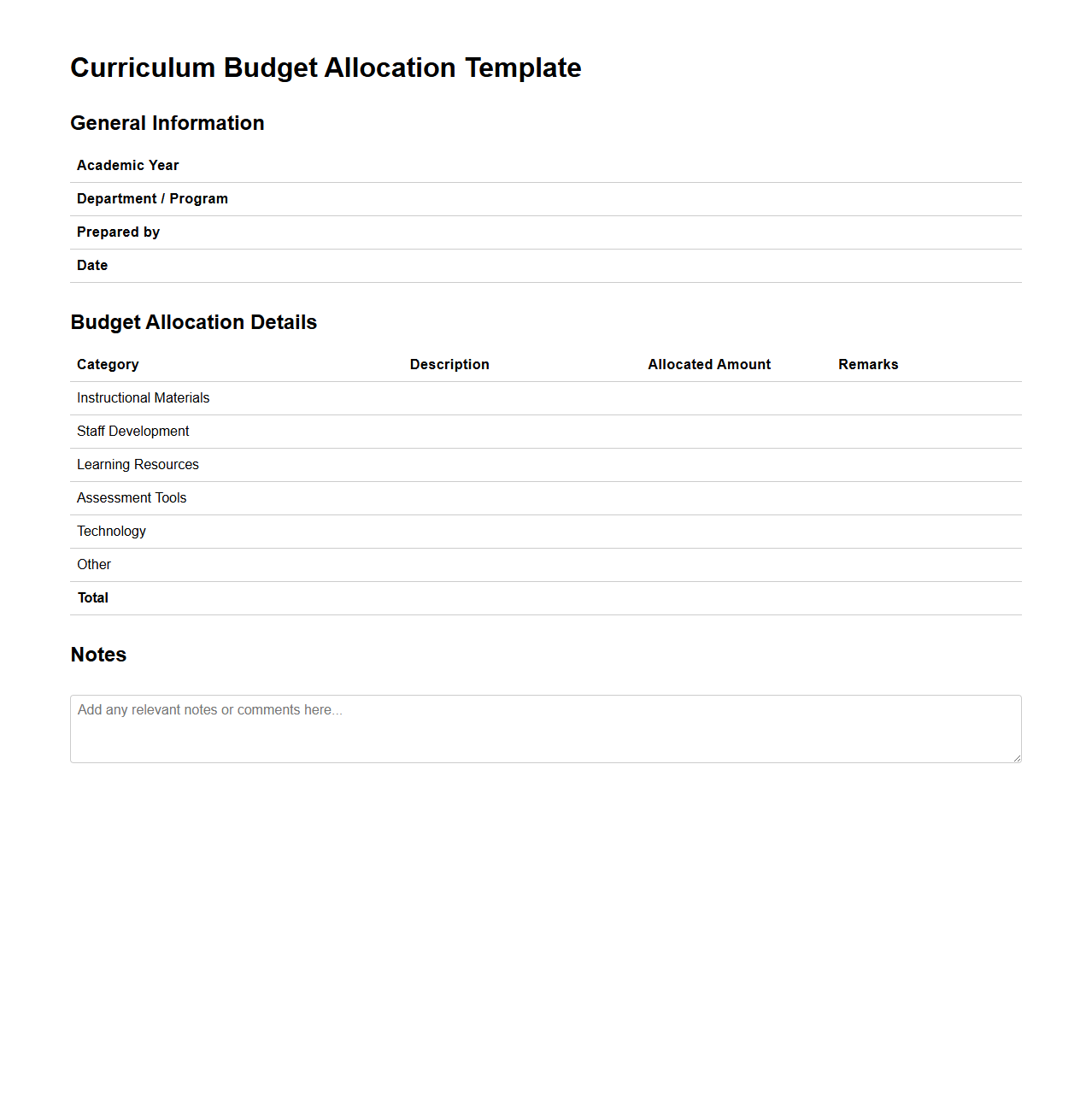
Curriculum Budget Allocation Template
A
Curriculum Budget Allocation Template document is a structured tool designed to help educational institutions plan and manage financial resources for curriculum development and implementation. It outlines budget categories such as materials, training, technology, and personnel costs, enabling precise allocation and tracking of funds. This template ensures transparency and efficient use of resources to support academic goals and program enhancements.
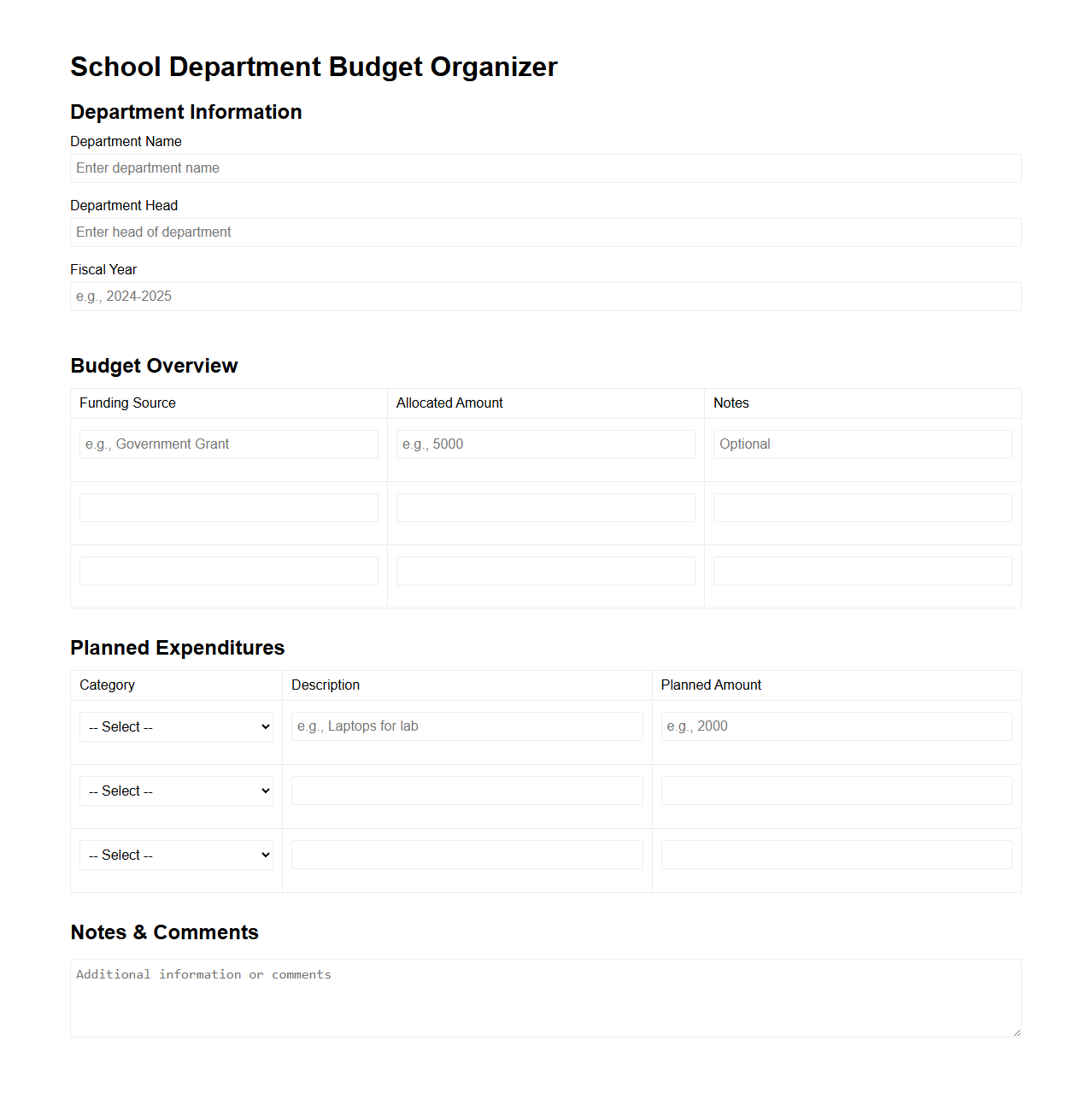
School Department Budget Organizer
The
School Department Budget Organizer document is a structured tool designed to help educational administrators plan, allocate, and monitor financial resources across various school departments effectively. It systematically categorizes expenses such as salaries, supplies, and program funding, ensuring transparency and accountability in budget management. This organizer supports data-driven decision-making by providing a clear overview of fiscal priorities aligned with academic goals.
What key expense categories should be included in a blank school budget template for K-12 institutions?
A blank school budget template for K-12 institutions should include key expense categories such as salaries and benefits, instructional materials, and facility maintenance. These categories ensure that critical operational areas are adequately funded to support student learning and school infrastructure. Additionally, categories for technology, transportation, and extracurricular activities are essential to cover the full scope of school needs.
How does a blank school budget letter address anticipated versus actual funding sources?
A blank school budget letter clearly distinguishes between anticipated and actual funding sources to enhance financial transparency. It typically includes projections for state aid, federal grants, local taxes, and donations while leaving space to record actual amounts received. This comparison helps administrators monitor funding accuracy and adjust budget plans accordingly.
What essential financial data fields must a blank educational institution budget provide for administrative approval?
A blank educational institution budget must provide essential financial data fields such as total projected revenues, detailed expense breakdowns, and variances between budgeted and actual figures. These fields allow administrators to review funding allocations comprehensively and ensure fiscal responsibility. Clear presentation of these data points facilitates informed decision-making and approval processes.
How should a blank school budget template allocate funds for extracurricular programs and resources?
A blank school budget template should allocate funds for extracurricular programs by specifying categories such as sports, arts, clubs, and student support services. Allocations must reflect the school's priorities and promote equitable access to diverse activities. Including contingency funding for unexpected expenses helps maintain program quality throughout the year.
What reporting frequency should be specified in a blank school budget letter for compliance and transparency?
A blank school budget letter should specify a reporting frequency that supports compliance and transparency, typically on a quarterly or monthly basis. Regular financial updates enable timely adjustments and clear communication with stakeholders. This consistent reporting fosters accountability and trust within the school community.