A Blank Business Plan Template for Startups provides a structured format to outline your business goals, strategies, and financial projections clearly. This template helps entrepreneurs organize essential information, making it easier to communicate their vision to investors and stakeholders. Using a standardized template ensures no critical elements are overlooked during the planning process.
Simple Business Plan Outline for New Ventures
A
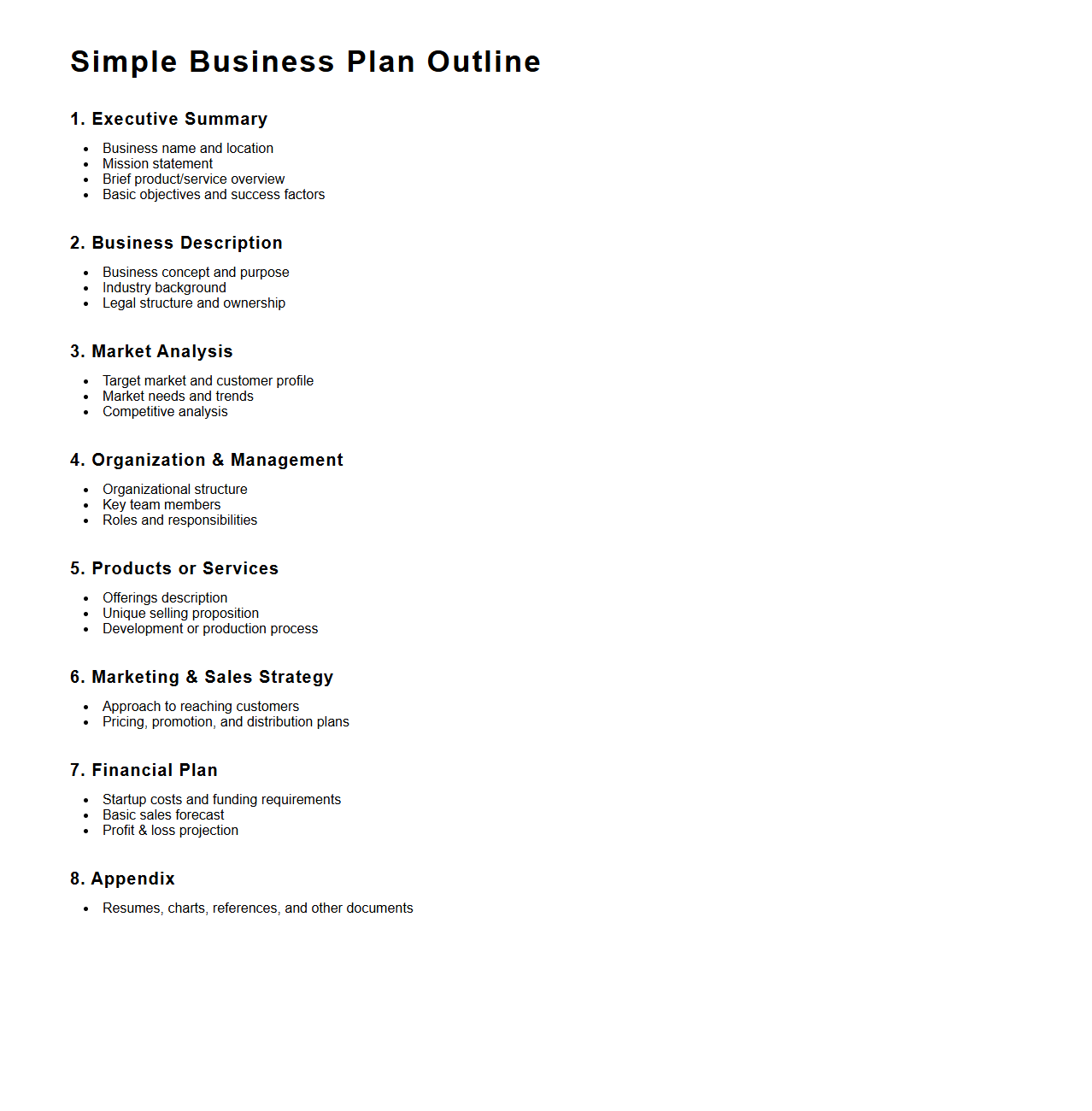
Simple Business Plan Outline for New Ventures document provides a clear, structured framework to guide entrepreneurs through the essential components of starting a new business. It typically includes sections on market analysis, business model, financial projections, and marketing strategies, enabling startups to organize their ideas and communicate their vision effectively. This outline helps streamline the planning process, making it easier to identify goals, allocate resources, and attract investors or partners.
Basic Startup Business Plan Format
A
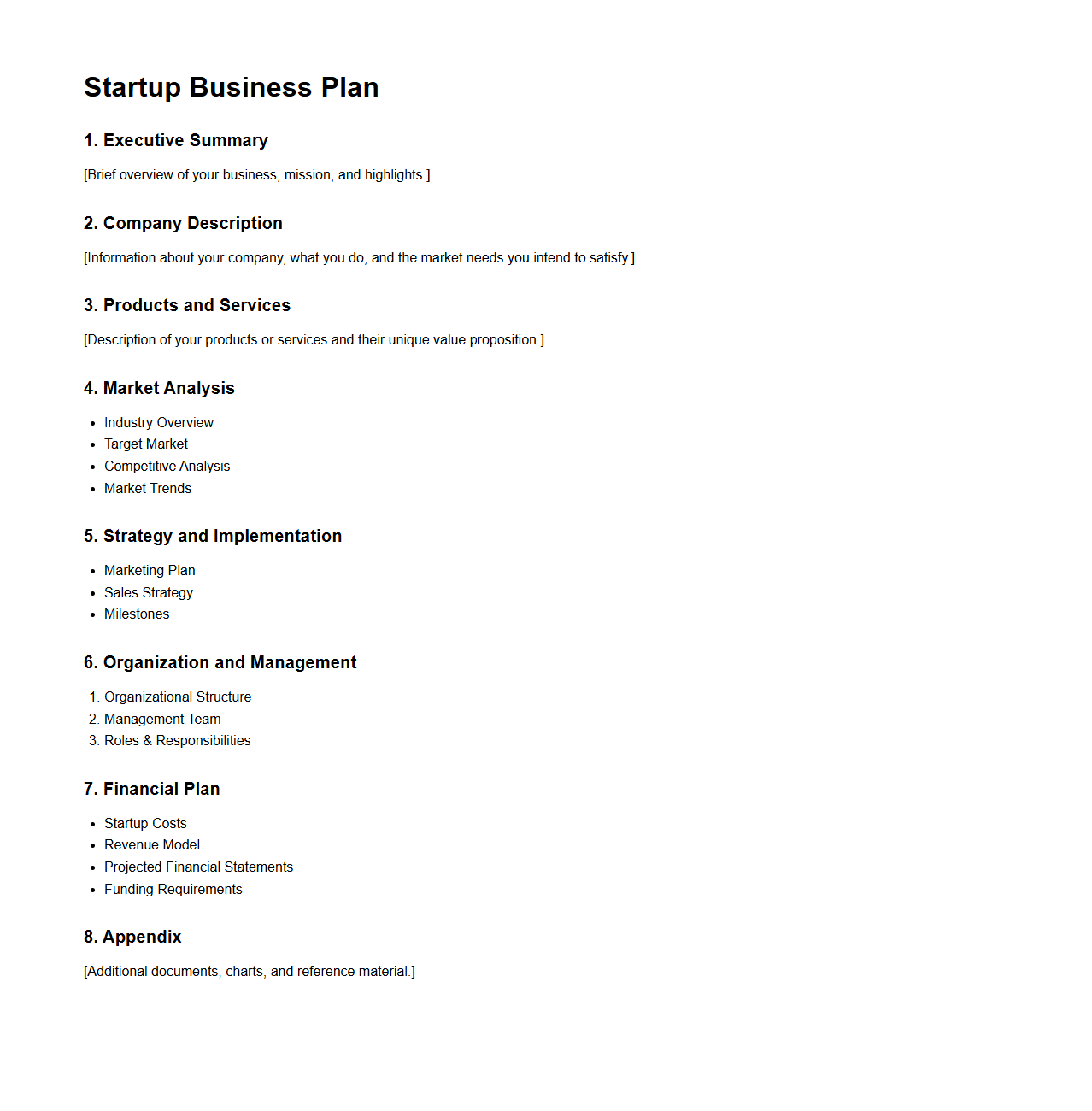
Basic Startup Business Plan Format document outlines the essential components needed to articulate a new business idea, including the executive summary, market analysis, organizational structure, product or service offerings, marketing strategies, and financial projections. This format serves as a practical roadmap for entrepreneurs to communicate their vision, secure funding, and guide operational decisions. Utilizing a clear, structured approach enhances planning efficiency and investor comprehension, ultimately increasing the startup's chances of success.
One-Page Business Plan for Entrepreneurs
A
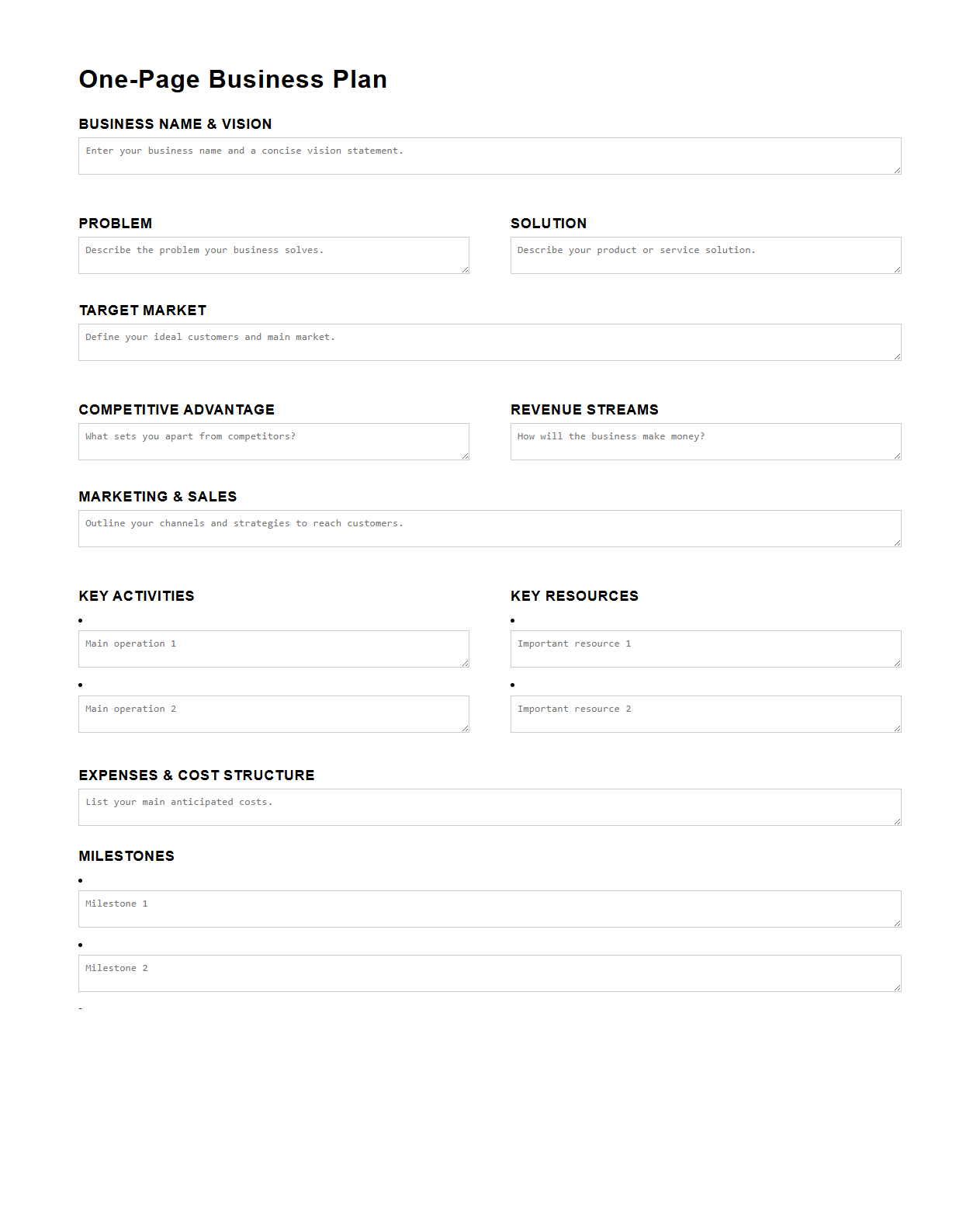
One-Page Business Plan for entrepreneurs is a concise strategic document that outlines the essential elements of a business, including objectives, target market, value proposition, and financial goals. This streamlined format allows entrepreneurs to quickly communicate their business vision and action steps to stakeholders, investors, and team members. The document emphasizes clarity and focus, enabling efficient decision-making and agile business management.
Lean Canvas Business Plan Worksheet
The
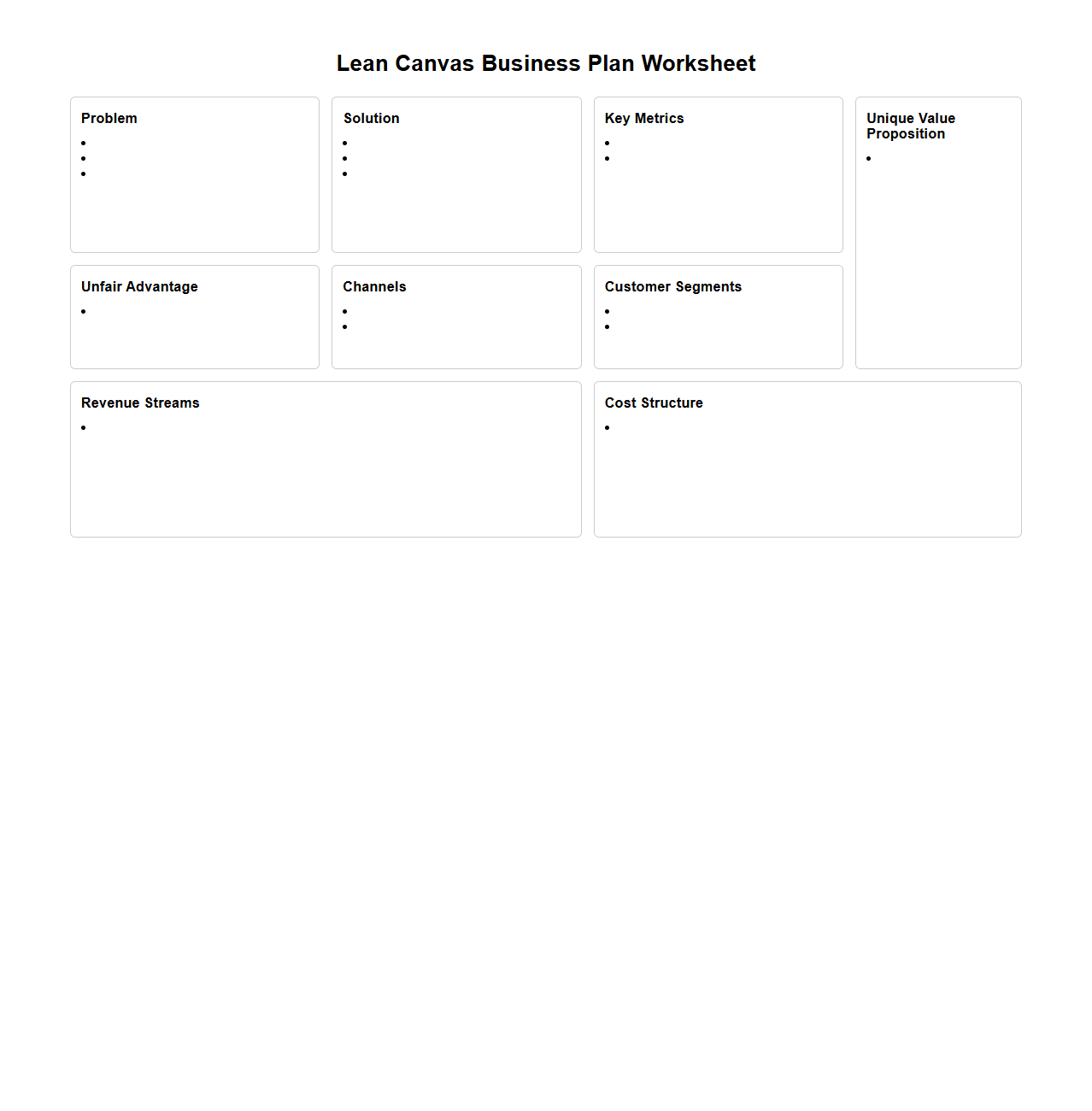
Lean Canvas Business Plan Worksheet is a strategic management tool designed to simplify the process of developing a startup or business model. It focuses on key components such as problem identification, customer segments, unique value propositions, and revenue streams, enabling entrepreneurs to visualize and test their ideas quickly. This one-page document helps prioritize critical assumptions and aligns business activities with measurable goals to drive efficient decision-making.
Startup Business Model Canvas Template
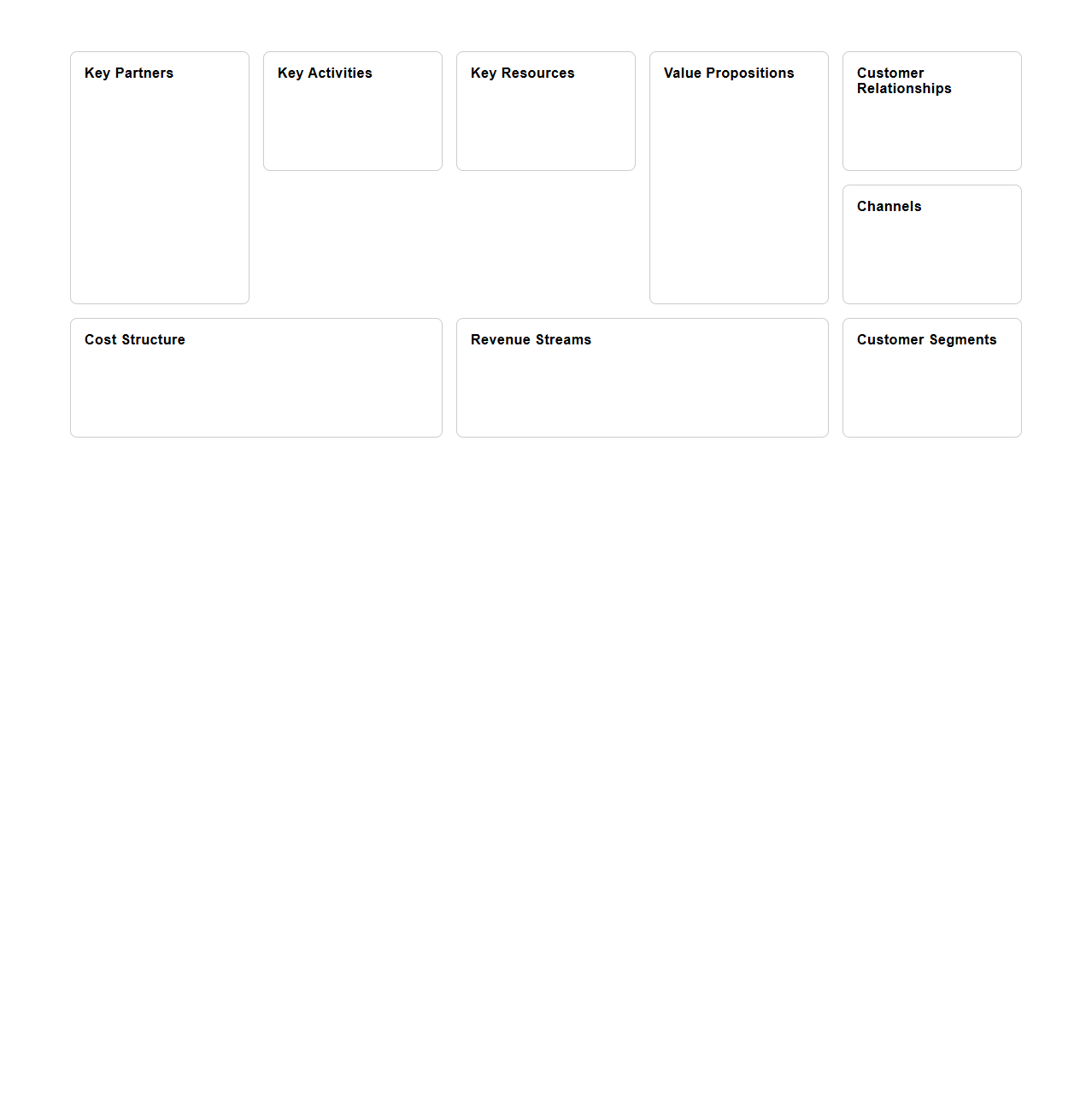
The
Startup Business Model Canvas Template is a strategic management tool designed to help entrepreneurs visualize, develop, and refine their business model on a single page. It breaks down a startup's plan into key components such as value propositions, customer segments, revenue streams, and cost structure, enabling clear and concise planning. This document facilitates better decision-making and communication among stakeholders by providing a shared framework.
Streamlined Business Plan Framework for Startups
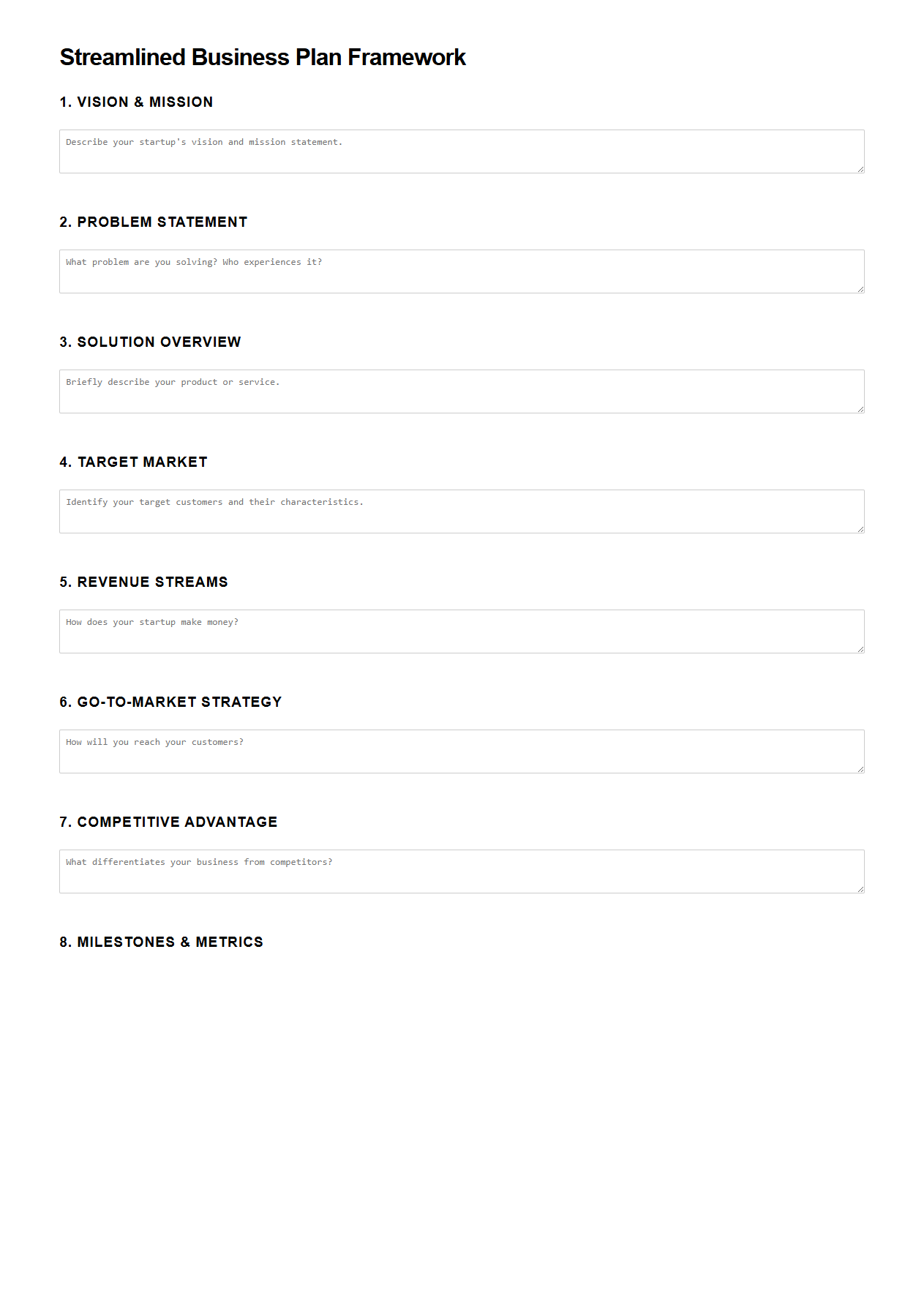
The
Streamlined Business Plan Framework for Startups document provides a concise and efficient template designed to help entrepreneurs outline their business ideas clearly and effectively. It focuses on essential components such as market analysis, value proposition, revenue model, and financial projections, enabling startups to attract investors and guide operational strategies. This framework minimizes complexity while maximizing clarity, making it ideal for early-stage companies seeking to structure their plans quickly and professionally.
Early-Stage Business Plan Structure for Founders
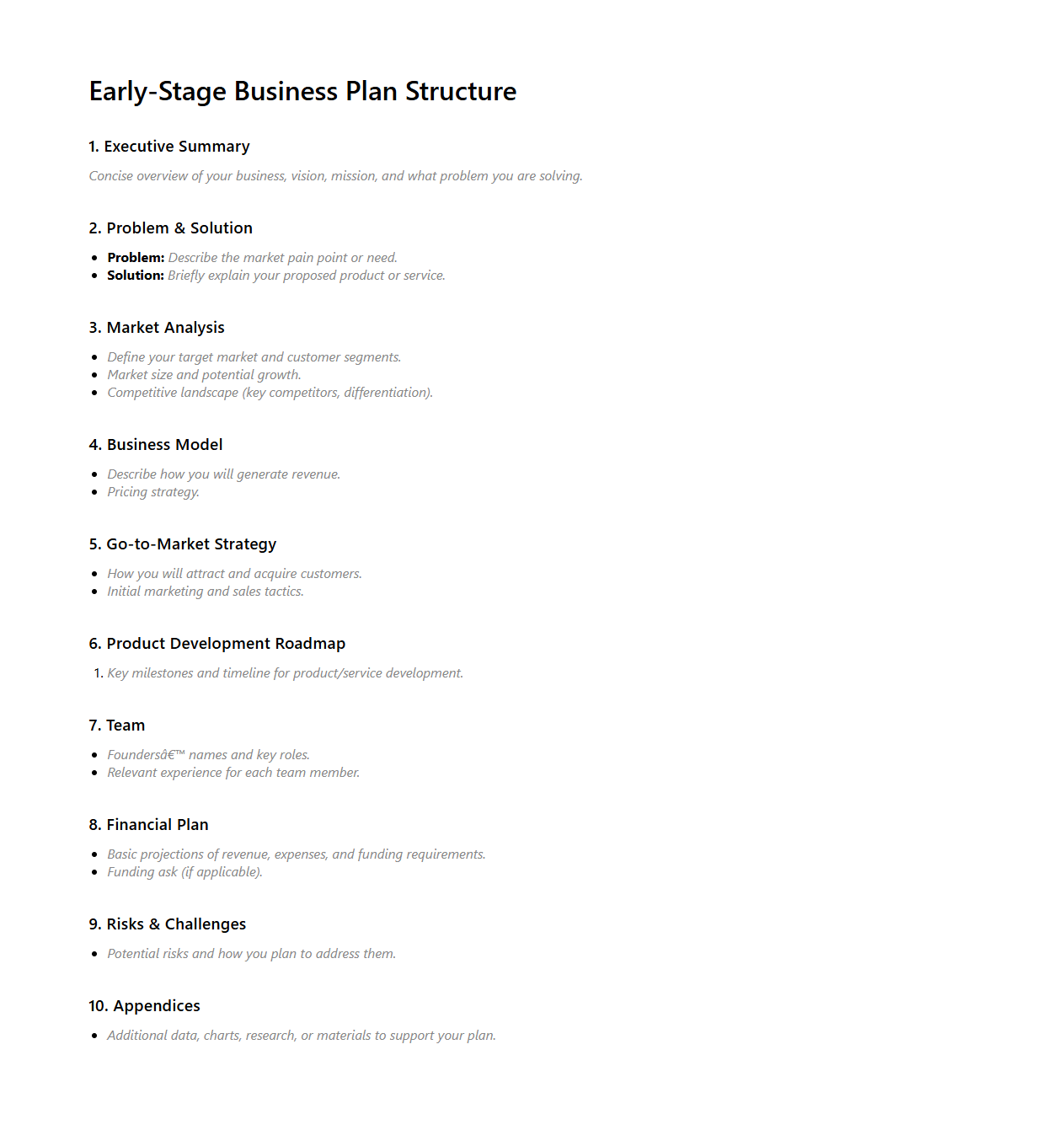
The
Early-Stage Business Plan Structure for Founders document outlines the essential components and framework needed to effectively communicate a startup's vision, goals, and strategies. It includes sections such as market analysis, value proposition, financial projections, and operational plans tailored to attract investors and guide initial business development. This structured plan serves as a foundational roadmap for startup success during the critical early phases of growth.
Minimalist Business Plan Document for New Businesses
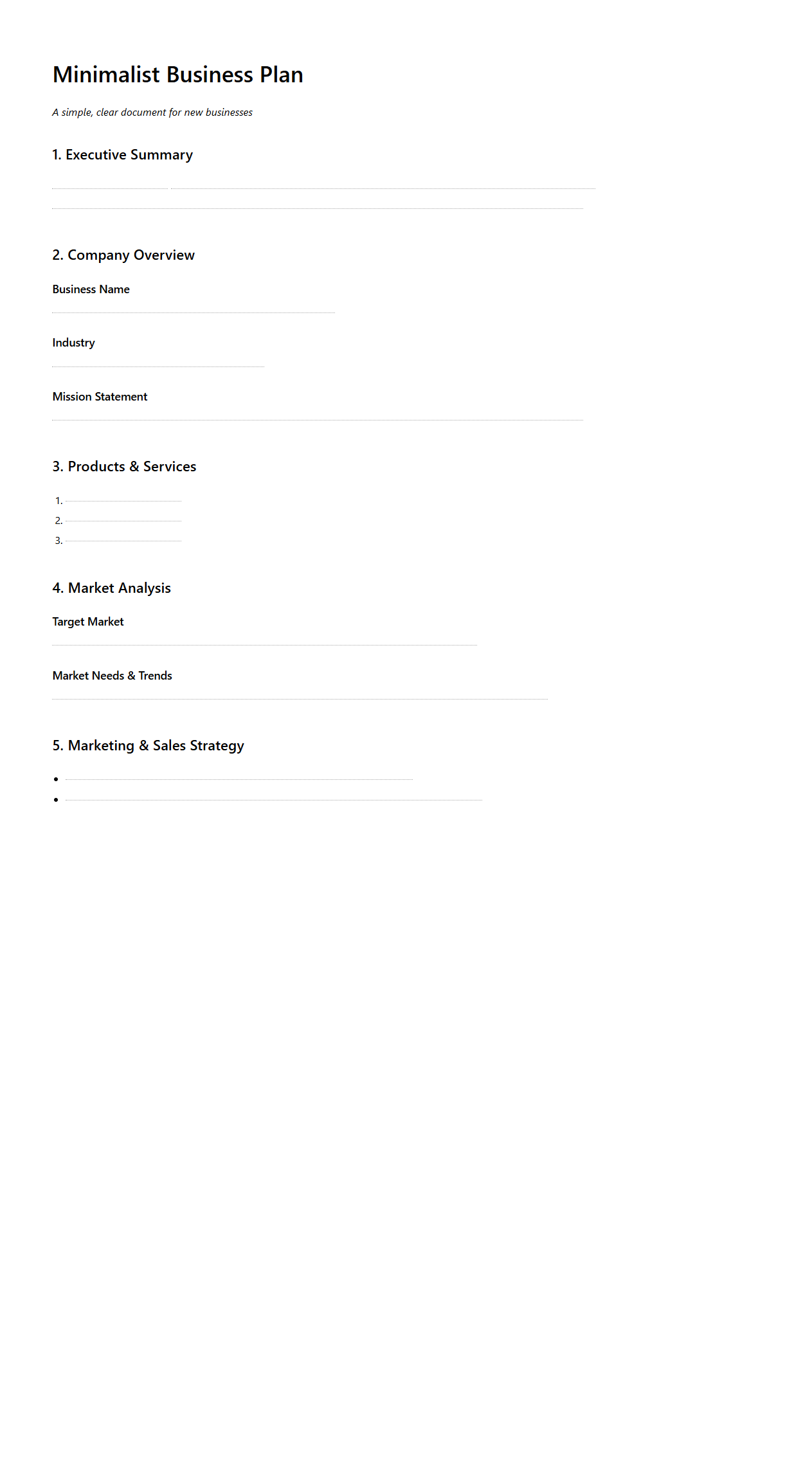
A
Minimalist Business Plan Document for new businesses is a concise and streamlined plan focusing on essential elements such as business objectives, target market, value proposition, and financial projections. It eliminates unnecessary details, making it easier for entrepreneurs to communicate their strategy effectively and secure initial funding or support. This simplified approach increases clarity and agility, allowing startups to adapt quickly in dynamic market conditions.
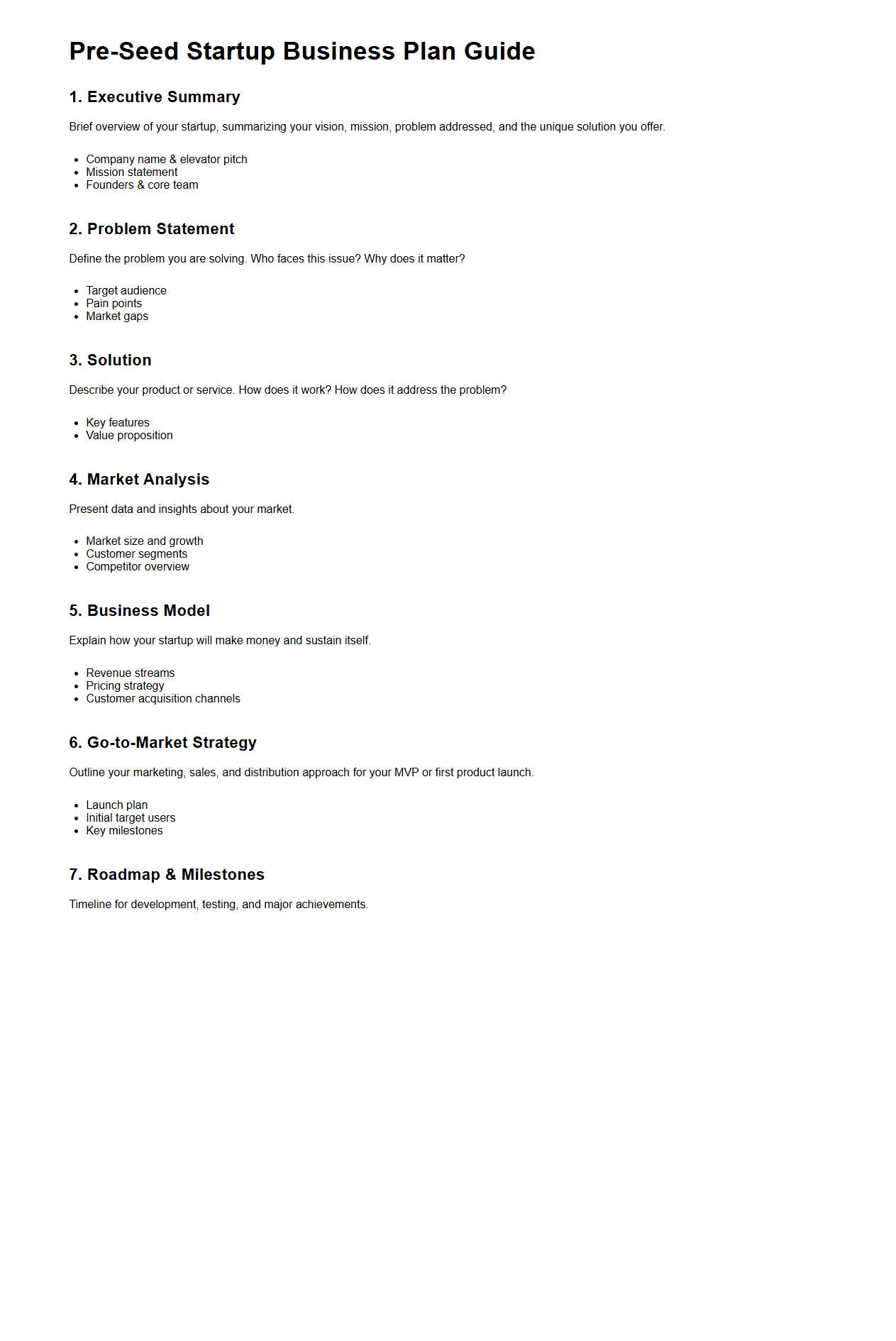
Pre-Seed Startup Business Plan Guide
A
Pre-Seed Startup Business Plan Guide document provides early-stage entrepreneurs with a structured framework to outline their initial business idea, market research, funding requirements, and development roadmap. It helps founders articulate their value proposition, target audience, and go-to-market strategy to attract potential investors and stakeholders. This guide emphasizes key components such as problem identification, solution description, competitive analysis, and financial projections specific to the pre-seed phase.
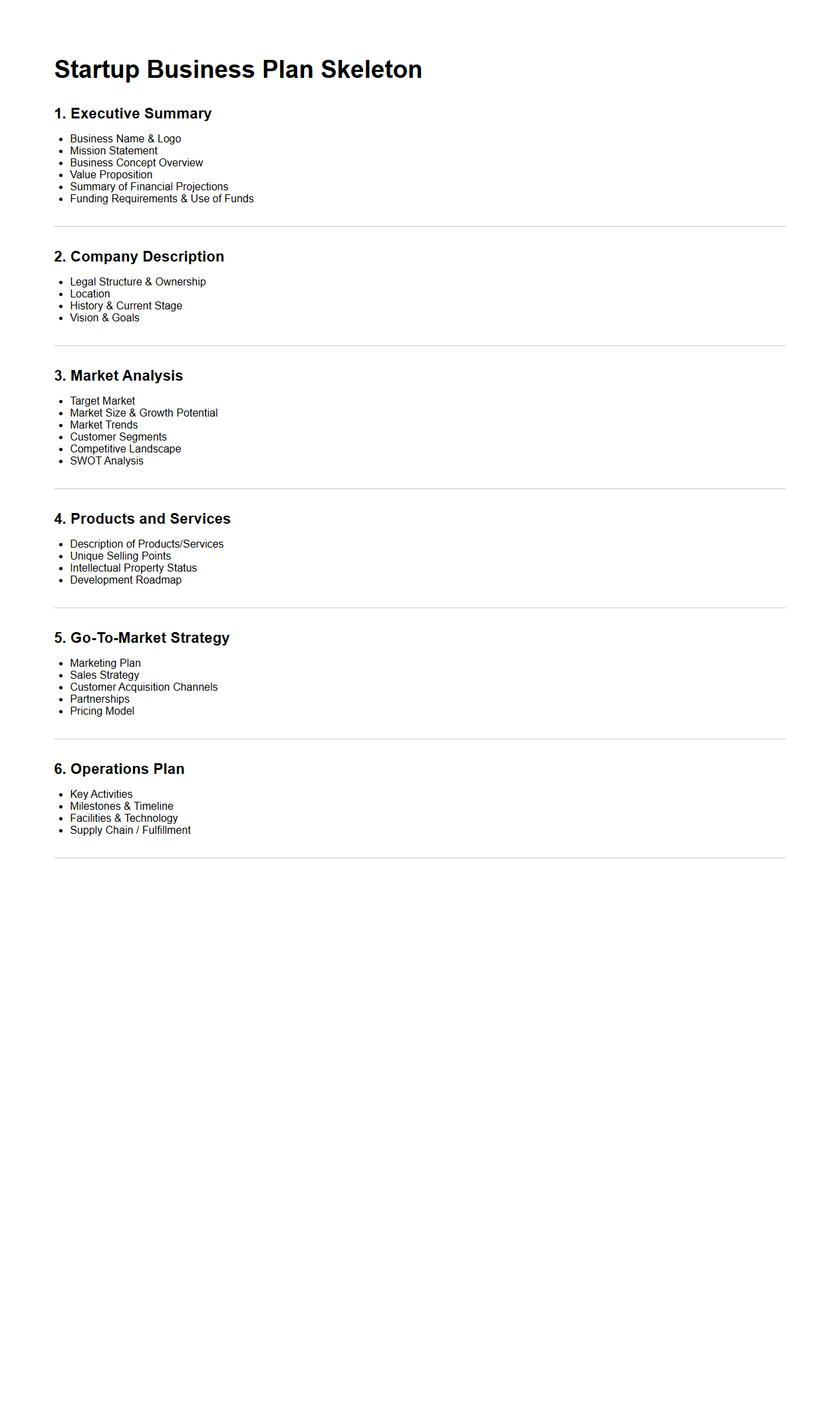
Investor-Ready Startup Business Plan Skeleton
The
Investor-Ready Startup Business Plan Skeleton document is a structured framework designed to guide entrepreneurs in presenting their business ideas clearly and concisely to potential investors. It covers essential components such as market analysis, value proposition, revenue model, financial projections, and team overview, ensuring all critical elements are addressed. This document helps startups create a compelling pitch that meets investor expectations and supports funding acquisition.
What are the critical sections to include in a blank business plan template for tech startups?
A business plan template for tech startups must include an executive summary, detailing the core business idea and value proposition. A detailed product or service description section is essential to explain the technology, development stage, and innovation. Finally, market analysis, competitive analysis, and a go-to-market strategy form the backbone of the plan to demonstrate market understanding and growth potential.
How should financial projections be structured in a business plan for early-stage ventures?
Financial projections in early-stage business plans should start with clear revenue forecasts, outlining expected sales growth and key assumptions. Expense budgets need to be granular, covering costs like R&D, marketing, and operations to reflect accurate capital needs. Complete cash flow statements and break-even analyses are critical for demonstrating sustainability and investor confidence.
Which legal disclaimers are essential in a blank business plan document for startups?
Legal disclaimers in startup business plans protect against liability, stating that forward-looking statements involve risks and uncertainties. Confidentiality clauses emphasize that the information is proprietary and restrict unauthorized use or distribution. Additionally, disclaimers about the accuracy of information help limit legal exposure regarding projections or market data.
What unique market analysis tools can be integrated into a startup business plan template?
Incorporating tools like SWOT analysis and PESTEL analysis provides a structured overview of strengths, weaknesses, opportunities, threats, and external environmental factors. Market segmentation models and customer persona frameworks help to target specific audiences effectively. Competitive landscape matrices and trend forecasting tools offer insights into positioning and future market shifts.
How can a blank business plan letter address intellectual property strategies for new businesses?
A blank business plan letter should highlight the importance of a well-defined intellectual property (IP) strategy, including patents, trademarks, and copyrights relevant to the startup's technology. It should encourage early registration and protection to secure competitive advantage. Additionally, outlining plans for managing IP risks and licensing can demonstrate foresight to investors and partners.