Utility Bill Statement Form
A
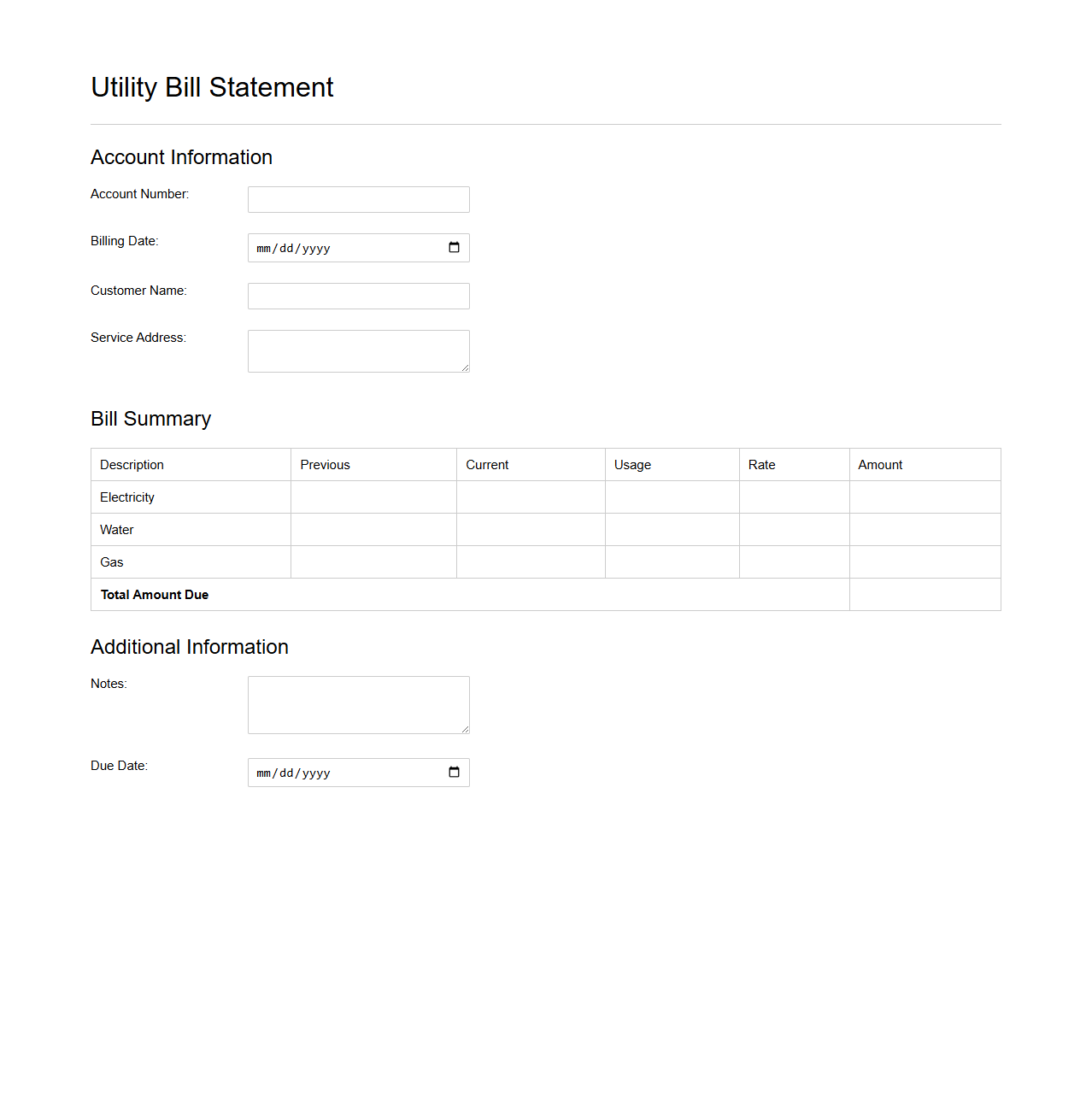
Utility Bill Statement Form is a document used to verify address and billing information by detailing charges for services such as electricity, water, or gas. It typically includes account holder details, billing period, consumption metrics, and payment status, making it essential for proof of residency or financial transactions. Organizations and institutions often require this form to confirm authenticity and maintain accurate records.
Utility Charge Summary Sheet
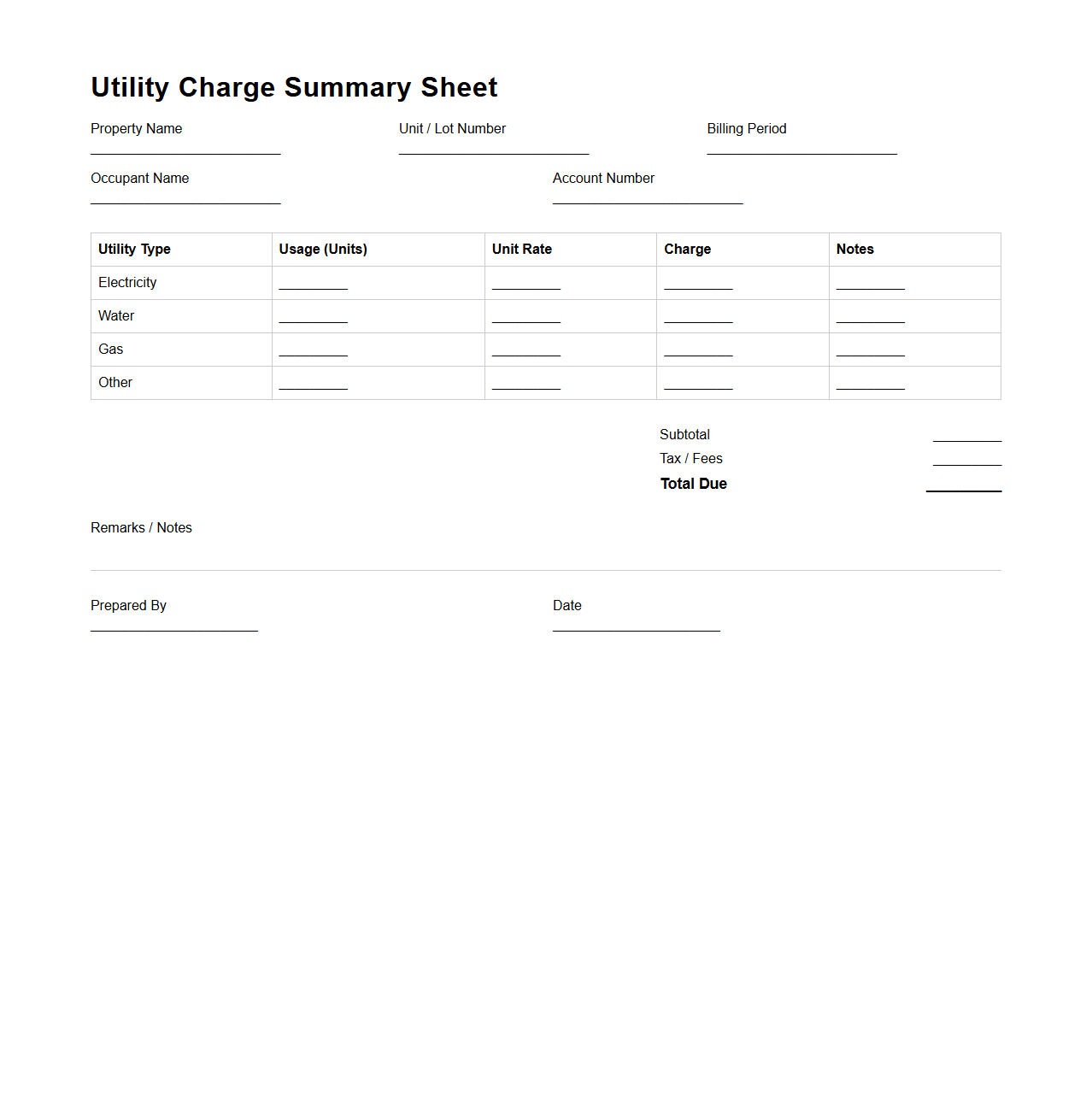
The
Utility Charge Summary Sheet document provides a detailed overview of all utility-related expenses within a specific period, including electricity, water, gas, and other essential services. It consolidates charges, usage data, and payment statuses, enabling efficient tracking and budget management. This summary aids both residential and commercial users in understanding their utility consumption patterns and identifying areas for cost-saving.
Monthly Utility Expense Statement
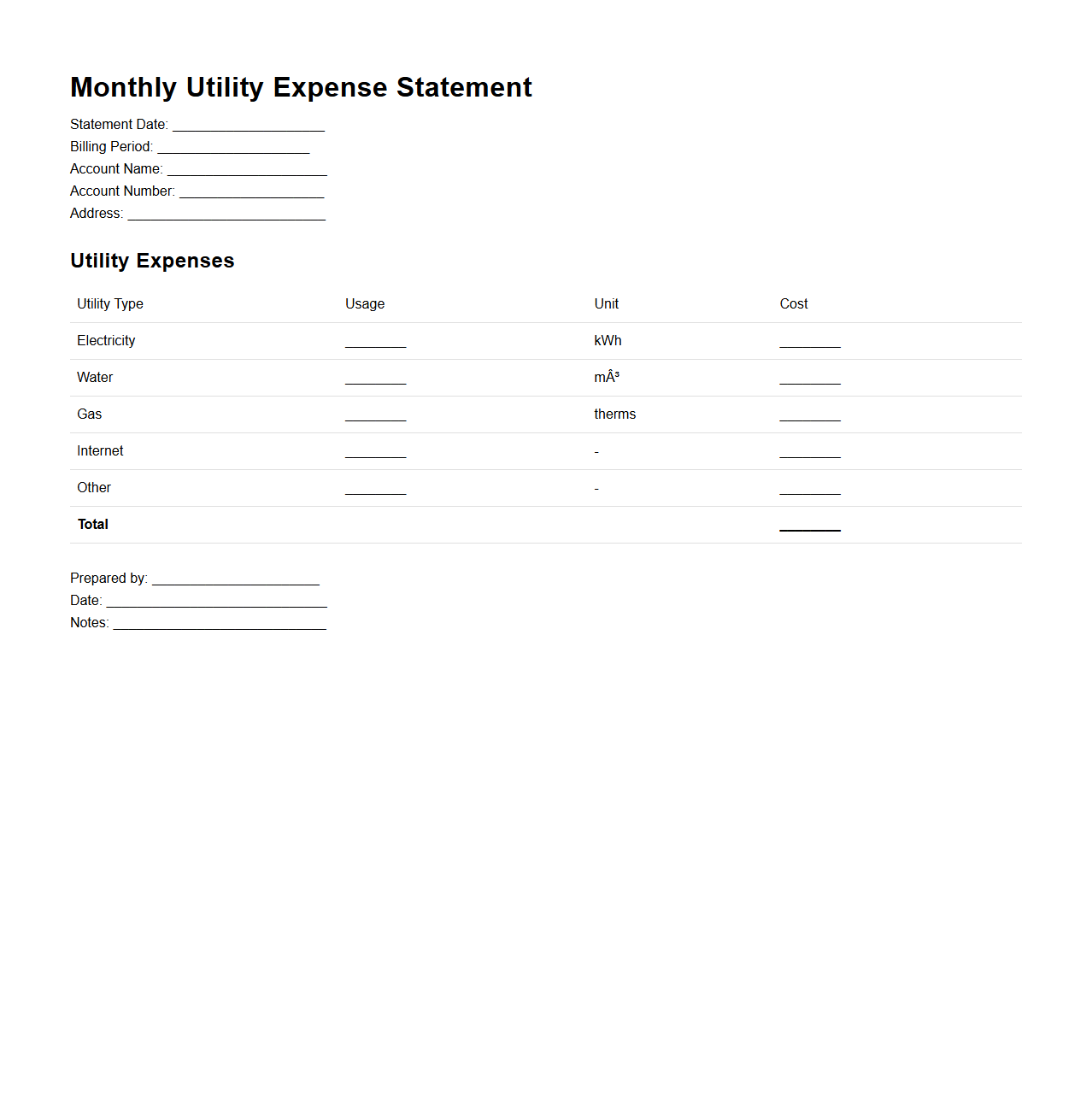
A
Monthly Utility Expense Statement is a financial document detailing the costs incurred for utilities such as electricity, water, gas, and waste services over a specific month. It provides a breakdown of charges, usage data, and payment history, enabling individuals or businesses to track and manage their utility expenses effectively. This statement is essential for budgeting, expense reporting, and identifying patterns in utility consumption.
Utility Payment Record Template
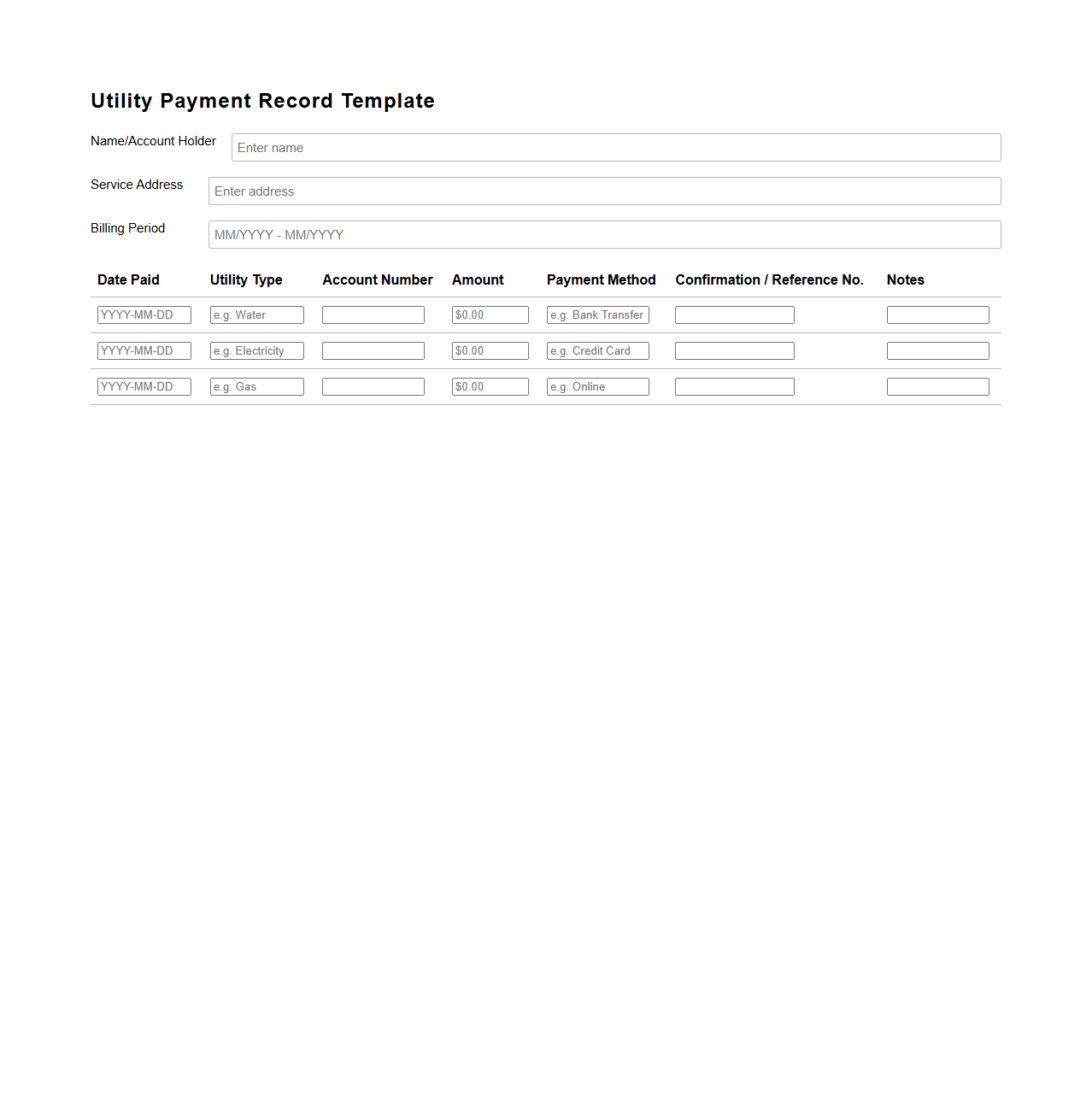
A
Utility Payment Record Template document is a structured form used to track and organize payments made for utilities such as electricity, water, gas, and internet services. It ensures accurate documentation of payment dates, amounts, service providers, and billing periods, facilitating efficient financial management and expense monitoring. This template is essential for both personal budgeting and business accounting, helping to avoid missed payments and maintain clear financial records.
Utility Services Billing Statement
A
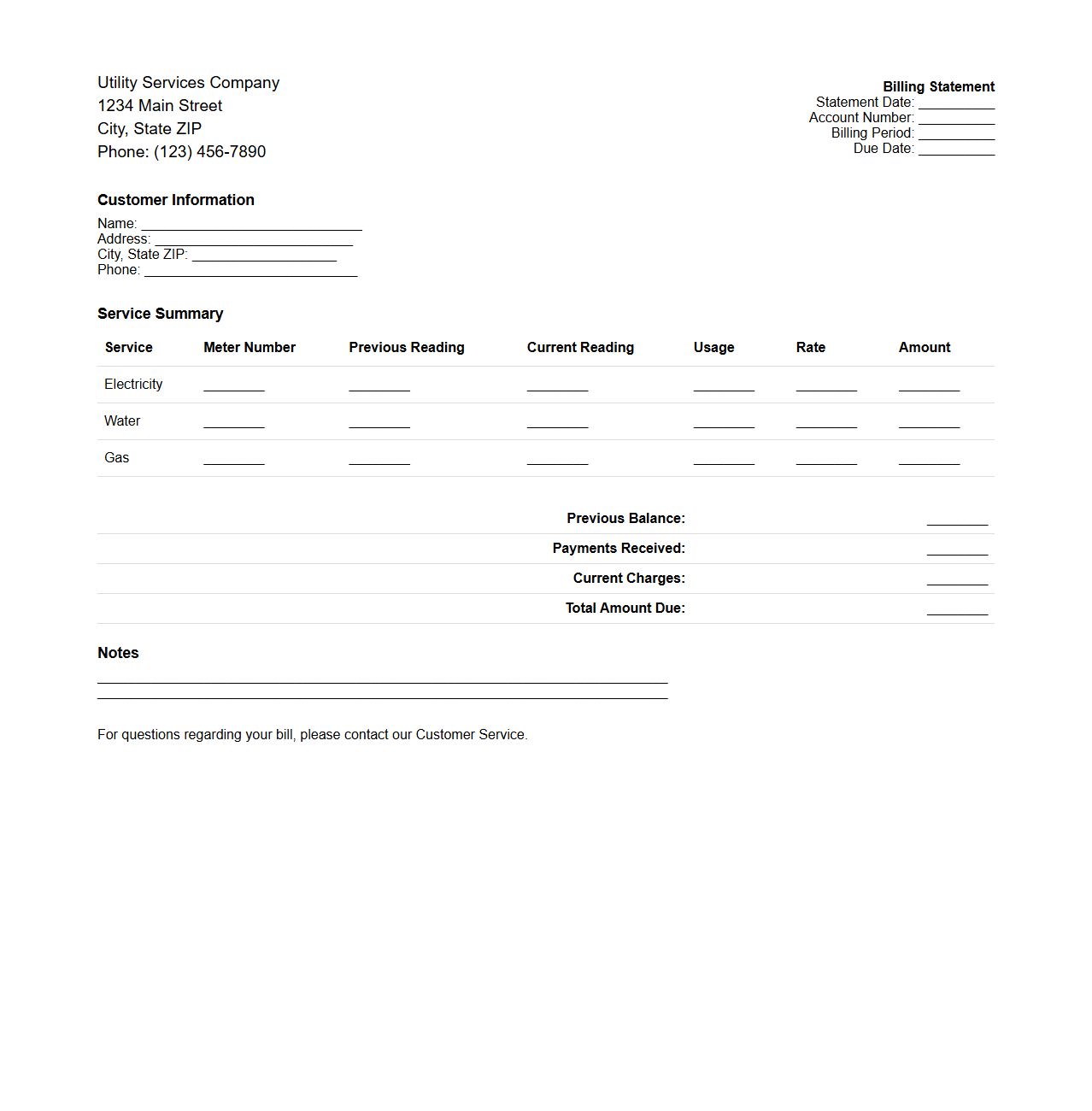
Utility Services Billing Statement document details the charges and consumption for services such as electricity, water, gas, or sewer. It typically includes account information, billing period, usage data, rates applied, and total amount due. This statement serves as an official record for both customers and utility providers to manage payments and service usage efficiently.
Statement of Utility Account Charges
The
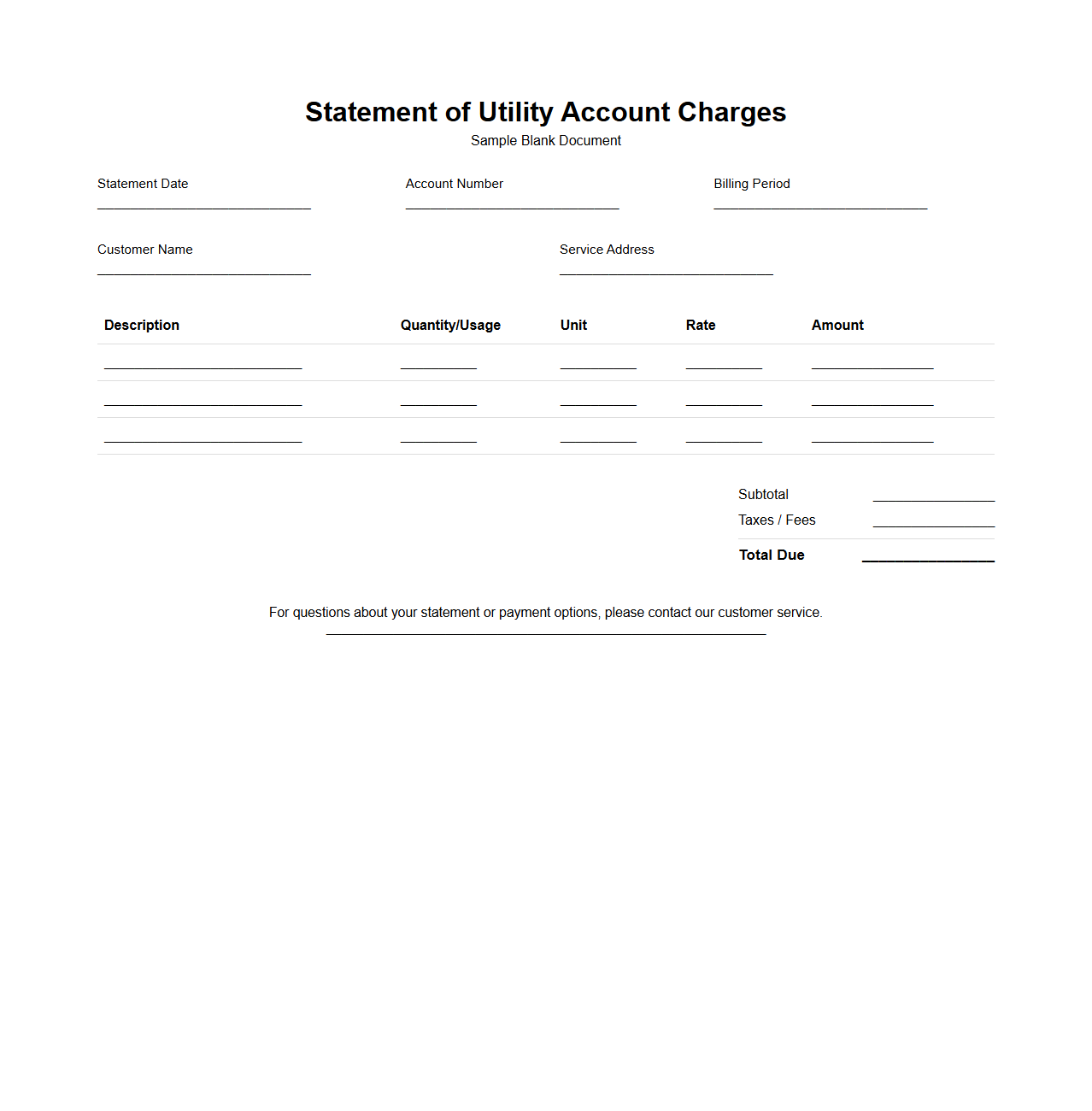
Statement of Utility Account Charges is a detailed document outlining the costs associated with utility services such as water, electricity, gas, and sewage for a specific account over a billing period. It itemizes charges including consumption, fixed fees, taxes, and any outstanding balances to provide a comprehensive overview of the financial obligations. This statement serves as a critical tool for account holders to track usage, verify charges, and manage payments effectively.
Utility Cost Allocation Statement
A
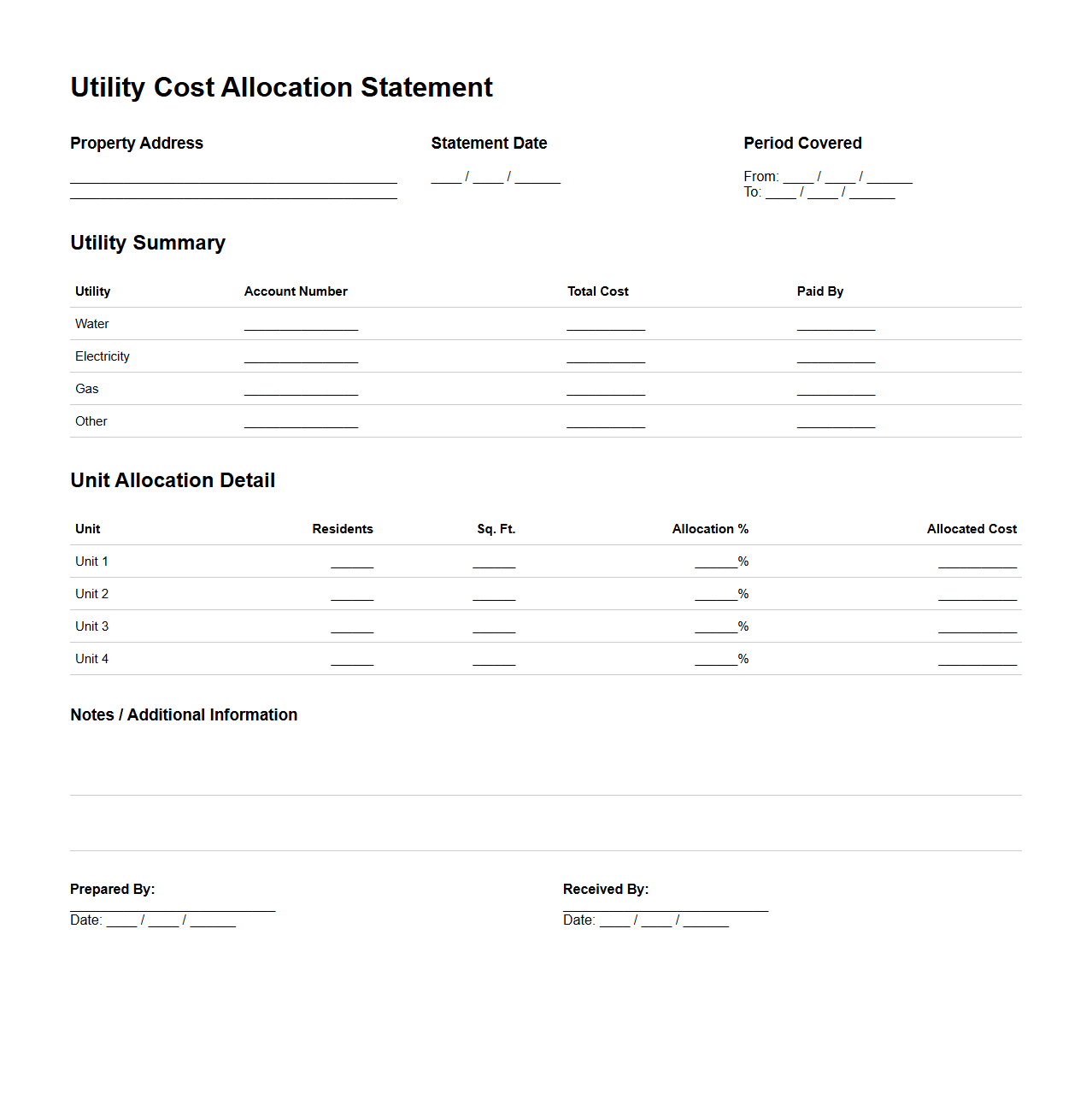
Utility Cost Allocation Statement is a detailed document that outlines the distribution of utility expenses across various departments, units, or cost centers within an organization. It provides transparency by accurately assigning costs based on actual usage, helping businesses manage budgets and improve operational efficiency. This statement is essential for tracking utility consumption, facilitating cost control, and supporting financial planning and reporting.
Utility Usage and Charges Log
The
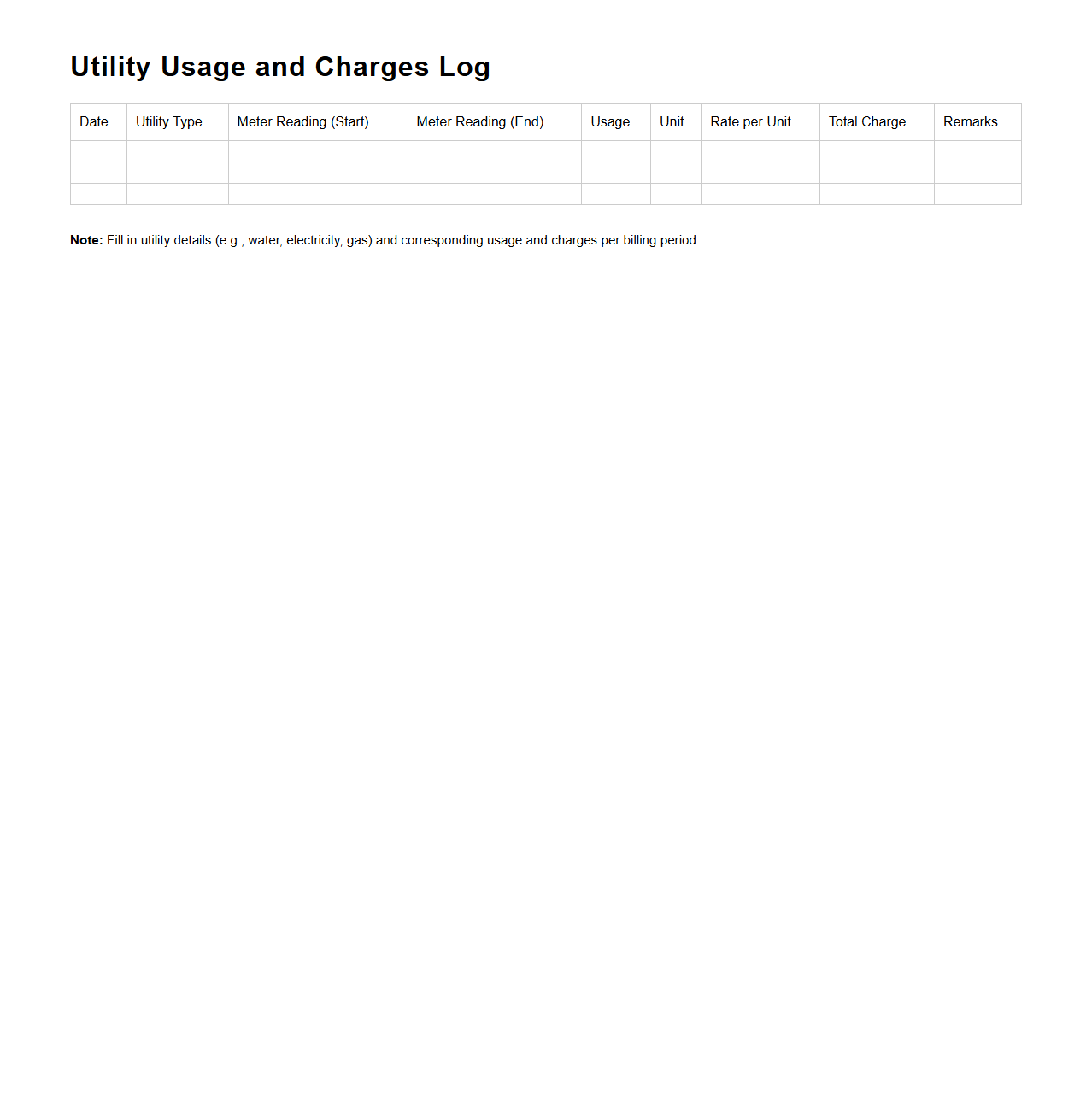
Utility Usage and Charges Log document is a detailed record that tracks consumption data and associated costs for utilities such as electricity, water, gas, and waste management. It enables organizations or households to monitor usage patterns, identify inefficiencies, and manage budget forecasting effectively. This log supports financial accountability and sustainability efforts by providing transparent insights into utility expenses over time.
Utility Billing Breakdown Statement
A
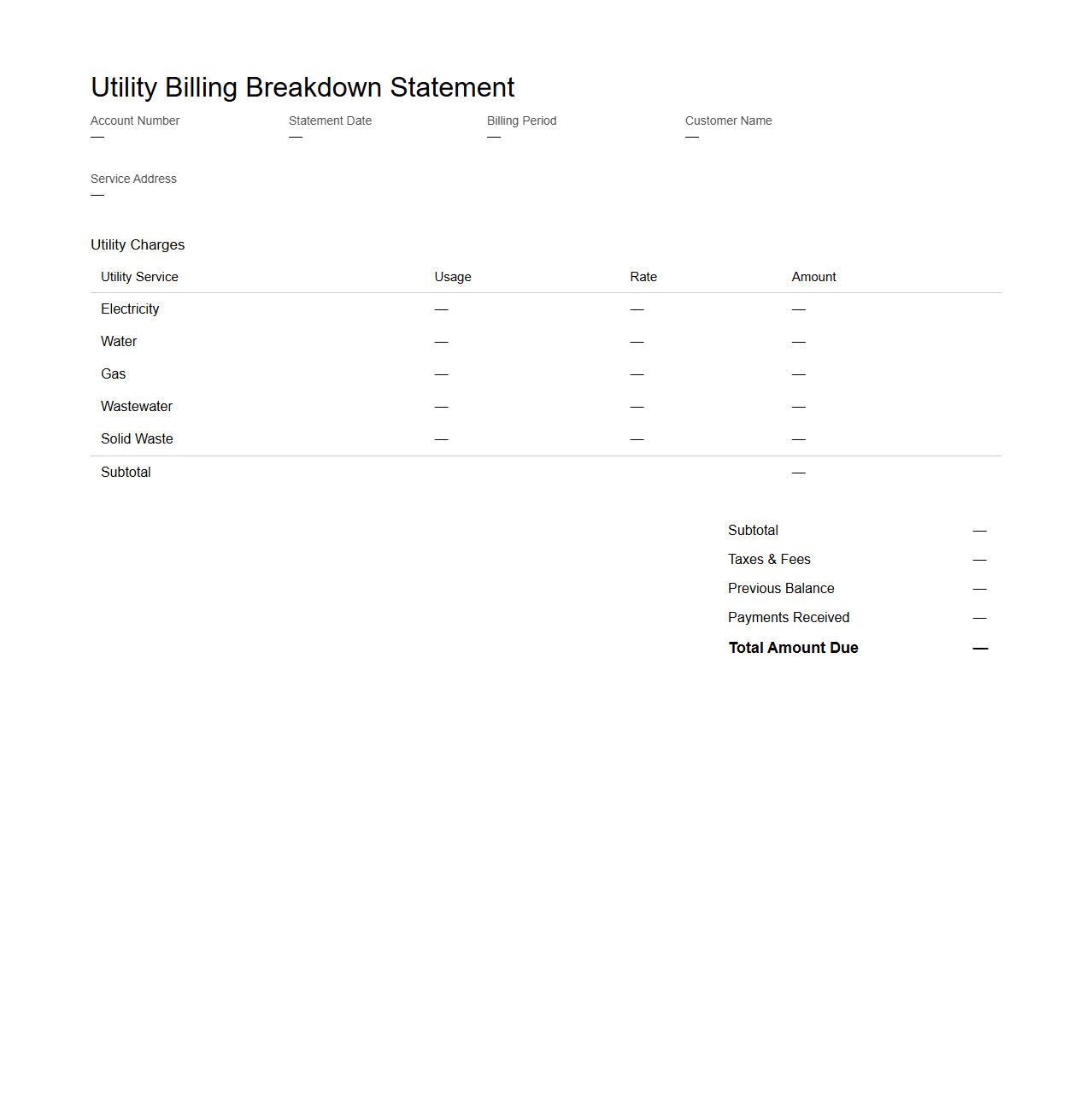
Utility Billing Breakdown Statement document itemizes charges for services such as electricity, water, gas, and sewer, providing detailed information about consumption and rates. It helps customers understand how their total utility bill is calculated by listing individual usage amounts and corresponding costs. This statement is essential for accurate billing, dispute resolution, and monitoring energy or resource consumption over time.
Utility Account Statement Form
A
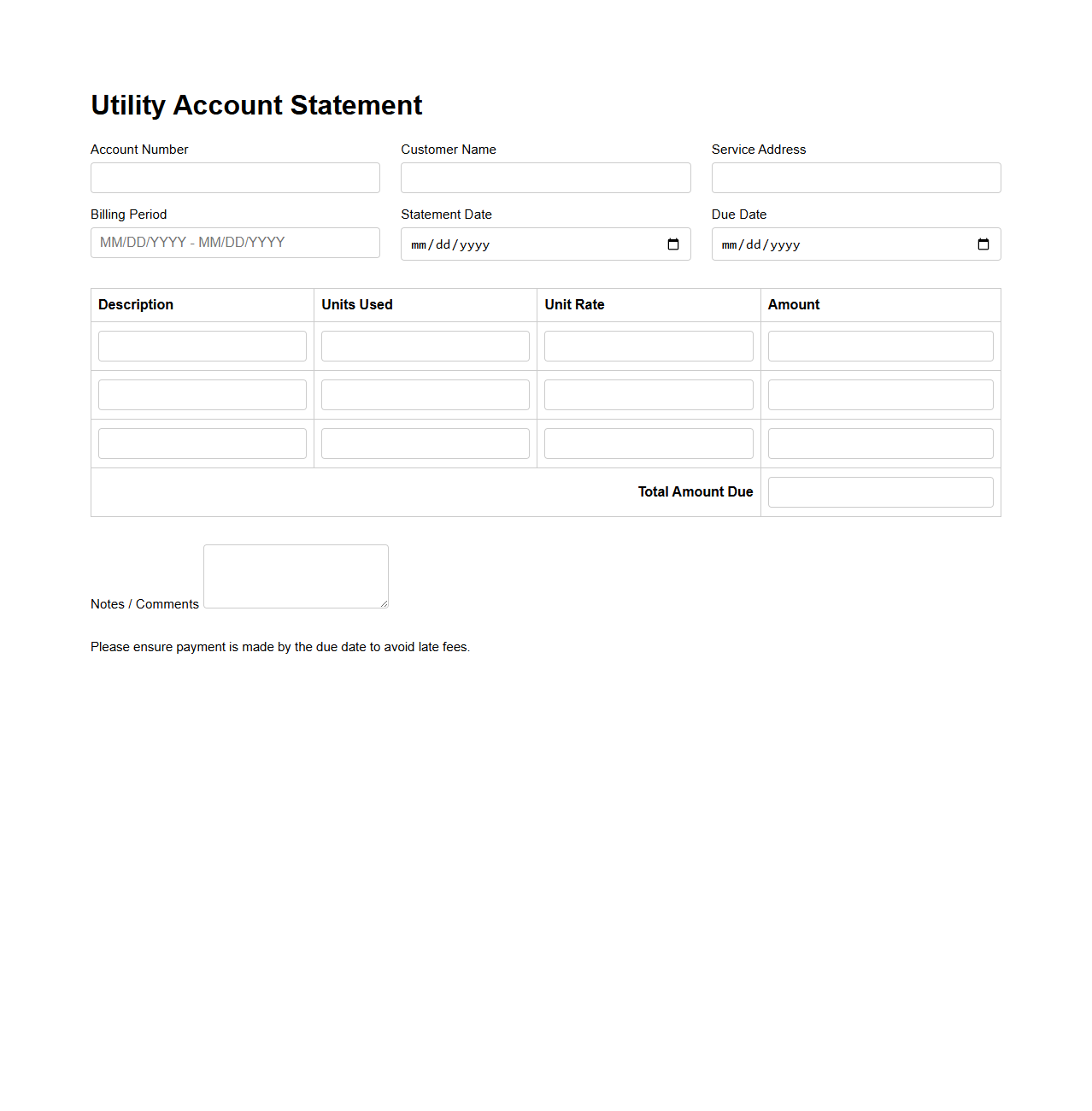
Utility Account Statement Form is a document used to provide detailed information about a customer's utility usage, billing history, and account status. It typically includes data such as account number, billing period, outstanding balances, payment history, and service details for utilities like electricity, water, gas, or telecommunications. This form helps both customers and service providers track consumption patterns, verify charges, and resolve billing disputes efficiently.
What legal disclaimers should a blank utility charge statement include?
A blank utility charge statement should include a disclaimer clarifying the accuracy of the charges and the company's non-liability for errors. It must state that the statement is a preliminary document subject to verification. Additionally, the disclaimer should inform recipients of their right to dispute charges within a specified period.
How can a blank statement for utility charges be customized for commercial tenants?
Customization for commercial tenants involves adding specific usage categories relevant to their business activities. The statement should include tailored billing periods and detailed consumption breakdowns. Incorporating tenant-specific contact information for queries enhances clarity and communication.
Which digital tools support secure electronic delivery of blank utility charge letters?
Digital tools like DocuSign and Adobe Sign provide secure platforms for electronic delivery and signature collection. Cloud services such as Google Workspace and Microsoft 365 enable encrypted document sharing. These tools ensure compliance with data protection regulations and offer audit trails.
What metadata fields are essential in a template for blank utility statements?
Essential metadata includes billing date, account number, and tenant identification. The template should capture statement period and customer contact details for reference. Including version control metadata aids in managing statement updates.
How can blank utility charge statements ensure compliance with local billing regulations?
Ensuring compliance requires integrating regulatory language mandated by local authorities into the statement. Statements should reflect approved tariff rates and adhere to prescribed billing cycles. Regularly updating the template to incorporate legal changes guarantees ongoing regulatory conformity.